
Business
Florida Appeals Court Rules Against Punitive Damages in I-4 Case

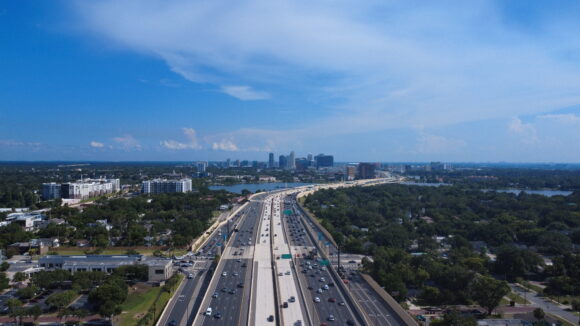
The ongoing construction project on Interstate 4 in Orlando has been marred by a series of accidents, resulting in the deaths of five workers and numerous injuries. Recently, a Florida appeals court ruled that one injured worker cannot seek punitive damages from his employer, despite the driver involved having a history of license violations. The decision came from the Florida 6th District Court of Appeals on February 27, 2024, overturning an earlier circuit court ruling.
During the I-4 Ultimate project, which ran from 2015 to 2021, Stafford Mitchell Jr., an employee of C&C Concrete Pumping, sustained serious injuries when a pipe struck him while being handled by another employee, Brayan Sagastume Miralda. The court noted that Mitchell had previously settled a workers’ compensation claim, receiving a lump sum of $55,000, of which $13,750 was allocated to his attorney.
Mitchell’s legal team argued that C&C had acted negligently by hiring Sagastume, who had recently relocated from New York and was driving with an expired license at the time of the incident. They sought punitive damages, asserting that Sagastume’s history of license suspensions indicated a pattern of reckless behavior that warranted additional penalties.
However, the appeals court concluded that the criteria for awarding punitive damages were not met in this case. According to the court, Florida law permits punitive damages only when a defendant’s actions are deemed “willful and wanton,” meaning they must be so extreme that they provoke outrage from an average member of the community.
The court referenced previous rulings, stating, “The relevant conduct here does not meet this stringent standard.” It clarified that Sagastume’s license issues stemmed from administrative problems, such as lapsed insurance, and that he was originally hired as a mechanic, not a driver.
The court also dismissed claims that Sagastume was at fault in a similar incident just days before Mitchell’s injury, noting that such allegations were unproven. Judge Mary Alice Nardella, writing for the panel, emphasized that punitive damages should punish the conduct that caused harm, rather than merely penalizing individuals for their past indiscretions.
The I-4 Ultimate project has faced scrutiny for safety practices. In 2020, the U.S. Occupational Safety and Health Administration (OSHA) fined Skanska-Granite-Lane, the general contractor, $53,976 following an incident in which a worker was struck by a concrete beam. This incident occurred approximately 15 months prior to Mitchell’s injury.
As construction projects continue to face challenges related to safety and liability, this case highlights the complexities surrounding workers’ rights and employer responsibilities within high-risk environments. The decision from the appeals court underscores the legal standards required for punitive damages in Florida, which may impact future claims related to workplace injuries.

Robinhood Stock Surges 2.5% Today Amid Tech Market Recovery

Philadelphia’s Earth Month Kicks Off with Free Events in Parks

GSK’s Inhaler Decision Sparks Health Concerns for Children

Bradford’s Fish Fry Fridays Offer Community Spirit and Flavor

Speculation Rises on Shutdowns During Trump’s Potential Presidency

Samsung Galaxy Watch 9 to Feature Larger Battery, Report Reveals

Inventors Find New Purpose Through Unconventional Paths

UConn Huskies Aim for Back-to-Back Titles in 2026 NCAA Tournament

U.S. Mine Countermeasure Ships Dock in Malaysia for Logistics Stop

University of Hawaiʻi at Mānoa Joins $25.6M AI Initiative for Disaster Monitoring

$2.2 Million Boost for Cancer Research and Training in Hawaiʻi

ALMA Discovers Companion Orbiting Red Giant Star π 1 Gruis

Sacituzumab Govitecan Shows Promise for HR+/HER2− Breast Cancer

币安人生 Sees $15.92 Million in Trading Volume Amid Market Fluctuations

New Gel Offers Hope for Regrowing Tooth Enamel in Dentistry

CAVA Group Shares Surge 5.1% Amid Mixed Analyst Ratings

Christian Bale in Talks to Join Leonardo DiCaprio in Heat 2

Supreme Court to Review Birthright Citizenship for Children of Immigrants
-
Science8 months ago
University of Hawaiʻi at Mānoa Joins $25.6M AI Initiative for Disaster Monitoring
-
 Health7 months ago
$2.2 Million Boost for Cancer Research and Training in Hawaiʻi
-
 Science8 months ago
ALMA Discovers Companion Orbiting Red Giant Star π 1 Gruis
-
 Health7 months ago
Sacituzumab Govitecan Shows Promise for HR+/HER2− Breast Cancer
-
Politics4 months ago
币安人生 Sees $15.92 Million in Trading Volume Amid Market Fluctuations
-
 Health8 months ago
New Gel Offers Hope for Regrowing Tooth Enamel in Dentistry
-
 Business7 months ago
CAVA Group Shares Surge 5.1% Amid Mixed Analyst Ratings
-
 Entertainment8 months ago
Christian Bale in Talks to Join Leonardo DiCaprio in Heat 2
-
 Politics7 months ago
Supreme Court to Review Birthright Citizenship for Children of Immigrants
-

 Lifestyle7 months ago
Fernando Mendoza Secures Maxwell and O’Brien Awards Ahead of Heisman
-

 Lifestyle8 months ago
Art Deco and Traditional Designs Set to Transform Homes in 2026
-

 World7 months ago
Swiss Residents Reject 50% Inheritance Tax on Wealthy