
World
US Political Parties Divided Over Middle East Conflict and War

The recent military actions involving the United States and Israel against Iran have sparked significant debate and dissent among American voters. Despite a clear majority of the public opposing further military involvement in the Middle East, both major political parties in the U.S. appear to be aligning behind President Donald Trump’s controversial decision to invade Iran. This divergence between party leaders and voter sentiment underscores growing tensions regarding foreign policy.
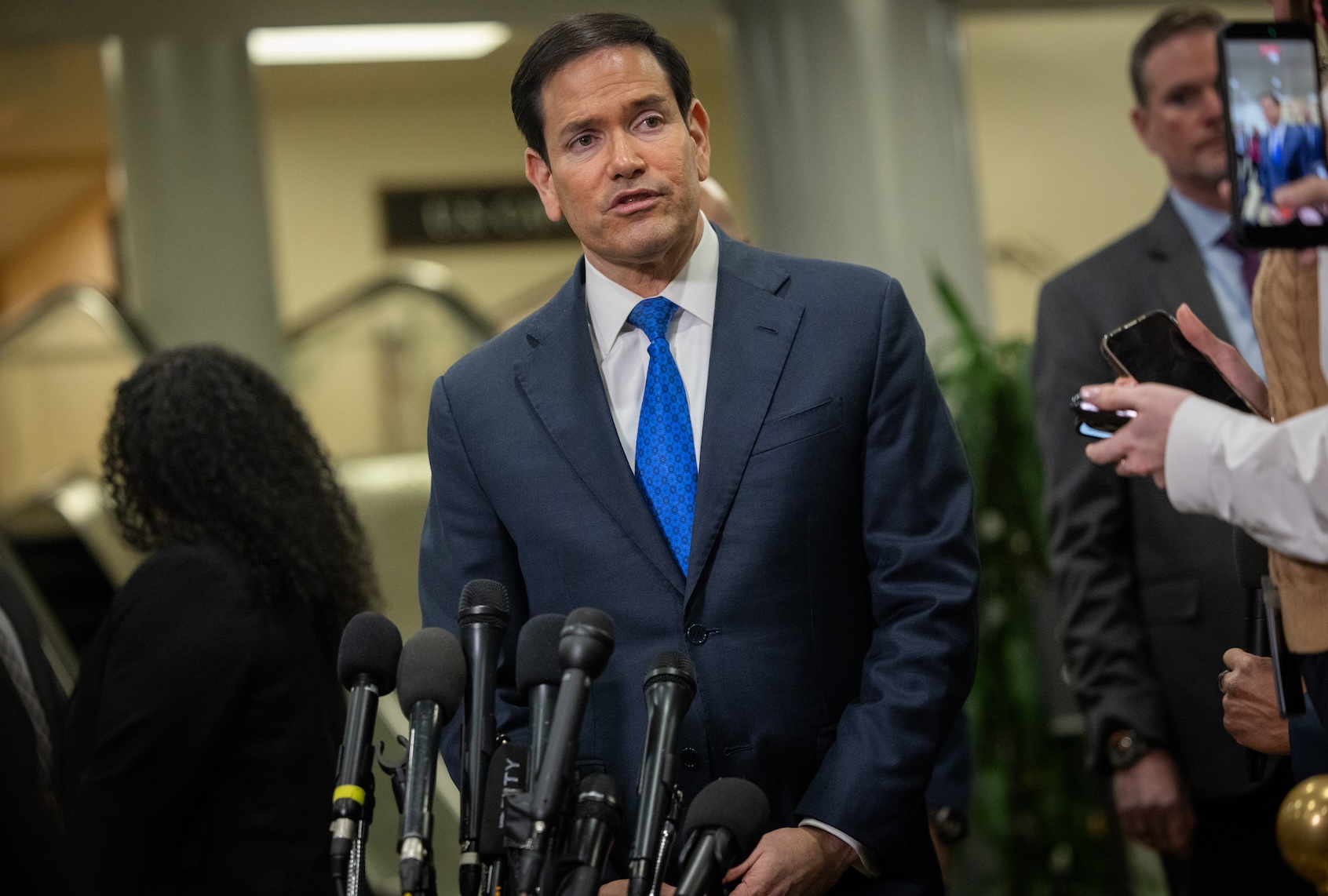
On October 7, 2023, the situation escalated when Secretary of State Marco Rubio stated that the administration’s decision to attack Iran was influenced by Israeli policy. He claimed that Israel intended to launch a strike on Iran regardless of U.S. support, suggesting that the administration’s options were limited. “The president made the very wise decision,” Rubio said, emphasizing the necessity of a preemptive strike to prevent potential casualties among American forces.
Polling data reveals a stark contrast between the views of politicians and the electorate. A recent flash poll by Reuters and Ipsos indicated that only 27% of American adults support the ongoing conflict, while 43% disapprove. The partisan divide is evident, as Republicans largely rally behind Trump, who has initiated military actions in seven countries, including Iran, Venezuela, and Syria. The administration has also recently engaged in military actions in Ecuador, although details remain unclear.
In response to the geopolitical situation, Trump has expressed a belief that the conflict could be prolonged indefinitely, claiming a “virtually unlimited supply” of military resources. Some experts, however, caution that certain weapon stockpiles may deplete over time, raising questions about sustainability.
Democrats show a more fragmented stance on the conflict. While some party members vocally oppose the war, others, including Senate Majority Leader Chuck Schumer, have criticized the administration’s approach rather than the war itself. Schumer highlighted the lack of clarity regarding the threats posed by Iran. “Confronting Iran’s malign regional activities demands American strength and strategic clarity,” he stated, indicating concerns about the administration’s erratic strategy.
The Democratic Party faces internal challenges as pro-Israel organizations influence primary elections. Newly formed groups are emerging to sway party dynamics, supporting candidates aligned with pro-Israel views. For example, the Article One PAC has recently backed Rep. Valerie Foushee in North Carolina, contributing $600,000 to her campaign. This has drawn criticism from opponents who argue that such financial backing undermines the party’s commitment to broader issues affecting everyday citizens.
Simultaneously, a recent Gallup poll revealed a significant shift in public sentiment. For the first time, a plurality of Americans, 41% to 36%, expressed greater sympathy for Palestinians over Israelis. The shift is particularly pronounced among Democrats, with 65% favoring Palestinian perspectives compared to 17% for Israelis. Among independents, the numbers reflect a similar trend, indicating a growing disconnect between party leadership and voter priorities.
This evolving landscape raises questions about the political ramifications for both parties as they approach upcoming midterm elections. While foreign policy typically plays a lesser role in voters’ decision-making, involvement in an unpopular war could elevate these issues in the public consciousness.
As American sympathies continue to evolve, political leaders are faced with the challenge of reconciling their positions with voter expectations. The ongoing developments in the Middle East and the domestic responses from both parties will likely shape the political discourse in the months ahead, underscoring the complexities of American foreign policy in an increasingly polarized environment.

Robinhood Stock Surges 2.5% Today Amid Tech Market Recovery

Philadelphia’s Earth Month Kicks Off with Free Events in Parks

GSK’s Inhaler Decision Sparks Health Concerns for Children

Bradford’s Fish Fry Fridays Offer Community Spirit and Flavor

Speculation Rises on Shutdowns During Trump’s Potential Presidency

Samsung Galaxy Watch 9 to Feature Larger Battery, Report Reveals

Inventors Find New Purpose Through Unconventional Paths

UConn Huskies Aim for Back-to-Back Titles in 2026 NCAA Tournament

U.S. Mine Countermeasure Ships Dock in Malaysia for Logistics Stop

University of Hawaiʻi at Mānoa Joins $25.6M AI Initiative for Disaster Monitoring

$2.2 Million Boost for Cancer Research and Training in Hawaiʻi

ALMA Discovers Companion Orbiting Red Giant Star π 1 Gruis

Sacituzumab Govitecan Shows Promise for HR+/HER2− Breast Cancer

币安人生 Sees $15.92 Million in Trading Volume Amid Market Fluctuations

New Gel Offers Hope for Regrowing Tooth Enamel in Dentistry

CAVA Group Shares Surge 5.1% Amid Mixed Analyst Ratings

Christian Bale in Talks to Join Leonardo DiCaprio in Heat 2

Supreme Court to Review Birthright Citizenship for Children of Immigrants
-
Science8 months ago
University of Hawaiʻi at Mānoa Joins $25.6M AI Initiative for Disaster Monitoring
-
 Health7 months ago
$2.2 Million Boost for Cancer Research and Training in Hawaiʻi
-
 Science8 months ago
ALMA Discovers Companion Orbiting Red Giant Star π 1 Gruis
-
 Health7 months ago
Sacituzumab Govitecan Shows Promise for HR+/HER2− Breast Cancer
-
Politics4 months ago
币安人生 Sees $15.92 Million in Trading Volume Amid Market Fluctuations
-
 Health8 months ago
New Gel Offers Hope for Regrowing Tooth Enamel in Dentistry
-
 Business7 months ago
CAVA Group Shares Surge 5.1% Amid Mixed Analyst Ratings
-
 Entertainment8 months ago
Christian Bale in Talks to Join Leonardo DiCaprio in Heat 2
-
 Politics7 months ago
Supreme Court to Review Birthright Citizenship for Children of Immigrants
-

 Lifestyle7 months ago
Fernando Mendoza Secures Maxwell and O’Brien Awards Ahead of Heisman
-

 Lifestyle8 months ago
Art Deco and Traditional Designs Set to Transform Homes in 2026
-

 World7 months ago
Swiss Residents Reject 50% Inheritance Tax on Wealthy