
Science
Innovative Optical Tactile Sensor Enhances Radiotherapy Precision

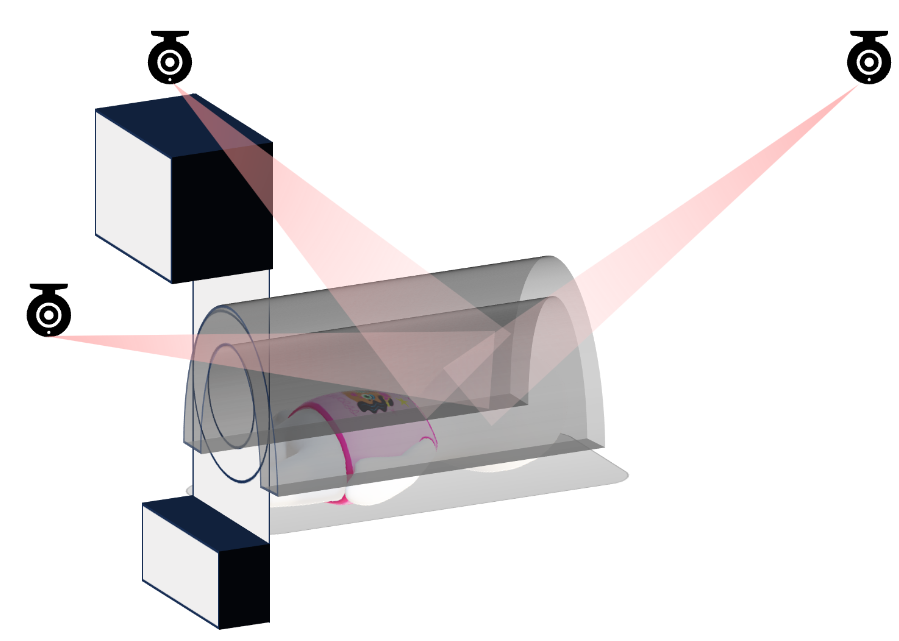
A groundbreaking optical tactile sensor, designed to track head motion during radiotherapy, was developed by Bhoomika Gandhi, a recent PhD graduate from the University of Sheffield. This technology aims to enhance the accuracy of cancer treatment for patients undergoing head and neck therapies, addressing significant challenges associated with traditional immobilisation techniques.
Patients receiving radiotherapy for head and neck cancers often experience discomfort from immobilisation methods such as thermoplastic masks or stereotactic frames. These tools are necessary to ensure precise treatment but can lead to patient movement, compromising the effectiveness of the therapy. Gandhi’s research sought to create a more comfortable and effective solution through her innovative design, known as the Motion Capture Pillow (MCP).
Challenges of Current Radiotherapy Techniques
Traditional systems for monitoring patient motion during radiotherapy typically rely on ceiling-mounted cameras. These cameras face limitations, as they cannot be positioned too close to patients due to electromagnetic interference from the treatment equipment. Additionally, the cameras often have occluded views when patients are placed in treatment tunnels, making it difficult to track their rotational movements accurately.
One alternative currently in use is an infrared camera equipped with a nose marker, which can only detect translational motion. When patients move beyond a set threshold, treatment must be paused, and adjustments are made. This process can disrupt the treatment session and affect overall efficacy.
The Motion Capture Pillow, containing an optical tactile sensor, aims to solve these issues. By placing the pillow beneath the patient’s head, it can provide real-time feedback on both translational and rotational movements. This innovative approach ensures direct contact with the patient, eliminating occlusions and improving compatibility with radiotherapy environments due to its non-ferromagnetic components.
Key Contributions and Future Developments
Gandhi’s research resulted in four main contributions to the field. Firstly, she enhanced the imaging and tracking capabilities of the sensor by replacing the previous webcam method with a fibrescope and an optical flow tracking algorithm. This change significantly improved the sensor’s performance in tracking marker displacement.
Secondly, she optimised the density of markers on the sensor to ensure effective tracking. The array of markers on the deformable pillow is crucial, as the deformation is captured by the integrated camera. Balancing marker spacing proved essential for achieving optimal results.
The third contribution involved sensor fusion techniques to bolster reliability. By integrating a gyroscope and employing Kalman filtering, Gandhi was able to enhance the tracking accuracy, particularly beneficial for systems like the Gamma Knife, which are used in radiosurgery for brain cancers.
Finally, Gandhi conducted a participatory design study with clinicians to examine how the MCP could be integrated into hospital workflows. While the feedback from clinicians was positive, concerns about the accuracy and the learning curve associated with new technology highlighted the need for further development before widespread implementation.
Future work will focus on refining the pressure control system of the pillow, which affects motion readings. Initial tests indicated discrepancies between mannequin and participant data, suggesting that further optimisation is necessary. Additional studies will aim to improve the fibrescope’s resolution and angle, ensuring better visualisation of the marker arrays.
As Bhoomika Gandhi looks ahead, her work promises to pave the way for advanced radiotherapy techniques that prioritise patient comfort while maintaining treatment accuracy. Her findings may significantly influence how hospitals adopt and integrate new technology into existing systems, transforming cancer care for patients worldwide.

Robinhood Stock Surges 2.5% Today Amid Tech Market Recovery

Philadelphia’s Earth Month Kicks Off with Free Events in Parks

GSK’s Inhaler Decision Sparks Health Concerns for Children

Bradford’s Fish Fry Fridays Offer Community Spirit and Flavor

Speculation Rises on Shutdowns During Trump’s Potential Presidency

Samsung Galaxy Watch 9 to Feature Larger Battery, Report Reveals

Inventors Find New Purpose Through Unconventional Paths

UConn Huskies Aim for Back-to-Back Titles in 2026 NCAA Tournament

U.S. Mine Countermeasure Ships Dock in Malaysia for Logistics Stop

University of Hawaiʻi at Mānoa Joins $25.6M AI Initiative for Disaster Monitoring

$2.2 Million Boost for Cancer Research and Training in Hawaiʻi

ALMA Discovers Companion Orbiting Red Giant Star π 1 Gruis

Sacituzumab Govitecan Shows Promise for HR+/HER2− Breast Cancer

币安人生 Sees $15.92 Million in Trading Volume Amid Market Fluctuations

New Gel Offers Hope for Regrowing Tooth Enamel in Dentistry

CAVA Group Shares Surge 5.1% Amid Mixed Analyst Ratings

Christian Bale in Talks to Join Leonardo DiCaprio in Heat 2

Supreme Court to Review Birthright Citizenship for Children of Immigrants
-
Science8 months ago
University of Hawaiʻi at Mānoa Joins $25.6M AI Initiative for Disaster Monitoring
-
 Health7 months ago
$2.2 Million Boost for Cancer Research and Training in Hawaiʻi
-
 Science8 months ago
ALMA Discovers Companion Orbiting Red Giant Star π 1 Gruis
-
 Health7 months ago
Sacituzumab Govitecan Shows Promise for HR+/HER2− Breast Cancer
-
Politics4 months ago
币安人生 Sees $15.92 Million in Trading Volume Amid Market Fluctuations
-
 Health8 months ago
New Gel Offers Hope for Regrowing Tooth Enamel in Dentistry
-
 Business7 months ago
CAVA Group Shares Surge 5.1% Amid Mixed Analyst Ratings
-
 Entertainment8 months ago
Christian Bale in Talks to Join Leonardo DiCaprio in Heat 2
-
 Politics7 months ago
Supreme Court to Review Birthright Citizenship for Children of Immigrants
-

 Lifestyle7 months ago
Fernando Mendoza Secures Maxwell and O’Brien Awards Ahead of Heisman
-

 Lifestyle8 months ago
Art Deco and Traditional Designs Set to Transform Homes in 2026
-

 World7 months ago
Swiss Residents Reject 50% Inheritance Tax on Wealthy