
World
China Rejects G2 Concept Amid Rising U.S.-China Tensions

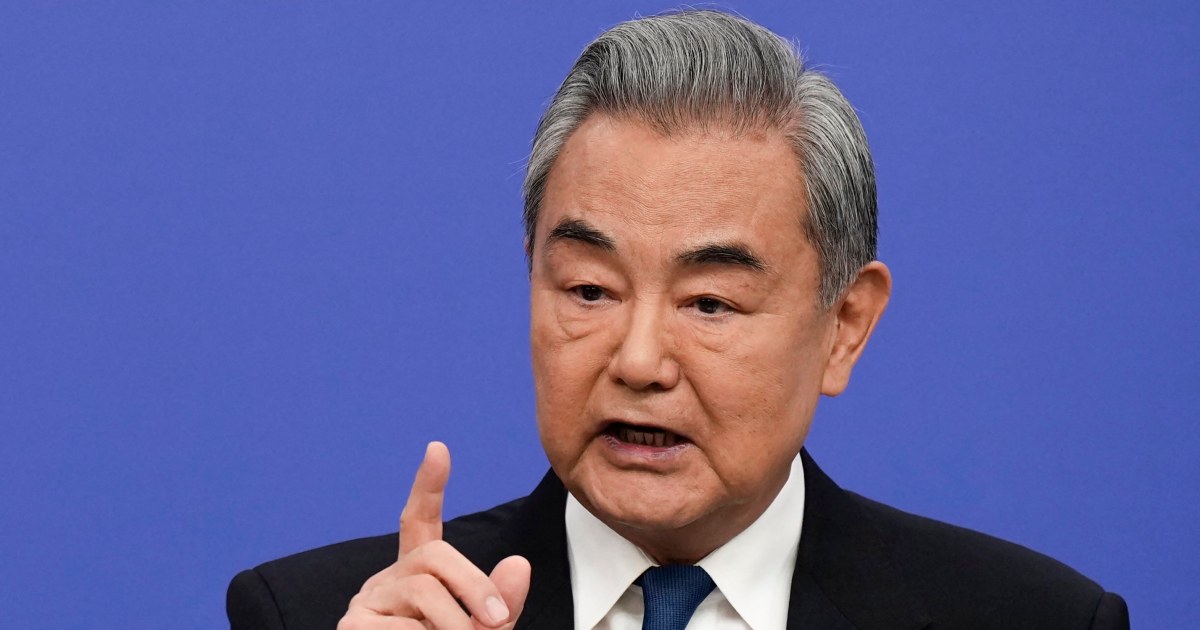
In a recent statement, Chinese Foreign Minister Wang Yi publicly dismissed the idea of a “G2” global order, championed by U.S. President Donald Trump. The concept, which envisions a power dynamic primarily between the United States and China, has surfaced amidst increasing tensions between the two nations. Wang’s remarks came during a news conference at the annual legislative session in Beijing, where he emphasized that the world consists of over 190 countries, and no single pair should dominate international affairs.
The term “G2” was first introduced in 2005 by economist C. Fred Bergsten to highlight the necessity for dialogue between the world’s two largest economies. Although it garnered initial support, particularly from U.S. policymakers, sentiment has shifted in Washington due to escalating conflicts with Beijing. Trump’s frequent use of the term in recent discussions with Chinese President Xi Jinping underscores a recognition of China’s growing influence. However, China appears cautious, regarding this acknowledgment as an indication that both nations should share equal footing in global decision-making.
Wang articulated concerns from U.S. allies, who fear potential exclusion from critical discussions. He stated, “There is no doubt that China and the U.S. have a significant impact on the world. But we should not forget there are more than 190 countries on our planet.” He reiterated the importance of collective efforts among all nations in shaping the future.
The “G2” framework presents challenges for China, which bases much of its foreign policy on advocating for the interests of smaller nations. Wang emphasized that China does not seek hegemony and is committed to promoting a multipolar world. He remarked, “Great power rivalry and bloc confrontation have invariably inflicted disaster and pain on humanity.”
Moreover, Wang highlighted the importance of stable U.S.-China relations, stating that “turning our backs on each other would only lead to mutual misperception and miscalculation.” He cautioned that any drift towards conflict could have dire consequences globally. Despite ongoing tensions, including Trump‘s global tariffs, both leaders have maintained communication, with Trump praising his “great relationship” with Xi.
Looking forward, Trump and Xi are expected to meet multiple times in 2024, beginning with Trump’s scheduled visit to China on March 31, 2024. Xi is anticipated to reciprocate with a visit to the U.S., potentially attending the G20 summit in Miami in December. Wang noted that 2026 would be a significant year for U.S.-China relations, emphasizing the need for thorough preparations to foster a conducive environment for dialogue.
One potential impediment to these discussions is the ongoing military conflict involving the U.S. and Israel in Iran, a nation that maintains close ties with China. Wang reiterated calls for an immediate cessation of military actions, stating, “This is a war that should not have happened.” He condemned the “abuse of force” and stressed the importance of adhering to international law, asserting that “the law of the jungle must not return and rule the world.”
As the geopolitical landscape evolves, the relationship between the United States and China remains crucial not only for both nations but for global stability. Wang’s comments reflect a desire for cooperation rather than confrontation, underscoring the complexities that define one of the world’s most consequential bilateral relationships.

Robinhood Stock Surges 2.5% Today Amid Tech Market Recovery

Philadelphia’s Earth Month Kicks Off with Free Events in Parks

GSK’s Inhaler Decision Sparks Health Concerns for Children

Bradford’s Fish Fry Fridays Offer Community Spirit and Flavor

Speculation Rises on Shutdowns During Trump’s Potential Presidency

Samsung Galaxy Watch 9 to Feature Larger Battery, Report Reveals

Inventors Find New Purpose Through Unconventional Paths

UConn Huskies Aim for Back-to-Back Titles in 2026 NCAA Tournament

U.S. Mine Countermeasure Ships Dock in Malaysia for Logistics Stop

University of Hawaiʻi at Mānoa Joins $25.6M AI Initiative for Disaster Monitoring

$2.2 Million Boost for Cancer Research and Training in Hawaiʻi

ALMA Discovers Companion Orbiting Red Giant Star π 1 Gruis

Sacituzumab Govitecan Shows Promise for HR+/HER2− Breast Cancer

币安人生 Sees $15.92 Million in Trading Volume Amid Market Fluctuations

New Gel Offers Hope for Regrowing Tooth Enamel in Dentistry

CAVA Group Shares Surge 5.1% Amid Mixed Analyst Ratings

Christian Bale in Talks to Join Leonardo DiCaprio in Heat 2

Supreme Court to Review Birthright Citizenship for Children of Immigrants
-
Science8 months ago
University of Hawaiʻi at Mānoa Joins $25.6M AI Initiative for Disaster Monitoring
-
 Health7 months ago
$2.2 Million Boost for Cancer Research and Training in Hawaiʻi
-
 Science8 months ago
ALMA Discovers Companion Orbiting Red Giant Star π 1 Gruis
-
 Health7 months ago
Sacituzumab Govitecan Shows Promise for HR+/HER2− Breast Cancer
-
Politics4 months ago
币安人生 Sees $15.92 Million in Trading Volume Amid Market Fluctuations
-
 Health8 months ago
New Gel Offers Hope for Regrowing Tooth Enamel in Dentistry
-
 Business7 months ago
CAVA Group Shares Surge 5.1% Amid Mixed Analyst Ratings
-
 Entertainment8 months ago
Christian Bale in Talks to Join Leonardo DiCaprio in Heat 2
-
 Politics7 months ago
Supreme Court to Review Birthright Citizenship for Children of Immigrants
-

 Lifestyle7 months ago
Fernando Mendoza Secures Maxwell and O’Brien Awards Ahead of Heisman
-

 Lifestyle8 months ago
Art Deco and Traditional Designs Set to Transform Homes in 2026
-

 World7 months ago
Swiss Residents Reject 50% Inheritance Tax on Wealthy