
World
UN Inquiry Commission Completes Syria Mission, Calls for Reforms

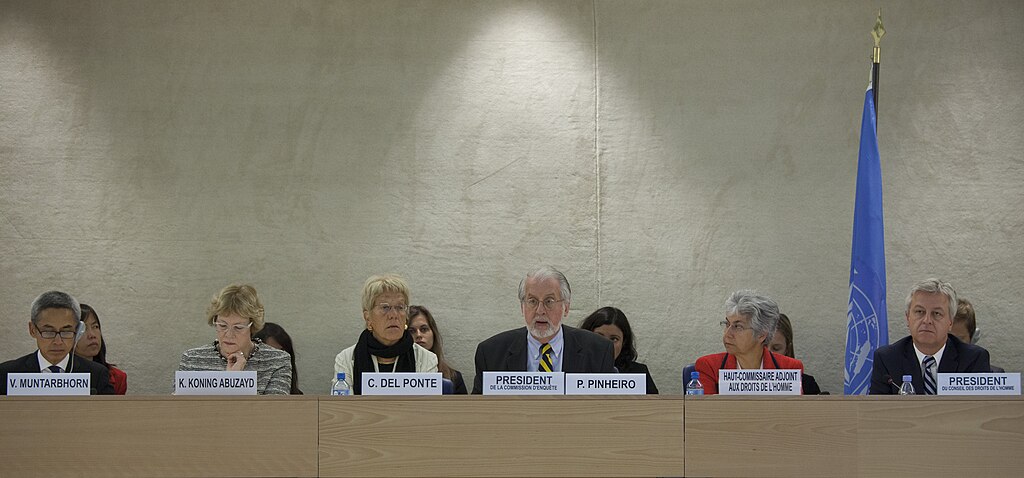
The UN Human Rights Council’s Syria Commission of Inquiry (COI) has concluded its mission in Damascus as it prepares to present findings to the Human Rights Council in Geneva on March 13, 2026. The commission aims to urge Syria’s transitional authorities to prioritize accountability, institutional reform, and the protection of civil society amid ongoing regional tensions.
Focus on Accountability and Civil Society
During their visit, commissioners Monia Ammar and Fionnuala Ní Aoláin engaged with senior Syrian officials and various stakeholders. They emphasized the importance of “transparency, accountability, security sector reform, and engagement with impacted communities” as essential for a successful transition. The commissioners highlighted the necessity of establishing a legal framework capable of addressing both historical and recent violations.
The COI underscored that the transition should ensure “equal protection” of civil, political, economic, social, and cultural rights. While the growth of Syrian civil society organizations, including those returning from exile, was noted as a positive development, the commissioners expressed concern over existing barriers and the fear that still pervades the landscape. They called for conditions that allow civil society to operate “without restriction.”
There are critical legal questions regarding the authorities’ tolerance for independent documentation, advocacy, and victim participation. These elements are vital for credible truth-seeking, designing reparations, and institutional vetting. The COI, established by the Human Rights Council in 2011, focuses on investigating alleged violations of international human rights law in Syria since March 2011. Its mission includes documenting evidence and recommending reforms and pathways to justice, rather than prosecuting individuals.
Regional Tensions and Civilian Protection
The commissioners explicitly linked transitional legitimacy to the ability of civil society to function independently. They recognized that effective accountability hinges on the safety of non-state actors, especially as victims and witnesses may risk retaliation. The COI also raised concerns about the spillover effects of regional escalation, particularly following Israeli and U.S. strikes on Iran. These actions have reportedly led to civilian casualties from falling debris from intercepted rockets.
Moreover, the COI expressed apprehension regarding “direct Israeli activity in southern Syria,” which has the potential to disrupt internal stabilization efforts. These statements are crucial, highlighting the core protection duties under international law, which obligate authorities to safeguard civilians and investigate potential unlawful harm. Such responsibilities become increasingly important amid cross-border violence and during domestic transitions.
As the COI prepares for its upcoming briefing, the focus remains on ensuring that Syria’s transition is characterized by genuine accountability and the protection of human rights for all its citizens.

Robinhood Stock Surges 2.5% Today Amid Tech Market Recovery

Philadelphia’s Earth Month Kicks Off with Free Events in Parks

GSK’s Inhaler Decision Sparks Health Concerns for Children

Bradford’s Fish Fry Fridays Offer Community Spirit and Flavor

Speculation Rises on Shutdowns During Trump’s Potential Presidency

Samsung Galaxy Watch 9 to Feature Larger Battery, Report Reveals

Inventors Find New Purpose Through Unconventional Paths

UConn Huskies Aim for Back-to-Back Titles in 2026 NCAA Tournament

U.S. Mine Countermeasure Ships Dock in Malaysia for Logistics Stop

University of Hawaiʻi at Mānoa Joins $25.6M AI Initiative for Disaster Monitoring

$2.2 Million Boost for Cancer Research and Training in Hawaiʻi

ALMA Discovers Companion Orbiting Red Giant Star π 1 Gruis

Sacituzumab Govitecan Shows Promise for HR+/HER2− Breast Cancer

币安人生 Sees $15.92 Million in Trading Volume Amid Market Fluctuations

New Gel Offers Hope for Regrowing Tooth Enamel in Dentistry

CAVA Group Shares Surge 5.1% Amid Mixed Analyst Ratings

Christian Bale in Talks to Join Leonardo DiCaprio in Heat 2

Supreme Court to Review Birthright Citizenship for Children of Immigrants
-
Science8 months ago
University of Hawaiʻi at Mānoa Joins $25.6M AI Initiative for Disaster Monitoring
-
 Health7 months ago
$2.2 Million Boost for Cancer Research and Training in Hawaiʻi
-
 Science8 months ago
ALMA Discovers Companion Orbiting Red Giant Star π 1 Gruis
-
 Health7 months ago
Sacituzumab Govitecan Shows Promise for HR+/HER2− Breast Cancer
-
Politics4 months ago
币安人生 Sees $15.92 Million in Trading Volume Amid Market Fluctuations
-
 Health8 months ago
New Gel Offers Hope for Regrowing Tooth Enamel in Dentistry
-
 Business7 months ago
CAVA Group Shares Surge 5.1% Amid Mixed Analyst Ratings
-
 Entertainment8 months ago
Christian Bale in Talks to Join Leonardo DiCaprio in Heat 2
-
 Politics7 months ago
Supreme Court to Review Birthright Citizenship for Children of Immigrants
-

 Lifestyle7 months ago
Fernando Mendoza Secures Maxwell and O’Brien Awards Ahead of Heisman
-

 Lifestyle8 months ago
Art Deco and Traditional Designs Set to Transform Homes in 2026
-

 World7 months ago
Swiss Residents Reject 50% Inheritance Tax on Wealthy