
Science
Akshay Agrawal Launches Marimo to Transform Python Notebooks

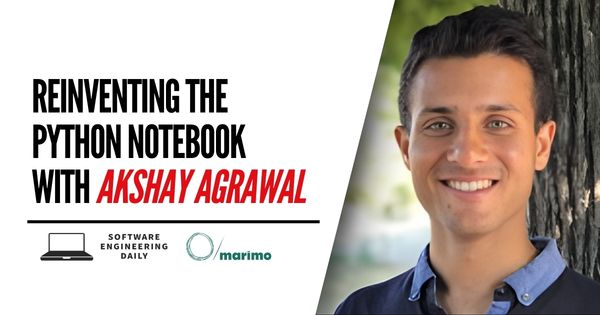
Interactive notebooks have revolutionized the fields of data science and research, with the Jupyter project serving as a cornerstone for data exploration. Despite their popularity, traditional imperative notebooks face significant challenges as projects scale. Problems such as hidden state, non-reproducible execution, and inadequate version control make transitioning from exploration to production increasingly complex. Additionally, sharing results often requires collaborators to replicate entire environments, which can hinder interactivity and delay feedback.
To address these limitations, Akshay Agrawal, a former Google Brain engineer, has introduced Marimo, an open-source, next-generation Python notebook. Marimo aims to enhance the user experience by offering a platform that simplifies the complexities associated with traditional notebooks.
Addressing the Challenges of Traditional Notebooks
In a recent discussion, Agrawal highlighted the shortcomings of conventional notebooks, emphasizing their inability to effectively manage growing complexity in projects. “As notebooks evolve, they often become cumbersome, making it difficult for users to navigate and maintain,” he noted. Marimo seeks to solve these issues by incorporating features that enhance code reusability and facilitate smoother transitions into production environments.
Agrawal’s vision for Marimo is to create a reactive notebook design that bridges the gap between research and practical application. This innovative approach aims to streamline workflows for data scientists and engineers alike, allowing them to focus on analysis rather than the technical intricacies of notebook management.
Joining Agrawal in the conversation is Kevin Ball, Vice President of Engineering at Mento. Ball, who has a rich background in technology and engineering leadership, co-founded two companies and has played a pivotal role in the San Diego JavaScript meetup. His insights complement Agrawal’s expertise, as they explore how Marimo can adapt to an increasingly AI-assisted development landscape.
Marimo’s Role in the Future of Development
Marimo’s design is particularly relevant as the tech industry continues to evolve. As artificial intelligence becomes more integrated into development processes, tools must adapt to facilitate collaboration and enhance productivity. Agrawal and Ball discussed how Marimo fits into this new paradigm, enabling developers to leverage the capabilities of AI while maintaining control over their projects.
The introduction of Marimo comes at a time when the need for effective tools in data science and software development is more critical than ever. As teams increasingly rely on a combination of traditional and AI-driven approaches, having a reliable, user-friendly notebook is essential for fostering innovation and efficiency.
For those interested in exploring Marimo further, detailed information and updates are available through the official channels. The open-source nature of the project encourages contributions from the community, fostering a collaborative environment aimed at continuous improvement.
In conclusion, Akshay Agrawal’s efforts to reinvent the Python notebook with Marimo represent a significant advancement in the field of data science. By addressing the inherent limitations of traditional notebooks, Marimo stands poised to enhance the way researchers and developers interact with data, ultimately bridging the gap between exploration and production.

Robinhood Stock Surges 2.5% Today Amid Tech Market Recovery

Philadelphia’s Earth Month Kicks Off with Free Events in Parks

GSK’s Inhaler Decision Sparks Health Concerns for Children

Bradford’s Fish Fry Fridays Offer Community Spirit and Flavor

Speculation Rises on Shutdowns During Trump’s Potential Presidency

Samsung Galaxy Watch 9 to Feature Larger Battery, Report Reveals

Inventors Find New Purpose Through Unconventional Paths

UConn Huskies Aim for Back-to-Back Titles in 2026 NCAA Tournament

U.S. Mine Countermeasure Ships Dock in Malaysia for Logistics Stop

University of Hawaiʻi at Mānoa Joins $25.6M AI Initiative for Disaster Monitoring

$2.2 Million Boost for Cancer Research and Training in Hawaiʻi

ALMA Discovers Companion Orbiting Red Giant Star π 1 Gruis

Sacituzumab Govitecan Shows Promise for HR+/HER2− Breast Cancer

币安人生 Sees $15.92 Million in Trading Volume Amid Market Fluctuations

New Gel Offers Hope for Regrowing Tooth Enamel in Dentistry

CAVA Group Shares Surge 5.1% Amid Mixed Analyst Ratings

Christian Bale in Talks to Join Leonardo DiCaprio in Heat 2

Supreme Court to Review Birthright Citizenship for Children of Immigrants
-
Science8 months ago
University of Hawaiʻi at Mānoa Joins $25.6M AI Initiative for Disaster Monitoring
-
 Health7 months ago
$2.2 Million Boost for Cancer Research and Training in Hawaiʻi
-
 Science8 months ago
ALMA Discovers Companion Orbiting Red Giant Star π 1 Gruis
-
 Health7 months ago
Sacituzumab Govitecan Shows Promise for HR+/HER2− Breast Cancer
-
Politics4 months ago
币安人生 Sees $15.92 Million in Trading Volume Amid Market Fluctuations
-
 Health8 months ago
New Gel Offers Hope for Regrowing Tooth Enamel in Dentistry
-
 Business7 months ago
CAVA Group Shares Surge 5.1% Amid Mixed Analyst Ratings
-
 Entertainment8 months ago
Christian Bale in Talks to Join Leonardo DiCaprio in Heat 2
-
 Politics7 months ago
Supreme Court to Review Birthright Citizenship for Children of Immigrants
-

 Lifestyle7 months ago
Fernando Mendoza Secures Maxwell and O’Brien Awards Ahead of Heisman
-

 Lifestyle8 months ago
Art Deco and Traditional Designs Set to Transform Homes in 2026
-

 World7 months ago
Swiss Residents Reject 50% Inheritance Tax on Wealthy