
Top Stories
Major Historical Events on Oct. 20: From Watergate to Gadhafi’s Death

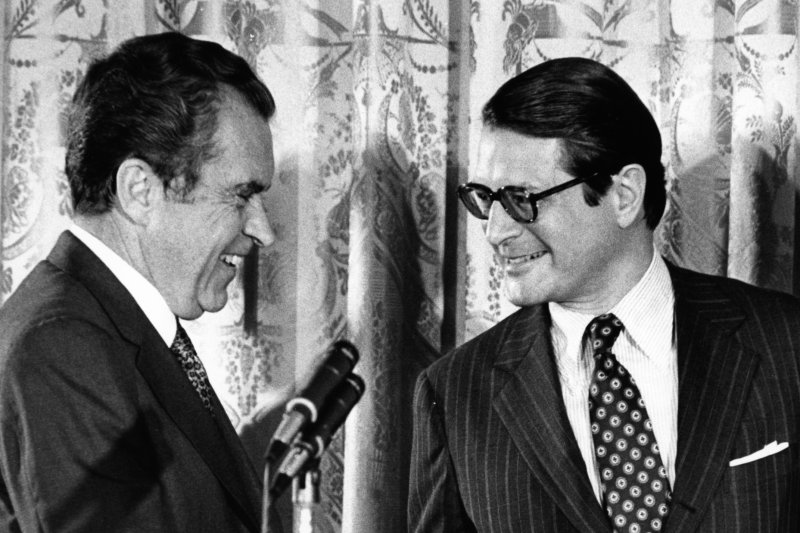
UPDATE: Today, October 20, marks a pivotal day in history with significant events that shaped nations and influenced global affairs. Key occurrences include the infamous Watergate scandal’s “Saturday Night Massacre” and the death of Libyan dictator Moammar Gadhafi.
On this day in 1973, during the height of the Watergate scandal, U.S. President Richard Nixon ordered Attorney General Elliot Richardson and Deputy Attorney General William Ruckelshaus to fire special prosecutor Archibald Cox. Both officials resigned in protest, leading to a constitutional crisis that rocked American politics. This incident, now known as the “Saturday Night Massacre,” underscored the escalating tensions surrounding Nixon’s administration, ultimately contributing to his resignation less than a year later.
Fast forward to 2011, on October 20, Moammar Gadhafi, who had ruled Libya for 42 years, was killed in a dramatic confrontation as he attempted to escape from his hometown of Sirte. This event marked a dramatic conclusion to the uprising against his regime, which had begun just months earlier. Gadhafi’s death was confirmed by the National Transitional Council, significantly shifting Libya’s political landscape.
Other notable historical moments include:
- 1818: The United States and Britain established the 49th parallel as the official boundary between the U.S. and Canada.
- 1918: Germany accepted U.S. President Woodrow Wilson‘s terms to end World War I.
- 1944: American troops landed on Leyte Island in the Philippines, with General Douglas MacArthur famously declaring, “I have returned.”
- 1968: Former First Lady Jacqueline Kennedy married Greek shipping tycoon Aristotle Onassis.
- 1977: A tragic plane crash claimed the lives of members of the rock band Lynyrd Skynyrd, including lead singer Ronnie Van Zant.
- 2022: British Prime Minister Liz Truss announced her resignation after just 50 days in office, the shortest term in British history.
As we reflect on these significant events, it is essential to understand their impact on today’s world. The Watergate scandal continues to influence political discourse in the U.S., while the aftermath of Gadhafi’s death has left Libya in a turbulent state of transition. Each of these events serves as a reminder of the powerful forces at play in shaping national and global politics.
Looking ahead, observers will closely watch the ongoing developments in Libya and the implications of political accountability in the United States as historical lessons resonate in current affairs.
Stay tuned for more updates as we continue to track how these historical milestones continue to affect our world today.

Robinhood Stock Surges 2.5% Today Amid Tech Market Recovery

Philadelphia’s Earth Month Kicks Off with Free Events in Parks

GSK’s Inhaler Decision Sparks Health Concerns for Children

Bradford’s Fish Fry Fridays Offer Community Spirit and Flavor

Speculation Rises on Shutdowns During Trump’s Potential Presidency

Samsung Galaxy Watch 9 to Feature Larger Battery, Report Reveals

Inventors Find New Purpose Through Unconventional Paths

UConn Huskies Aim for Back-to-Back Titles in 2026 NCAA Tournament

U.S. Mine Countermeasure Ships Dock in Malaysia for Logistics Stop

University of Hawaiʻi at Mānoa Joins $25.6M AI Initiative for Disaster Monitoring

$2.2 Million Boost for Cancer Research and Training in Hawaiʻi

ALMA Discovers Companion Orbiting Red Giant Star π 1 Gruis

Sacituzumab Govitecan Shows Promise for HR+/HER2− Breast Cancer

币安人生 Sees $15.92 Million in Trading Volume Amid Market Fluctuations

New Gel Offers Hope for Regrowing Tooth Enamel in Dentistry

CAVA Group Shares Surge 5.1% Amid Mixed Analyst Ratings

Christian Bale in Talks to Join Leonardo DiCaprio in Heat 2

Supreme Court to Review Birthright Citizenship for Children of Immigrants
-
Science9 months ago
University of Hawaiʻi at Mānoa Joins $25.6M AI Initiative for Disaster Monitoring
-
 Health7 months ago
$2.2 Million Boost for Cancer Research and Training in Hawaiʻi
-
 Science9 months ago
ALMA Discovers Companion Orbiting Red Giant Star π 1 Gruis
-
 Health7 months ago
Sacituzumab Govitecan Shows Promise for HR+/HER2− Breast Cancer
-
Politics5 months ago
币安人生 Sees $15.92 Million in Trading Volume Amid Market Fluctuations
-
 Health9 months ago
New Gel Offers Hope for Regrowing Tooth Enamel in Dentistry
-
 Business8 months ago
CAVA Group Shares Surge 5.1% Amid Mixed Analyst Ratings
-
 Entertainment9 months ago
Christian Bale in Talks to Join Leonardo DiCaprio in Heat 2
-
 Politics8 months ago
Supreme Court to Review Birthright Citizenship for Children of Immigrants
-

 Lifestyle8 months ago
Art Deco and Traditional Designs Set to Transform Homes in 2026
-

 Lifestyle8 months ago
Fernando Mendoza Secures Maxwell and O’Brien Awards Ahead of Heisman
-

 World8 months ago
Swiss Residents Reject 50% Inheritance Tax on Wealthy