
Lifestyle
Innovative DIY Smart Home Projects Unveiled at Maker Faire Shenzhen

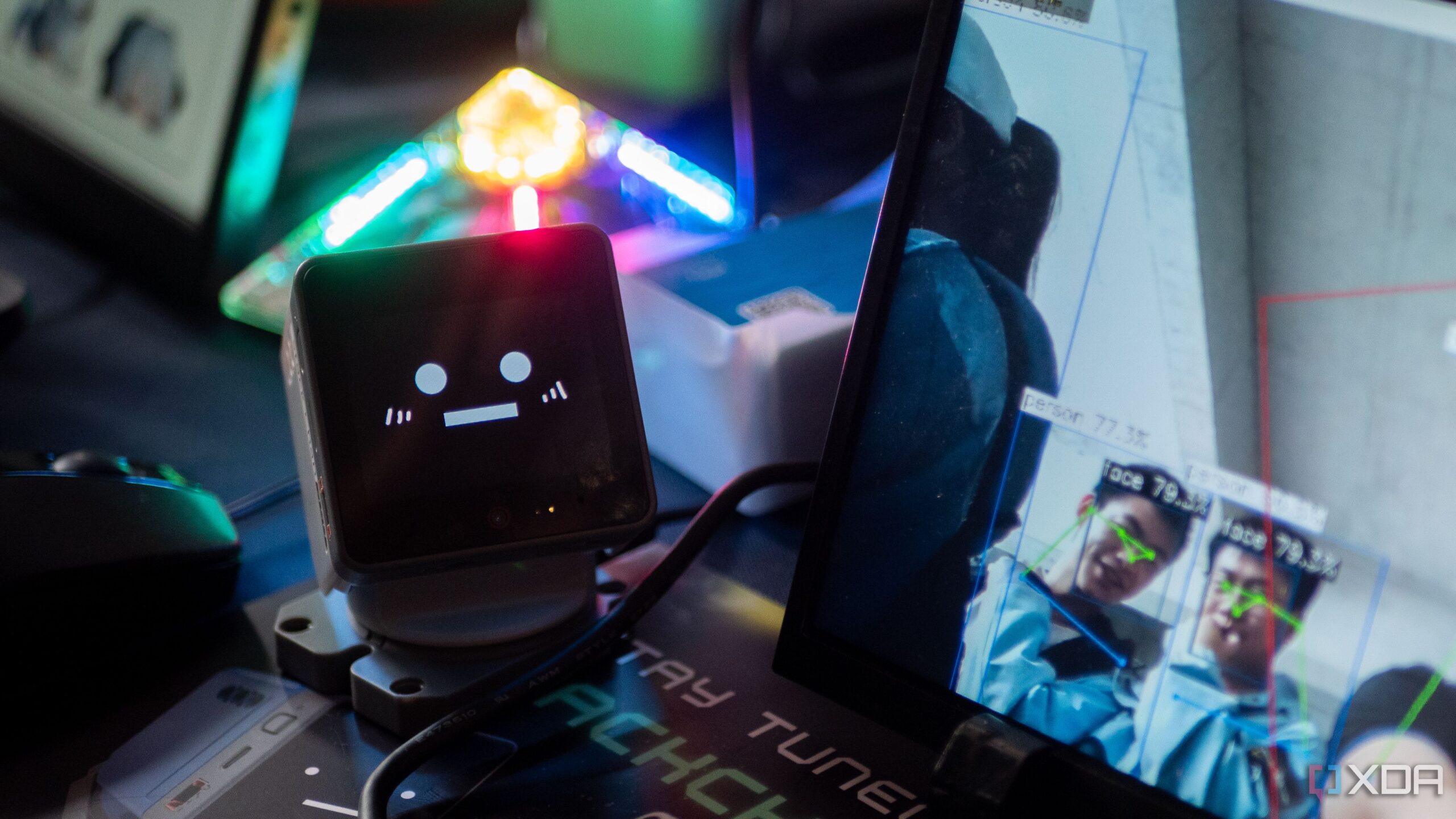
Maker Faire Shenzhen showcased a range of innovative DIY smart home projects that challenge conventional ideas about home automation. Attendees discovered not just flashy prototypes but practical solutions focused on reliability, privacy, and efficiency. These projects, born from creativity and ingenuity, offer alternatives to mainstream smart home products available in retail outlets.
The event revealed numerous inventive concepts that attendees could easily integrate into their own homes. Among these, several stood out for their unique functionalities and design.
Notable Innovations from Maker Faire Shenzhen
One of the standout devices was the Astrion Home Assistant controller developed by Sanytron. This dedicated remote control is designed specifically for Home Assistant, featuring its own speakers, a microphone, and a user-friendly touchscreen. The device is powered by a rechargeable 2,000 mAh battery and can control any device compatible with Home Assistant. Users can even repurpose it as a Google TV remote while retaining functionality for lighting and other smart home applications. Another intriguing product from Sanytron is the “Ultra Bar,” a customizable input device with detachable buttons, designed to enhance user interaction with computers.
From M5Stack, the Stack Chan 450 drew attention for its playful design and capabilities. This small robot, equipped with a camera and local computer vision processor, can recognize faces and respond to hand gestures. Originally created by developer Shinya Ishikawa, the latest iteration processes video feeds using the LLM-8850 acceleration card. While primarily entertaining, Stack Chan also serves as a reminder of the potential for engaging technology in home environments.
Functional Applications and Open-Source Solutions
A game-changing project unveiled at the event was the Openterface plug-and-play KVM, which allows users to repurpose old laptops as monitors. This open-source solution functions without network access, emulating keyboard, mouse, and display signals directly to another machine. By connecting via VGA or HDMI, users can control their target machines seamlessly. The plug-and-play nature of this device, requiring no additional software installation, impressed many attendees, highlighting the simplicity and effectiveness of open-source technology.
At the Seeed Studio booth, an interactive AI display caught the eye. This device listens for nearby movement, indicated by a blinking LED, and responds to inquiries with emojis that reflect the mood of its text responses. Although not commercially available, the concept is straightforward enough for DIY enthusiasts to replicate. By integrating a local language model, a circular display, and presence sensors, individuals can create their own customized voice assistants that respond contextually to users.
Another innovative entry, the Camthink NE301, is a local-first AI camera capable of processing images using the YOLOv8 model at 25 frames per second. This camera excels in local image classification, detecting various objects without relying on external servers. It features multiple power options, including Power over Ethernet and battery operation, making it versatile for different environments. The NE301 stands out from many alternatives, as it is designed specifically for efficient local processing, appealing to users concerned with data privacy.
Lastly, the Lilygo T-Bao combined robotics and imaging technology, featuring an ESP32-S3-CAM that can move autonomously while capturing video and audio. This niche product allows for innovative uses in surveillance or entertainment, demonstrating the creative potential of merging robotics with smart home technology.
As the smart home landscape continues to evolve, projects showcased at Maker Faire Shenzhen exemplify a shift towards more practical, user-driven solutions. The innovative spirit of these DIY projects not only inspires creativity but also encourages individuals to explore their own smart home capabilities. With a focus on functionality and community involvement, these creations may redefine how we approach home automation in the future.

Robinhood Stock Surges 2.5% Today Amid Tech Market Recovery

Philadelphia’s Earth Month Kicks Off with Free Events in Parks

GSK’s Inhaler Decision Sparks Health Concerns for Children

Bradford’s Fish Fry Fridays Offer Community Spirit and Flavor

Speculation Rises on Shutdowns During Trump’s Potential Presidency

Samsung Galaxy Watch 9 to Feature Larger Battery, Report Reveals

Inventors Find New Purpose Through Unconventional Paths

UConn Huskies Aim for Back-to-Back Titles in 2026 NCAA Tournament

U.S. Mine Countermeasure Ships Dock in Malaysia for Logistics Stop

University of Hawaiʻi at Mānoa Joins $25.6M AI Initiative for Disaster Monitoring

$2.2 Million Boost for Cancer Research and Training in Hawaiʻi

ALMA Discovers Companion Orbiting Red Giant Star π 1 Gruis

Sacituzumab Govitecan Shows Promise for HR+/HER2− Breast Cancer

币安人生 Sees $15.92 Million in Trading Volume Amid Market Fluctuations

New Gel Offers Hope for Regrowing Tooth Enamel in Dentistry

CAVA Group Shares Surge 5.1% Amid Mixed Analyst Ratings

Christian Bale in Talks to Join Leonardo DiCaprio in Heat 2

Supreme Court to Review Birthright Citizenship for Children of Immigrants
-
Science9 months ago
University of Hawaiʻi at Mānoa Joins $25.6M AI Initiative for Disaster Monitoring
-
 Health7 months ago
$2.2 Million Boost for Cancer Research and Training in Hawaiʻi
-
 Science9 months ago
ALMA Discovers Companion Orbiting Red Giant Star π 1 Gruis
-
 Health7 months ago
Sacituzumab Govitecan Shows Promise for HR+/HER2− Breast Cancer
-
Politics5 months ago
币安人生 Sees $15.92 Million in Trading Volume Amid Market Fluctuations
-
 Health9 months ago
New Gel Offers Hope for Regrowing Tooth Enamel in Dentistry
-
 Business8 months ago
CAVA Group Shares Surge 5.1% Amid Mixed Analyst Ratings
-
 Entertainment9 months ago
Christian Bale in Talks to Join Leonardo DiCaprio in Heat 2
-
 Politics8 months ago
Supreme Court to Review Birthright Citizenship for Children of Immigrants
-

 Lifestyle8 months ago
Art Deco and Traditional Designs Set to Transform Homes in 2026
-

 Lifestyle8 months ago
Fernando Mendoza Secures Maxwell and O’Brien Awards Ahead of Heisman
-

 World8 months ago
Swiss Residents Reject 50% Inheritance Tax on Wealthy