
Business
Analysts Warn of Economic Challenges for Trump One Year In

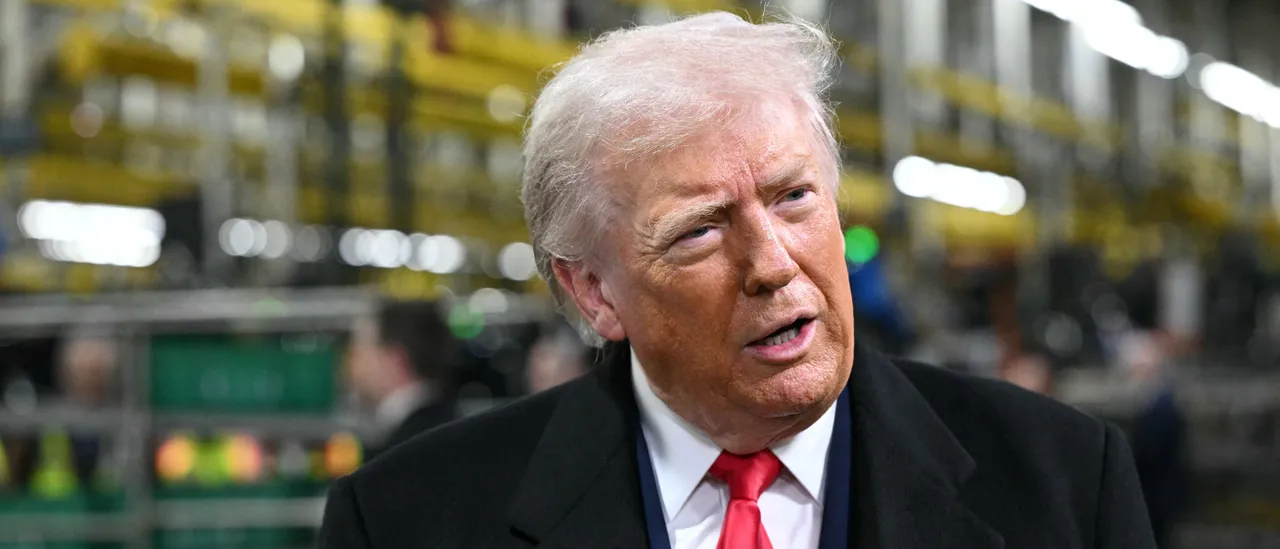
President Donald Trump faces significant challenges in his second term as new polling indicates a marked decline in American confidence regarding the economy. Recent surveys, including one from the Wall Street Journal released on January 16, 2026, revealed that nearly half of respondents believe the U.S. economy has worsened over the past year, contrasting sharply with only 35% who feel it has improved.
Concerns about economic policy uncertainty and persistent inflation appear to be driving this pessimism. According to Peter C. Earle, Director of Economics and Economic Freedom at the American Institute for Economic Research (AIER), “A major underappreciated factor in the growing economic pessimism is ongoing policy uncertainty.” Earle pointed to the Economic Policy Uncertainty Index, which remains high despite seemingly positive economic indicators. He noted that when individuals perceive instability in economic rules, it leads to defensive behaviors like postponing major purchases and increased savings, resulting in a drop in overall confidence.
The divergence between “soft” data, such as consumer sentiment, and “hard” data, like GDP and employment figures, has become pronounced over the past two years. Earle highlighted that while hard data still appears solid, surveys indicate that households and small businesses are feeling the strain. “Historically, that kind of gap doesn’t resolve by surveys ‘catching up’ to GDP or corporate performance,” he explained.
In December 2025, consumer confidence declined further, with the Conference Board’s Consumer Confidence Index falling by 3.8 points to 89.1. A survey conducted by the Conference Board on January 15 found that 43% of U.S. CEOs identified uncertainty as their top economic concern, significantly higher than the 29% of CEOs globally who felt the same way.
Despite this gloomy outlook, Trump has asserted that the economy is performing well. During a speech at the Detroit Economic Club on January 13, he claimed that inflation had been “defeated” under his administration. “Under our administration, growth is exploding, productivity is soaring, investment is booming, incomes are rising, inflation is defeated,” Trump stated.
White House Press Secretary Karoline Leavitt echoed these sentiments, stating that Trump has “defeated the inflation crisis” inherited from former President Joe Biden. White House spokesperson Kush Desai emphasized that ongoing economic improvements are evident, including reduced inflation rates and increased investments in the U.S.
Yet, Earle suggests that the administration’s optimistic portrayal of the economy may contribute to public skepticism. He argued that the dismissal of affordability issues by the White House has significant consequences. “Americans now have two presidents in a row who have lied about the level of inflation when they entered office,” Earle commented. He stressed that while inflation may be slowing, many costs, such as housing and energy, continue to rise, leading to a disconnect between official reassurances and the lived experience of many households.
The perception of institutional credibility is also at stake, according to Earle. He noted that the public’s trust is eroded when they believe that politically sensitive issues are handled evasively, reducing the effectiveness of positive economic messaging.
A CNN poll released on January 16 revealed that 55% of voters believe Trump’s policies have worsened the U.S. economy, while only 32% think they have improved conditions. Additionally, 64% indicated that the president has not done enough to address rising prices of everyday goods. Overall, 58% of respondents rated the first year of Trump’s second term as a “failure.”
Wayne Winegarden, a senior fellow in economics at the Pacific Research Institute, commented on the troubling economic landscape. He noted that Trump’s policies have often been erratic and counterproductive, contributing to weakened employment growth. “While several macroeconomic numbers have remained positive through the third quarter, the risk is that the broader economic environment will appreciably weaken throughout 2026,” Winegarden warned.
The Bureau of Labor Statistics reported that nonfarm payrolls rose by only 50,000 in December 2025, with the unemployment rate holding steady at 4.4%. The Consumer Price Index increased by 0.3% on a seasonally adjusted basis in December, while the overall index rose by 2.7% over the past year.
Despite some positive signs, such as a stronger-than-expected growth rate of 4.3% in the third quarter of 2025, the economic outlook remains precarious. As the uncertainties continue, it is clear that both the administration and the American public face significant challenges in navigating the current economic climate.

Robinhood Stock Surges 2.5% Today Amid Tech Market Recovery

Philadelphia’s Earth Month Kicks Off with Free Events in Parks

GSK’s Inhaler Decision Sparks Health Concerns for Children

Bradford’s Fish Fry Fridays Offer Community Spirit and Flavor

Speculation Rises on Shutdowns During Trump’s Potential Presidency

Samsung Galaxy Watch 9 to Feature Larger Battery, Report Reveals

Inventors Find New Purpose Through Unconventional Paths

UConn Huskies Aim for Back-to-Back Titles in 2026 NCAA Tournament

U.S. Mine Countermeasure Ships Dock in Malaysia for Logistics Stop

University of Hawaiʻi at Mānoa Joins $25.6M AI Initiative for Disaster Monitoring

$2.2 Million Boost for Cancer Research and Training in Hawaiʻi

ALMA Discovers Companion Orbiting Red Giant Star π 1 Gruis

Sacituzumab Govitecan Shows Promise for HR+/HER2− Breast Cancer

币安人生 Sees $15.92 Million in Trading Volume Amid Market Fluctuations

New Gel Offers Hope for Regrowing Tooth Enamel in Dentistry

CAVA Group Shares Surge 5.1% Amid Mixed Analyst Ratings

Christian Bale in Talks to Join Leonardo DiCaprio in Heat 2

Supreme Court to Review Birthright Citizenship for Children of Immigrants
-
Science9 months ago
University of Hawaiʻi at Mānoa Joins $25.6M AI Initiative for Disaster Monitoring
-
 Health7 months ago
$2.2 Million Boost for Cancer Research and Training in Hawaiʻi
-
 Science8 months ago
ALMA Discovers Companion Orbiting Red Giant Star π 1 Gruis
-
 Health7 months ago
Sacituzumab Govitecan Shows Promise for HR+/HER2− Breast Cancer
-
Politics5 months ago
币安人生 Sees $15.92 Million in Trading Volume Amid Market Fluctuations
-
 Health9 months ago
New Gel Offers Hope for Regrowing Tooth Enamel in Dentistry
-
 Business7 months ago
CAVA Group Shares Surge 5.1% Amid Mixed Analyst Ratings
-
 Entertainment8 months ago
Christian Bale in Talks to Join Leonardo DiCaprio in Heat 2
-
 Politics7 months ago
Supreme Court to Review Birthright Citizenship for Children of Immigrants
-

 Lifestyle8 months ago
Art Deco and Traditional Designs Set to Transform Homes in 2026
-

 Lifestyle7 months ago
Fernando Mendoza Secures Maxwell and O’Brien Awards Ahead of Heisman
-

 World8 months ago
Swiss Residents Reject 50% Inheritance Tax on Wealthy