
Business
Data Centers Drive Fossil Fuel Demand, Warns Utility CEO

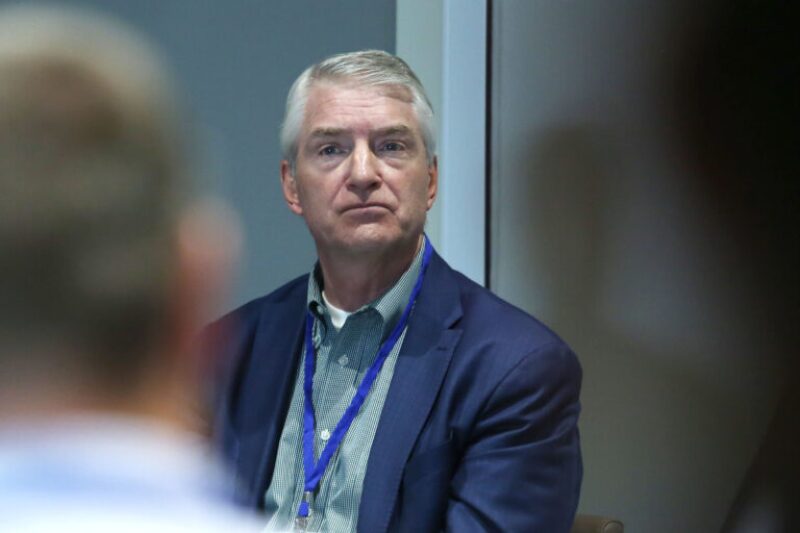
The rapid expansion of data centers is likely to prolong the reliance on fossil fuels, as noted by Brian Bird, President and CEO of NorthWestern Energy. Speaking to the Downtown Sioux Falls Rotary Club on Monday, Bird emphasized that while there are significant environmental concerns tied to these facilities, they also present a substantial opportunity for utility companies after a period of stagnant electricity demand.
Bird highlighted that the growing demand for electricity from massive data centers, which can span between 100 to 1,000 acres, will necessitate the construction of new fossil-fuel power plants. These facilities, essential for supporting advancements in artificial intelligence and cryptocurrency operations, can consume up to 1,000 megawatts of power—equivalent to the needs of approximately 800,000 residential customers. He pointed out that South Dakota’s largest data center currently consumes 30 megawatts, but proposals for even larger centers are in the works.
Potential Environmental Impact and Future Energy Needs
According to a report from the Congressional Research Service, data centers accounted for 4.4% of annual electricity consumption in the United States, a figure projected to triple by the end of the decade. NorthWestern Energy, headquartered in Sioux Falls, supplies natural gas and electricity to customers across Montana and eastern South Dakota, as well as parts of Nebraska and Yellowstone National Park. The company is currently pursuing a merger with Black Hills Energy, driven in part by the anticipated increase in demand for energy from data centers.
Bird asserted that addressing the energy needs of these centers will primarily hinge on coal and natural gas plants, rather than relying on more intermittent sources like wind and solar. He expressed skepticism about the effectiveness of current battery storage technologies, which he noted have only about four hours of storage capability and perform inadequately in low temperatures. He suggested that the growth of data centers could reignite interest in nuclear power within South Dakota, a state that currently lacks any nuclear facilities. Should battery technology advance to provide around 100 hours of storage, the dynamics might shift, allowing for a more significant role for renewable energy paired with battery systems.
Bird commented on the inevitability of increased fossil fuel consumption as demand for data centers rises. He pointed out that if South Dakota does not accommodate these facilities, they are likely to be established in regions with less stringent environmental regulations, resulting in a missed opportunity for local job creation and revenue generation.
Legislative Challenges and Financial Considerations
During the Rotary meeting, Bird addressed the importance of legislative support for data center development, specifically mentioning the necessity of a sales tax exemption for the software and hardware used by these facilities. He referred to a recent defeat of a state House Committee bill that would have provided such exemptions, which he claimed are vital for attracting developers. A spokesperson for a proposed 430-megawatt data center in Deuel County indicated that without the proposed legislation, the facility could miss out on approximately $500 million in sales tax relief during hardware and software upgrades.
In addition to discussing data centers, Bird highlighted a pending state bill aimed at providing utilities with wildfire liability protections. Under this proposed legislation, utilities would be required to submit wildfire mitigation plans to the state Public Utilities Commission, with annual compliance reports mandated. Bird underscored the need for utilities to be accountable for economic damages caused by their equipment during fires while also warning that excessive punitive damages could drive up customer rates and jeopardize financial stability.
He cited a January 2025 analysis from the U.S. Department of the Treasury, which revealed that homeowners in high-risk areas are already paying significantly more for insurance, with policyholders in the most vulnerable ZIP codes facing premiums 82% higher than those in the lowest-risk zones. The wildfire liability bill has already passed the state Senate with a vote of 29-4 and is awaiting a hearing from the House Commerce and Energy Committee.
As the conversation around energy consumption and environmental responsibility continues to evolve, Bird’s insights underscore the complex intersection of technological advancement, utility demands, and legislative action in shaping the future energy landscape in South Dakota and beyond.

Robinhood Stock Surges 2.5% Today Amid Tech Market Recovery

Philadelphia’s Earth Month Kicks Off with Free Events in Parks

GSK’s Inhaler Decision Sparks Health Concerns for Children

Bradford’s Fish Fry Fridays Offer Community Spirit and Flavor

Speculation Rises on Shutdowns During Trump’s Potential Presidency

Samsung Galaxy Watch 9 to Feature Larger Battery, Report Reveals

Inventors Find New Purpose Through Unconventional Paths

UConn Huskies Aim for Back-to-Back Titles in 2026 NCAA Tournament

U.S. Mine Countermeasure Ships Dock in Malaysia for Logistics Stop

University of Hawaiʻi at Mānoa Joins $25.6M AI Initiative for Disaster Monitoring

$2.2 Million Boost for Cancer Research and Training in Hawaiʻi

ALMA Discovers Companion Orbiting Red Giant Star π 1 Gruis

Sacituzumab Govitecan Shows Promise for HR+/HER2− Breast Cancer

币安人生 Sees $15.92 Million in Trading Volume Amid Market Fluctuations

New Gel Offers Hope for Regrowing Tooth Enamel in Dentistry

CAVA Group Shares Surge 5.1% Amid Mixed Analyst Ratings

Supreme Court to Review Birthright Citizenship for Children of Immigrants

Christian Bale in Talks to Join Leonardo DiCaprio in Heat 2
-
Science9 months ago
University of Hawaiʻi at Mānoa Joins $25.6M AI Initiative for Disaster Monitoring
-
 Health7 months ago
$2.2 Million Boost for Cancer Research and Training in Hawaiʻi
-
 Science8 months ago
ALMA Discovers Companion Orbiting Red Giant Star π 1 Gruis
-
 Health7 months ago
Sacituzumab Govitecan Shows Promise for HR+/HER2− Breast Cancer
-
Politics5 months ago
币安人生 Sees $15.92 Million in Trading Volume Amid Market Fluctuations
-
 Health8 months ago
New Gel Offers Hope for Regrowing Tooth Enamel in Dentistry
-
 Business7 months ago
CAVA Group Shares Surge 5.1% Amid Mixed Analyst Ratings
-
 Politics7 months ago
Supreme Court to Review Birthright Citizenship for Children of Immigrants
-
 Entertainment8 months ago
Christian Bale in Talks to Join Leonardo DiCaprio in Heat 2
-

 Lifestyle8 months ago
Art Deco and Traditional Designs Set to Transform Homes in 2026
-

 Lifestyle7 months ago
Fernando Mendoza Secures Maxwell and O’Brien Awards Ahead of Heisman
-

 World8 months ago
Swiss Residents Reject 50% Inheritance Tax on Wealthy