
Business
Oahu Office Vacancy Rate Hits Four-Year Low, Cautions Ahead for 2026

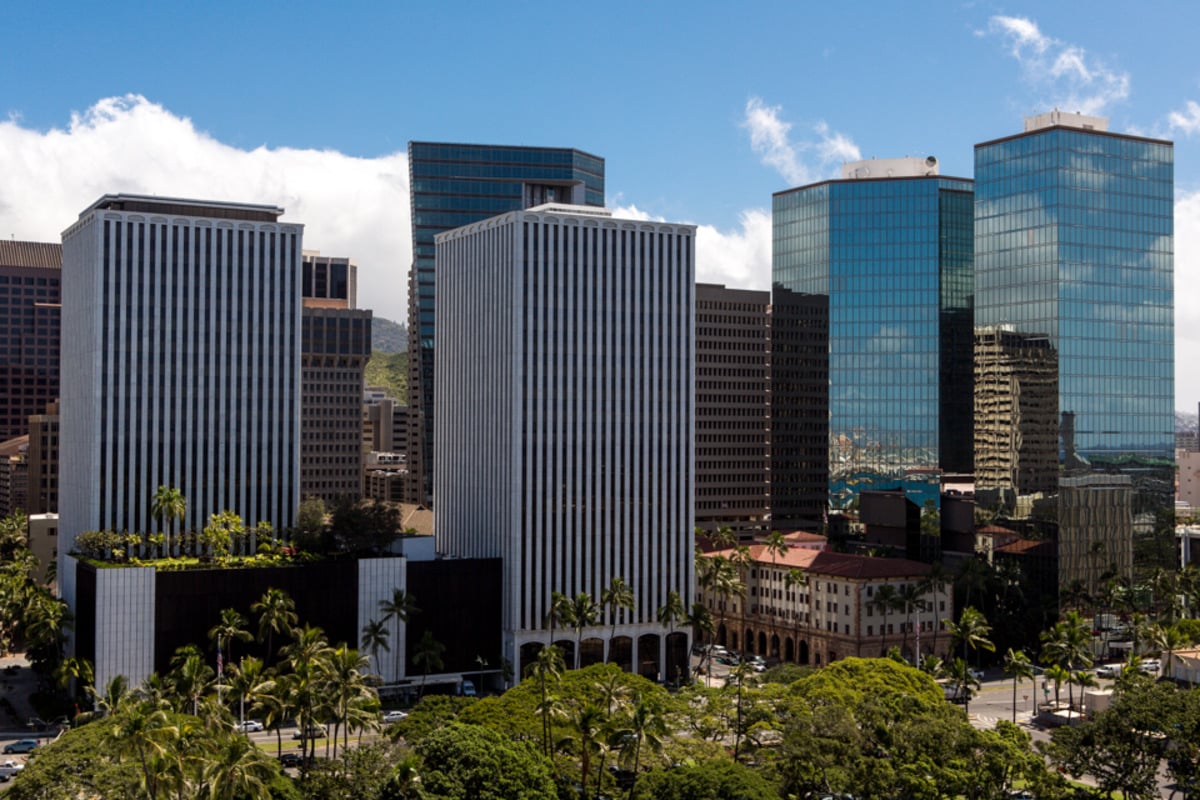
Oahu’s office vacancy rate declined to 12.59% at the end of 2025, marking the lowest level in four years. This reduction offers a glimmer of hope for landlords and investors in downtown Honolulu, reflecting a combination of lease renewals, targeted office conversions, and a limited pipeline of new construction. Despite this positive trend, experts caution that broader economic trends and fluctuations in the tech sector could quickly alter the market dynamics.
According to a report by Colliers Hawaii, published in Pacific Business News, the office vacancy rate of 12.59% signifies a slight improvement from 12.73% in the fourth quarter of 2024. The report underscores a cautious outlook for 2026, highlighting potential risks associated with an AI-driven leasing bubble and rising cost pressures. These challenges may cause both landlords and tenants to reconsider long-term leasing commitments.
The latest decline in vacancy rates continues a gradual tightening trend that Colliers has been monitoring. The analysis indicates that the conversion of older or underused office buildings into housing or mixed-use spaces has significantly contributed to reducing the available office inventory. Projects like the Davies Pacific Center conversion, reported by Hawaii News Now, exemplify this adaptive reuse strategy. Such initiatives have effectively absorbed excess office space while demand varies across different submarkets.
Despite these positive developments, Colliers warns that the emergence of an AI leasing bubble and increasing operational costs could impede progress as we enter 2026. The firm’s summary suggests that a decrease in vacancy rates does not necessarily equate to a fully healthy market, indicating that careful monitoring of economic conditions remains essential.
Data from CBRE presents a mixed perspective for 2025, reporting fluctuations in net absorption alongside noticeable variations in asking rents. These shifts imply that landlords are actively testing price points while tenants explore their options. Such volatility raises questions about the sustainability of recent gains unless demand from larger office users becomes more stable.
As 2026 approaches, several key factors will shape the office market landscape. The first is whether ongoing conversion projects will stay on track, permanently reducing office inventory—a critical element highlighted by Colliers. Second, the commitment of tech and professional firms to sign leases will be pivotal. Finally, the trajectory of financing and operating costs will also play a crucial role. Any of these factors could influence vacancy rates, with a handful of significant lease agreements capable of making a substantial impact.
For owners, tenants, and employees in Honolulu, the decline in the vacancy rate serves as a positive indicator, though it remains a tentative victory. The market is expected to see cautious leasing practices, selective conversions, and heightened scrutiny of major corporate decisions as the office landscape continues to evolve in 2026.

Robinhood Stock Surges 2.5% Today Amid Tech Market Recovery

Philadelphia’s Earth Month Kicks Off with Free Events in Parks

GSK’s Inhaler Decision Sparks Health Concerns for Children

Bradford’s Fish Fry Fridays Offer Community Spirit and Flavor

Speculation Rises on Shutdowns During Trump’s Potential Presidency

Samsung Galaxy Watch 9 to Feature Larger Battery, Report Reveals

Inventors Find New Purpose Through Unconventional Paths

UConn Huskies Aim for Back-to-Back Titles in 2026 NCAA Tournament

U.S. Mine Countermeasure Ships Dock in Malaysia for Logistics Stop

University of Hawaiʻi at Mānoa Joins $25.6M AI Initiative for Disaster Monitoring

$2.2 Million Boost for Cancer Research and Training in Hawaiʻi

ALMA Discovers Companion Orbiting Red Giant Star π 1 Gruis

Sacituzumab Govitecan Shows Promise for HR+/HER2− Breast Cancer

币安人生 Sees $15.92 Million in Trading Volume Amid Market Fluctuations

New Gel Offers Hope for Regrowing Tooth Enamel in Dentistry

CAVA Group Shares Surge 5.1% Amid Mixed Analyst Ratings

Christian Bale in Talks to Join Leonardo DiCaprio in Heat 2

Supreme Court to Review Birthright Citizenship for Children of Immigrants
-
Science9 months ago
University of Hawaiʻi at Mānoa Joins $25.6M AI Initiative for Disaster Monitoring
-
 Health7 months ago
$2.2 Million Boost for Cancer Research and Training in Hawaiʻi
-
 Science8 months ago
ALMA Discovers Companion Orbiting Red Giant Star π 1 Gruis
-
 Health7 months ago
Sacituzumab Govitecan Shows Promise for HR+/HER2− Breast Cancer
-
Politics5 months ago
币安人生 Sees $15.92 Million in Trading Volume Amid Market Fluctuations
-
 Health9 months ago
New Gel Offers Hope for Regrowing Tooth Enamel in Dentistry
-
 Business7 months ago
CAVA Group Shares Surge 5.1% Amid Mixed Analyst Ratings
-
 Entertainment8 months ago
Christian Bale in Talks to Join Leonardo DiCaprio in Heat 2
-
 Politics7 months ago
Supreme Court to Review Birthright Citizenship for Children of Immigrants
-

 Lifestyle8 months ago
Art Deco and Traditional Designs Set to Transform Homes in 2026
-

 Lifestyle7 months ago
Fernando Mendoza Secures Maxwell and O’Brien Awards Ahead of Heisman
-

 World8 months ago
Swiss Residents Reject 50% Inheritance Tax on Wealthy