
Business
Quick Commerce Revolutionizes Performance Marketing Strategies

Rising customer acquisition costs and the ineffectiveness of traditional marketing channels have compelled brands to seek innovative strategies for growth. In the current landscape, companies demand more than mere website visits; they expect customers to exhibit clear buying intent and generate measurable revenue. This shift has led to an increased interest in non-endemic advertising and commerce media, as these platforms deliver advertisements during critical buying moments rather than to disengaged audiences.
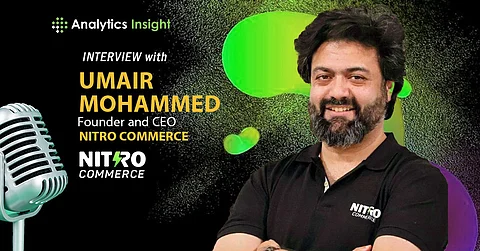
In a recent episode of the Analytics Insight Podcast, host Priya Dialani interviewed Umair Mohammed, Founder and CEO of Nitro Commerce, about how quick commerce is transforming brand performance and enabling retailers to better monetize their digital presence.
Transforming Consumer Engagement
Umair Mohammed established Nitro Commerce in response to a long-observed evolution in consumer behavior. He explained, “It’s not a sudden shift, honestly. It’s been a gradual shift over the last decade of how customers have consumed media, how customers have discovered your product.” He emphasized that digital transformation extends beyond mere online transactions, highlighting the growing role of smartphones in how consumers discover brands.
As consumer journeys transitioned online, advertising models required adaptation. Non-endemic placements emerged as a logical extension of commerce media, allowing merchants to unlock incremental revenue from existing traffic during peak engagement moments.
Quick Commerce: More Than Just a Trend
Initially, even Mohammed had reservations about the longevity of quick commerce. “When quick commerce came in, I think like everybody else, we also thought that quick commerce is a fad,” he admitted. However, user behavior quickly dispelled that skepticism. He referred to quick commerce as “habit-forming software,” likening its impact to ride-hailing platforms that fundamentally altered consumer expectations.
Quick commerce not only expedited delivery times but also transformed buying psychology. Mohammed shared a personal anecdote about ordering batteries before a football match, where an eight-minute delivery created a “wow moment” that permanently shifted his expectations regarding convenience and immediacy.
The growth of quick commerce is particularly evident in India, where an increasing number of users are significantly raising their monthly order frequency while new digital adopters join the ecosystem. These high-frequency buyers represent pure intent, characterized by their desire for immediate fulfillment without the need for planned store visits.
“I think all e-commerce will become quick commerce,” Mohammed predicts, suggesting that while delivery times may not always be as rapid as eight minutes, a trend towards faster, localized fulfillment is inevitable. This shift, powered by dark stores and high-velocity inventory, presents a significant monetization opportunity for brands and retailers.
By integrating commerce media with quick commerce infrastructure, businesses can capture consumer intent at the moment of decision, effectively transforming performance marketing into a transaction-driven growth model. As the landscape continues to evolve, the ability to adapt to these changes will be crucial for brands aiming to thrive in a more competitive digital environment.

Robinhood Stock Surges 2.5% Today Amid Tech Market Recovery

Philadelphia’s Earth Month Kicks Off with Free Events in Parks

GSK’s Inhaler Decision Sparks Health Concerns for Children

Bradford’s Fish Fry Fridays Offer Community Spirit and Flavor

Speculation Rises on Shutdowns During Trump’s Potential Presidency

Samsung Galaxy Watch 9 to Feature Larger Battery, Report Reveals

Inventors Find New Purpose Through Unconventional Paths

UConn Huskies Aim for Back-to-Back Titles in 2026 NCAA Tournament

U.S. Mine Countermeasure Ships Dock in Malaysia for Logistics Stop

University of Hawaiʻi at Mānoa Joins $25.6M AI Initiative for Disaster Monitoring

$2.2 Million Boost for Cancer Research and Training in Hawaiʻi

ALMA Discovers Companion Orbiting Red Giant Star π 1 Gruis

Sacituzumab Govitecan Shows Promise for HR+/HER2− Breast Cancer

币安人生 Sees $15.92 Million in Trading Volume Amid Market Fluctuations

New Gel Offers Hope for Regrowing Tooth Enamel in Dentistry

CAVA Group Shares Surge 5.1% Amid Mixed Analyst Ratings

Christian Bale in Talks to Join Leonardo DiCaprio in Heat 2

Supreme Court to Review Birthright Citizenship for Children of Immigrants
-
Science8 months ago
University of Hawaiʻi at Mānoa Joins $25.6M AI Initiative for Disaster Monitoring
-
 Health7 months ago
$2.2 Million Boost for Cancer Research and Training in Hawaiʻi
-
 Science8 months ago
ALMA Discovers Companion Orbiting Red Giant Star π 1 Gruis
-
 Health7 months ago
Sacituzumab Govitecan Shows Promise for HR+/HER2− Breast Cancer
-
Politics4 months ago
币安人生 Sees $15.92 Million in Trading Volume Amid Market Fluctuations
-
 Health8 months ago
New Gel Offers Hope for Regrowing Tooth Enamel in Dentistry
-
 Business7 months ago
CAVA Group Shares Surge 5.1% Amid Mixed Analyst Ratings
-
 Entertainment8 months ago
Christian Bale in Talks to Join Leonardo DiCaprio in Heat 2
-
 Politics7 months ago
Supreme Court to Review Birthright Citizenship for Children of Immigrants
-

 Lifestyle7 months ago
Fernando Mendoza Secures Maxwell and O’Brien Awards Ahead of Heisman
-

 Lifestyle8 months ago
Art Deco and Traditional Designs Set to Transform Homes in 2026
-

 World7 months ago
Swiss Residents Reject 50% Inheritance Tax on Wealthy