
Health
Indonesia Transforms Toll Roads into Emergency Runways for Jets

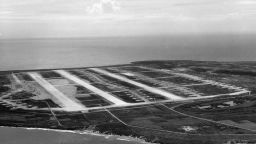
Indonesia is initiating an ambitious plan to convert toll roads into emergency runways for military aircraft, effectively providing the nation with a network of potential landing sites across its extensive archipelago. The country’s air force chief, Marshal Tonny Harjono, announced that the goal is for each of Indonesia’s 39 provinces to have at least one section of toll road designated for this purpose, although no specific timeline has been established for implementation.
In a demonstration held on Wednesday in Lampung province, an Indonesian Air Force F-16 fighter and a Super Tucano attack aircraft successfully landed and took off from the toll road. This event was hailed as a significant step in enhancing Indonesia’s defense capabilities. Deputy Defense Minister Donny Ermawan Taufanto stated, “This success marks an important milestone in strengthening the universal defense system.”
Utilizing highways as military runways is not a novel idea; various countries, including the United States, Finland, and Sweden, have previously demonstrated this capability. The U.S. military is actively exploring the dispersal of its fighter jets across a range of islands in the Pacific, as a strategy to make its air force less vulnerable in potential conflicts, particularly concerning tensions with China.
Despite Indonesia’s ongoing disputes with China over the South China Sea, officials have emphasized that this initiative is not aimed at any particular country. An Indonesian Air Force statement noted, “The use of toll roads as situational alternative runways is expected to strengthen the operational readiness of the Indonesian Air Force in facing various potential threats, without reducing the primary function of toll roads as public transportation infrastructure.”
This approach is seen as a cost-effective solution for Indonesia, the world’s largest archipelago, which encompasses more than 6,000 inhabited islands stretched over a distance of approximately 3,100 miles (5,000 kilometers). The high operational costs and logistical challenges of maintaining an aircraft carrier, which can run into billions of dollars, make this strategy appealing. Collin Koh, a research fellow at the S. Rajaratnam School of International Studies in Singapore, remarked, “An aircraft carrier doesn’t seem that attractive as a cost-effective platform.”
Koh further explained that the concept of designating toll roads as emergency runways offers greater strategic flexibility. “Having countless toll roads and highways earmarked as emergency military runways across the entire archipelago makes more strategic and operational sense,” he said. The risk associated with losing a single aircraft carrier is significantly higher compared to the multiple roadways available for military operations.
The Indonesian Air Force’s plan includes establishing sections of toll roads that span 3,000 meters (almost two miles) to accommodate military aircraft operations. Harjono praised the skill of Indonesian pilots who managed to land on roadways that are only half the width of standard airport runways. “Toll roads are only about 24 meters (79 feet) wide, narrower than airport runways at 45 to 60 meters. It’s risky, but Air Force pilots are trained for these conditions,” he noted, as reported by the government-run Antara news agency.
As Indonesia moves forward with this innovative strategy, the implications for its national defense and operational readiness will be closely observed both domestically and internationally. The initiative not only highlights Indonesia’s proactive approach to defense but also underscores the country’s unique geographical challenges and its efforts to adapt to them effectively.

Robinhood Stock Surges 2.5% Today Amid Tech Market Recovery

Philadelphia’s Earth Month Kicks Off with Free Events in Parks

GSK’s Inhaler Decision Sparks Health Concerns for Children

Bradford’s Fish Fry Fridays Offer Community Spirit and Flavor

Speculation Rises on Shutdowns During Trump’s Potential Presidency

Samsung Galaxy Watch 9 to Feature Larger Battery, Report Reveals

Inventors Find New Purpose Through Unconventional Paths

UConn Huskies Aim for Back-to-Back Titles in 2026 NCAA Tournament

U.S. Mine Countermeasure Ships Dock in Malaysia for Logistics Stop

University of Hawaiʻi at Mānoa Joins $25.6M AI Initiative for Disaster Monitoring

$2.2 Million Boost for Cancer Research and Training in Hawaiʻi

ALMA Discovers Companion Orbiting Red Giant Star π 1 Gruis

Sacituzumab Govitecan Shows Promise for HR+/HER2− Breast Cancer

币安人生 Sees $15.92 Million in Trading Volume Amid Market Fluctuations

New Gel Offers Hope for Regrowing Tooth Enamel in Dentistry

CAVA Group Shares Surge 5.1% Amid Mixed Analyst Ratings

Christian Bale in Talks to Join Leonardo DiCaprio in Heat 2

Supreme Court to Review Birthright Citizenship for Children of Immigrants
-
Science9 months ago
University of Hawaiʻi at Mānoa Joins $25.6M AI Initiative for Disaster Monitoring
-
 Health7 months ago
$2.2 Million Boost for Cancer Research and Training in Hawaiʻi
-
 Science8 months ago
ALMA Discovers Companion Orbiting Red Giant Star π 1 Gruis
-
 Health7 months ago
Sacituzumab Govitecan Shows Promise for HR+/HER2− Breast Cancer
-
Politics5 months ago
币安人生 Sees $15.92 Million in Trading Volume Amid Market Fluctuations
-
 Health8 months ago
New Gel Offers Hope for Regrowing Tooth Enamel in Dentistry
-
 Business7 months ago
CAVA Group Shares Surge 5.1% Amid Mixed Analyst Ratings
-
 Entertainment8 months ago
Christian Bale in Talks to Join Leonardo DiCaprio in Heat 2
-
 Politics7 months ago
Supreme Court to Review Birthright Citizenship for Children of Immigrants
-

 Lifestyle8 months ago
Art Deco and Traditional Designs Set to Transform Homes in 2026
-

 Lifestyle7 months ago
Fernando Mendoza Secures Maxwell and O’Brien Awards Ahead of Heisman
-

 World8 months ago
Swiss Residents Reject 50% Inheritance Tax on Wealthy