
Health
Interventional Psychiatry Offers New Hope for Depression Treatment

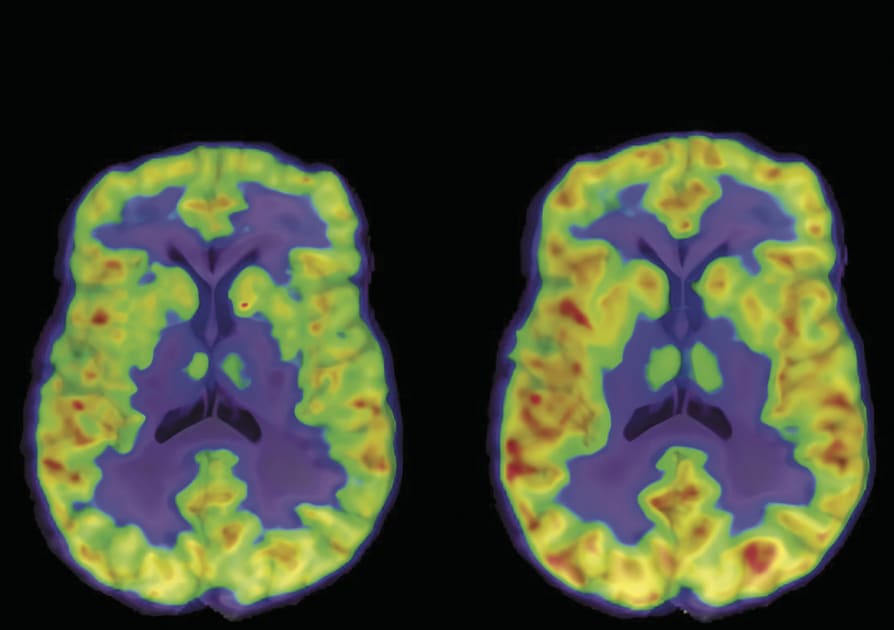
The field of psychiatry is witnessing a significant evolution with the rise of interventional psychiatry, which seeks to address treatment-resistant major depressive disorder (MDD). Traditional methods, including psychotherapy, lifestyle changes, and antidepressant medications, have proven effective for many but leave nearly one-third of patients without adequate relief. At the forefront of this emerging subspecialty is the collaboration between researchers at Yale School of Medicine and clinicians at Yale New Haven Psychiatric Hospital. Together, they are pioneering innovative treatments that aim to provide hope and healing for those suffering from debilitating depression.
Dr. Rachel Katz, an assistant professor of psychiatry, highlights the unique hybrid research-clinical model of their Interventional Psychiatry Service. “Our service is distinctive because we integrate cutting-edge research into our clinical practice,” Katz explains. This integration is crucial as MDD is not only a leading cause of disability globally, but it also incurred costs exceeding $333 billion in the United States alone in 2019, according to the World Health Organization.
The symptoms of MDD extend beyond persistent sadness, often including low energy, sleep disturbances, and suicidal ideation. Tragically, suicide is among the most common causes of death in the United States, particularly affecting adolescents and young adults. For approximately one-third of patients with MDD, standard interventions fail to provide relief, underscoring the urgent need for alternative approaches.
In 2009, the term “interventional psychiatry” was coined to describe the application of novel techniques targeting brain circuitry associated with psychiatric disorders. While some treatments, such as electroconvulsive therapy (ECT), have been used for decades, their unification under this new umbrella marks a significant development in mental health care. ECT, discovered in 1938, resets neural activity through controlled electric currents, while transcranial magnetic stimulation (TMS), originally developed for stroke rehabilitation, is now used to modulate brain activity and improve mood.
The Yale Depression Research Program has been a leader in exploring the potential of ketamine, a drug discovered in the 1990s for its rapid antidepressant effects. “Interventional psychiatry has existed in various forms for some time, but its integration into a cohesive framework is a recent and exciting development,” Katz notes. The Interventional Psychiatry Service at Yale was established in 2013, evolving into a comprehensive program that combines innovative treatments with research initiatives.
Current offerings include ECT, TMS, intravenous ketamine therapy, and esketamine nasal spray, along with opportunities for patients to participate in clinical trials. Dr. Robert Ostroff, co-medical director of the service, emphasizes the importance of cross-training for practitioners to ensure personalized treatment plans. “We want to avoid a one-size-fits-all approach,” Ostroff explains, stressing the need for clinicians to be adept in all treatment modalities.
Katz also co-directs the TMS service, utilizing pulsatile magnetic fields to stimulate brain tissue. This non-invasive procedure allows clinicians to adjust frequency and stimulation areas to manipulate brain activity effectively. Research indicates that interventional modalities can significantly benefit patients who do not respond to traditional therapies, providing hope for faster recovery.
At Yale, the clinical team is led by Dr. Gerard Sanacora, co-director of the Interventional Psychiatry Service, and Samuel Wilkinson, who focuses on advancing treatment modalities. Dr. Sophie Holmes directs research on the biological mechanisms of depression, contributing vital insights that inform clinical practices.
The origins of interventional psychiatry research at Yale can be traced back to the work of pioneers like Dr. John Krystal, who was instrumental in demonstrating ketamine’s potential as a rapid treatment for severe depression. Traditional antidepressants target neurotransmitters like serotonin, often taking weeks to show effects. Yale researchers shifted focus to the glutamatergic system, which plays a crucial role in brain signaling and neuroplasticity. Ketamine’s rapid action stems from its ability to block the N-methyl-D-aspartate (NMDA) receptor, modulating glutamate signals.
In 2000, Yale researchers published a groundbreaking study showcasing ketamine’s rapid efficacy in treating severe depression, prompting widespread interest in its use. This work contributed to the Food and Drug Administration (FDA) approval of esketamine nasal spray in 2019 for treatment-resistant depression. Recent studies, including one published in the American Journal of Psychiatry, analyzed data from over 58,000 patients receiving more than 1.4 million doses of esketamine, aiming to assess risks and usage patterns associated with this novel therapy.
Holmes is leading efforts to investigate the neurobiological impact of ketamine using advanced imaging techniques. Her team conducted pioneering studies using positron emission tomography (PET) to visualize neuroplasticity in the living human brain. “We are attempting to see whether ketamine helps rebuild lost connections between neurons,” she explains.
Ongoing research also includes a large study comparing the FDA-approved intranasal esketamine to intravenous ketamine, addressing existing controversies regarding their efficacy. Additionally, Yale researchers are conducting clinical trials exploring the use of ketamine infusions to treat depression in patients with Parkinson’s disease, a population often overlooked in depression treatment.
Looking to the future, the Yale Depression Research Program is investigating novel therapeutics to enhance treatment options. Collaborating with the University of California, San Francisco, researchers are launching a clinical trial to assess the potential of psilocybin, a compound found in “magic mushrooms,” for treating depression in Parkinson’s patients. “We believe psilocybin may induce neuroplasticity similar to ketamine,” says Holmes.
As the landscape of depression treatment evolves, Katz expresses optimism about the growing array of strategies available to mental health professionals. “We are learning more about how to help patients recover quickly and safely,” she concludes. The progress in interventional psychiatry not only holds potential for individual patients but also aims to alleviate the broader societal burden of depression.

Robinhood Stock Surges 2.5% Today Amid Tech Market Recovery

Philadelphia’s Earth Month Kicks Off with Free Events in Parks

GSK’s Inhaler Decision Sparks Health Concerns for Children

Bradford’s Fish Fry Fridays Offer Community Spirit and Flavor

Speculation Rises on Shutdowns During Trump’s Potential Presidency

Samsung Galaxy Watch 9 to Feature Larger Battery, Report Reveals

Inventors Find New Purpose Through Unconventional Paths

UConn Huskies Aim for Back-to-Back Titles in 2026 NCAA Tournament

U.S. Mine Countermeasure Ships Dock in Malaysia for Logistics Stop

University of Hawaiʻi at Mānoa Joins $25.6M AI Initiative for Disaster Monitoring

$2.2 Million Boost for Cancer Research and Training in Hawaiʻi

ALMA Discovers Companion Orbiting Red Giant Star π 1 Gruis

Sacituzumab Govitecan Shows Promise for HR+/HER2− Breast Cancer

币安人生 Sees $15.92 Million in Trading Volume Amid Market Fluctuations

New Gel Offers Hope for Regrowing Tooth Enamel in Dentistry

CAVA Group Shares Surge 5.1% Amid Mixed Analyst Ratings

Christian Bale in Talks to Join Leonardo DiCaprio in Heat 2

Supreme Court to Review Birthright Citizenship for Children of Immigrants
-
Science9 months ago
University of Hawaiʻi at Mānoa Joins $25.6M AI Initiative for Disaster Monitoring
-
 Health7 months ago
$2.2 Million Boost for Cancer Research and Training in Hawaiʻi
-
 Science9 months ago
ALMA Discovers Companion Orbiting Red Giant Star π 1 Gruis
-
 Health7 months ago
Sacituzumab Govitecan Shows Promise for HR+/HER2− Breast Cancer
-
Politics5 months ago
币安人生 Sees $15.92 Million in Trading Volume Amid Market Fluctuations
-
 Health9 months ago
New Gel Offers Hope for Regrowing Tooth Enamel in Dentistry
-
 Business8 months ago
CAVA Group Shares Surge 5.1% Amid Mixed Analyst Ratings
-
 Entertainment8 months ago
Christian Bale in Talks to Join Leonardo DiCaprio in Heat 2
-
 Politics8 months ago
Supreme Court to Review Birthright Citizenship for Children of Immigrants
-

 Lifestyle8 months ago
Art Deco and Traditional Designs Set to Transform Homes in 2026
-

 Lifestyle8 months ago
Fernando Mendoza Secures Maxwell and O’Brien Awards Ahead of Heisman
-

 World8 months ago
Swiss Residents Reject 50% Inheritance Tax on Wealthy