
Health
Llamas Lead Breakthrough in Snake Antivenom Development

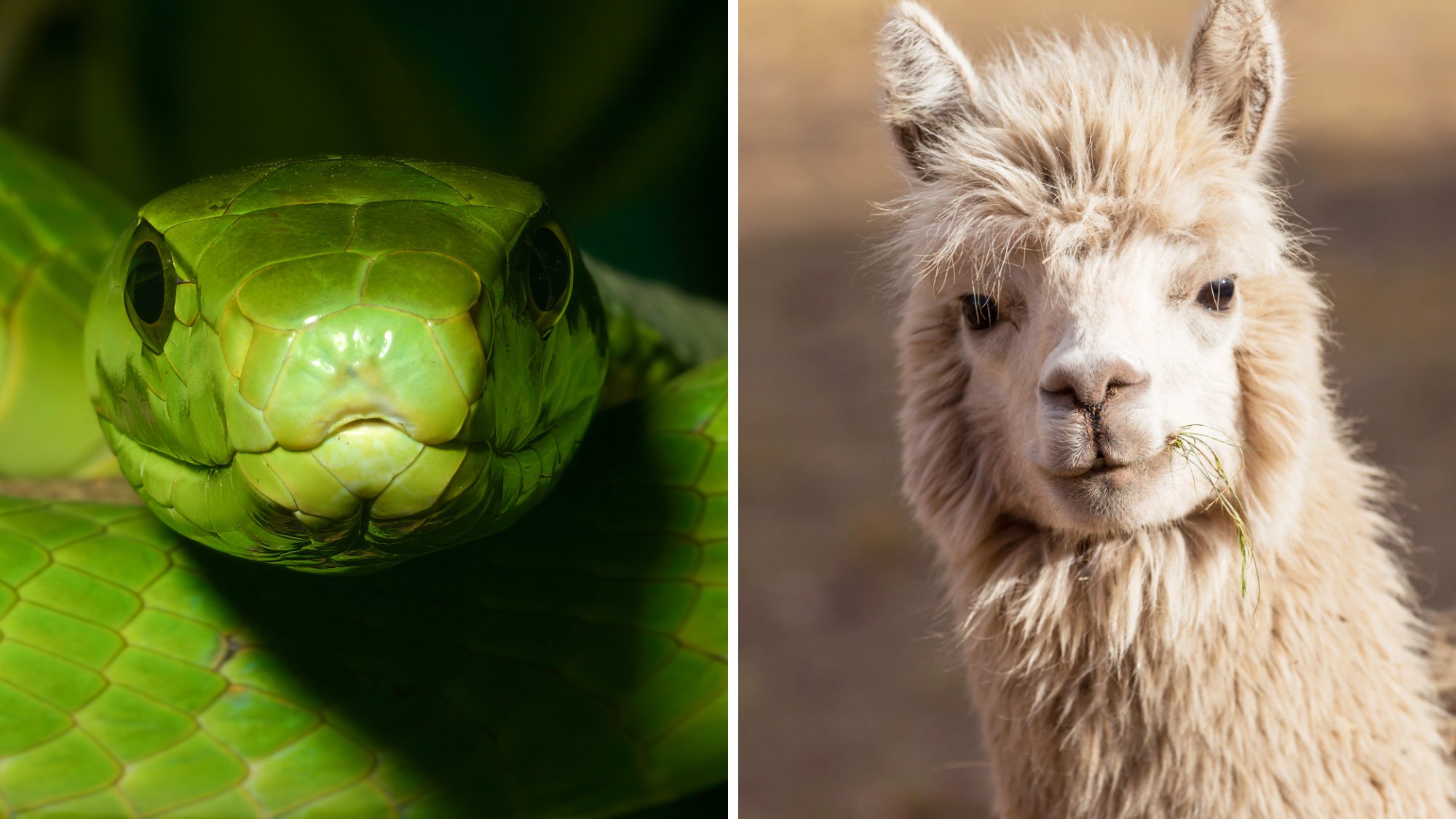
Snakebites continue to pose a serious health threat globally, particularly in rural areas of sub-Saharan Africa. Recently, a groundbreaking study published in the journal Nature highlights a potential solution to improve snake antivenom efficacy by utilizing antibodies derived from llamas and alpacas. This innovative approach aims to address the limitations of current antivenom treatments, which are often expensive and inconsistent.
The study, led by a team at the Technical University of Denmark, reveals that these camelids produce unique heavy-chain-only antibodies that can be engineered into nanobodies. This process may pave the way for new antivenom treatments that are both effective and cost-efficient. The research team immunized llamas and alpacas with venoms from 18 different snake species, hoping to harness these antibodies for medical use.
Venomous snakes account for approximately 10 percent of the world’s 4,000 known species. Among them, the elapids—including lethal species like cobras and mambas—are particularly concerning. According to the World Health Organization, the annual number of reported snakebites in sub-Saharan Africa exceeds 300,000, leading to over 7,000 deaths and around 14,000 limb amputations.
Anne Ljungars, a biological engineer and co-author of the study, explains that elapid venoms contain potent neurotoxins that can rapidly induce paralysis and respiratory failure. The lack of timely treatment and access to effective antivenoms exacerbates the high mortality rates associated with these bites. Elapids, such as the adult black mamba (Dendroaspis polylepis), can produce significant quantities of venom, heightening the threat they pose.
The potential of using nanobodies is noteworthy. Ljungars notes that these antibodies possess high affinity binding similar to regular antibodies but are smaller, allowing for rapid tissue penetration and minimal local damage. Additionally, nanobodies are stable and can be stored in challenging conditions, making them a practical choice for antivenom development.
Initial laboratory trials demonstrated promising results. The new nanobody antivenom successfully prevented deaths in mice exposed to venoms from 17 of the 18 tested snake species. It also showed superior performance compared to the existing commercial antivenom, Inoserp PAN-AFRICA, in preventing tissue necrosis and mortality. However, the study acknowledges that the nanobodies are currently only “partially protective” against certain species like the green and black mambas.
Despite these advancements, the research team faces challenges in funding further clinical trials. The economic viability of developing antivenoms for snakebite victims, who often reside in impoverished regions with limited access to healthcare, remains a significant hurdle. Andreas Hougaard Laustsen-Kiel, another co-author from DTU, emphasizes the difficulty in attracting investment for treatments that may not yield substantial financial returns.
As researchers continue to explore the potential of llama-derived nanobodies, the hope is to create a more effective and accessible antivenom solution. The ongoing development could revolutionize the way snakebites are treated, especially in regions where the need for effective medical interventions is most urgent.

Robinhood Stock Surges 2.5% Today Amid Tech Market Recovery

Philadelphia’s Earth Month Kicks Off with Free Events in Parks

GSK’s Inhaler Decision Sparks Health Concerns for Children

Bradford’s Fish Fry Fridays Offer Community Spirit and Flavor

Speculation Rises on Shutdowns During Trump’s Potential Presidency

Samsung Galaxy Watch 9 to Feature Larger Battery, Report Reveals

Inventors Find New Purpose Through Unconventional Paths

UConn Huskies Aim for Back-to-Back Titles in 2026 NCAA Tournament

U.S. Mine Countermeasure Ships Dock in Malaysia for Logistics Stop

University of Hawaiʻi at Mānoa Joins $25.6M AI Initiative for Disaster Monitoring

$2.2 Million Boost for Cancer Research and Training in Hawaiʻi

ALMA Discovers Companion Orbiting Red Giant Star π 1 Gruis

Sacituzumab Govitecan Shows Promise for HR+/HER2− Breast Cancer

币安人生 Sees $15.92 Million in Trading Volume Amid Market Fluctuations

New Gel Offers Hope for Regrowing Tooth Enamel in Dentistry

CAVA Group Shares Surge 5.1% Amid Mixed Analyst Ratings

Christian Bale in Talks to Join Leonardo DiCaprio in Heat 2

Supreme Court to Review Birthright Citizenship for Children of Immigrants
-
Science9 months ago
University of Hawaiʻi at Mānoa Joins $25.6M AI Initiative for Disaster Monitoring
-
 Health8 months ago
$2.2 Million Boost for Cancer Research and Training in Hawaiʻi
-
 Science9 months ago
ALMA Discovers Companion Orbiting Red Giant Star π 1 Gruis
-
 Health7 months ago
Sacituzumab Govitecan Shows Promise for HR+/HER2− Breast Cancer
-
Politics5 months ago
币安人生 Sees $15.92 Million in Trading Volume Amid Market Fluctuations
-
 Health9 months ago
New Gel Offers Hope for Regrowing Tooth Enamel in Dentistry
-
 Business8 months ago
CAVA Group Shares Surge 5.1% Amid Mixed Analyst Ratings
-
 Entertainment9 months ago
Christian Bale in Talks to Join Leonardo DiCaprio in Heat 2
-
 Politics8 months ago
Supreme Court to Review Birthright Citizenship for Children of Immigrants
-

 Lifestyle9 months ago
Art Deco and Traditional Designs Set to Transform Homes in 2026
-

 Lifestyle8 months ago
Fernando Mendoza Secures Maxwell and O’Brien Awards Ahead of Heisman
-

 World8 months ago
Swiss Residents Reject 50% Inheritance Tax on Wealthy