
Health
Measles Outbreaks Challenge US Elimination Status, CDC Responds

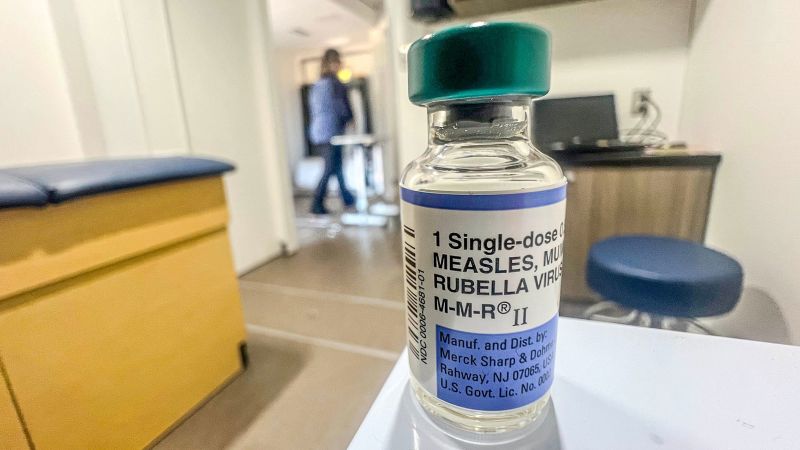
Ongoing measles outbreaks in various parts of the United States are raising concerns about the country’s status as a nation that has eliminated the virus. On March 5, 2026, during a federal briefing, Dr. Ralph Abraham, the Principal Deputy Director of the CDC, indicated that the potential loss of elimination status is not a major worry. This statement comes as South Carolina grapples with a significant outbreak that has recorded at least 646 cases, as reported by the state’s health department.
Last year, West Texas experienced approximately 760 cases, marking one of the largest and deadliest measles outbreaks in the United States in decades. Dr. Abraham, who recently joined the CDC, contended that transmission of the virus between states remains unproven. He emphasized that losing elimination status would not drastically affect current measles eradication strategies. “Losing elimination status… does not mean that the measles would be widespread, nor would it alter any key measles elimination strategies,” said Dr. Abraham.
The CDC reported 2,242 measles cases in 2025, the highest number since 1991. The disease was declared eliminated in the U.S. in 2000, but the Pan American Health Organization may reconsider this status during its meeting in April.
In addressing the situation, Dr. Abraham underscored the importance of vaccination, stating, “Vaccination remains the most effective way to prevent measles.” He acknowledged the right to personal freedom, noting, “We have these communities that choose to be unvaccinated. That’s their personal freedom.” He reassured the public that the CDC’s role is to support these communities while minimizing the impact of measles.
The current outbreak in South Carolina is particularly concerning, with more than 500 individuals under quarantine after being exposed to known cases without vaccination protection. The outbreak has prompted quarantines for unvaccinated students in several schools, including elementary, middle, and high schools, as well as Clemson University and Anderson University.
Dr. Demetre Daskalakis, a former director of the CDC’s National Center for Immunization and Respiratory Diseases, reported during the same briefing that the South Carolina outbreak is in a “very aggressively fast growth phase.” He noted that nearly 90% of measles cases in this outbreak have occurred among unvaccinated children. Only about 2% of cases involved individuals who had received both recommended doses of the measles-mumps-rubella (MMR) vaccine.
The rising incidence of measles has drawn criticism from public health officials. Hawaii Governor Josh Green and Dr. Annie Andrews from South Carolina pointed fingers at U.S. Health and Human Services Secretary Robert F. Kennedy Jr., blaming him for fostering distrust in vaccinations. “What’s happening today with measles is absolutely public health malpractice, and it’s completely preventable,” said Governor Green, who is also a physician.
The CDC reported a record high of kindergartners with vaccination exemptions during the last school year, marking the fifth consecutive year that MMR vaccine coverage has fallen below the federal target of 95%. Governor Green criticized public health leaders for contributing to this decline, stating, “Kids will die” if vaccination rates do not improve.
As the situation develops, the CDC continues to focus on promoting vaccination and addressing the concerns of communities affected by the outbreak. The impact of these ongoing measles outbreaks will likely shape public health discussions in the months to come.

Robinhood Stock Surges 2.5% Today Amid Tech Market Recovery

Philadelphia’s Earth Month Kicks Off with Free Events in Parks

GSK’s Inhaler Decision Sparks Health Concerns for Children

Bradford’s Fish Fry Fridays Offer Community Spirit and Flavor

Speculation Rises on Shutdowns During Trump’s Potential Presidency

Samsung Galaxy Watch 9 to Feature Larger Battery, Report Reveals

Inventors Find New Purpose Through Unconventional Paths

UConn Huskies Aim for Back-to-Back Titles in 2026 NCAA Tournament

U.S. Mine Countermeasure Ships Dock in Malaysia for Logistics Stop

University of Hawaiʻi at Mānoa Joins $25.6M AI Initiative for Disaster Monitoring

$2.2 Million Boost for Cancer Research and Training in Hawaiʻi

ALMA Discovers Companion Orbiting Red Giant Star π 1 Gruis

Sacituzumab Govitecan Shows Promise for HR+/HER2− Breast Cancer

币安人生 Sees $15.92 Million in Trading Volume Amid Market Fluctuations

New Gel Offers Hope for Regrowing Tooth Enamel in Dentistry

CAVA Group Shares Surge 5.1% Amid Mixed Analyst Ratings

Christian Bale in Talks to Join Leonardo DiCaprio in Heat 2

Supreme Court to Review Birthright Citizenship for Children of Immigrants
-
Science9 months ago
University of Hawaiʻi at Mānoa Joins $25.6M AI Initiative for Disaster Monitoring
-
 Health7 months ago
$2.2 Million Boost for Cancer Research and Training in Hawaiʻi
-
 Science8 months ago
ALMA Discovers Companion Orbiting Red Giant Star π 1 Gruis
-
 Health7 months ago
Sacituzumab Govitecan Shows Promise for HR+/HER2− Breast Cancer
-
Politics5 months ago
币安人生 Sees $15.92 Million in Trading Volume Amid Market Fluctuations
-
 Health9 months ago
New Gel Offers Hope for Regrowing Tooth Enamel in Dentistry
-
 Business7 months ago
CAVA Group Shares Surge 5.1% Amid Mixed Analyst Ratings
-
 Entertainment8 months ago
Christian Bale in Talks to Join Leonardo DiCaprio in Heat 2
-
 Politics7 months ago
Supreme Court to Review Birthright Citizenship for Children of Immigrants
-

 Lifestyle8 months ago
Art Deco and Traditional Designs Set to Transform Homes in 2026
-

 Lifestyle7 months ago
Fernando Mendoza Secures Maxwell and O’Brien Awards Ahead of Heisman
-

 World8 months ago
Swiss Residents Reject 50% Inheritance Tax on Wealthy