
Health
Moderna’s Former Executive Critiques Regulatory Landscape for Vaccines

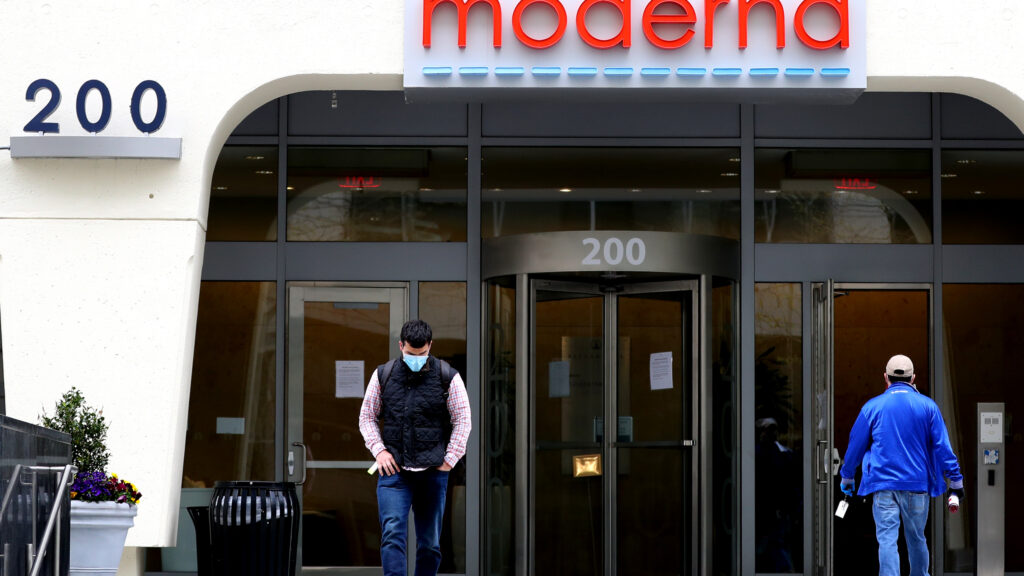
On March 30, 2024, Richard Hughes IV, a former executive at Moderna, expressed deep concern over the current state of vaccine innovation in the United States. In a candid opinion piece, he reflected on the optimism that surrounded the rollout of the Covid-19 vaccine and contrasted it with the challenges facing the pharmaceutical industry today.
Hughes recalls a pivotal moment from December 30, 2020, when he traveled to Moderna’s manufacturing site near Boston. As he received his first vaccine dose, he felt a profound connection to the collective hope and trauma experienced during the pandemic. At that time, Moderna was producing vaccines at an unprecedented scale, bolstered by a talented workforce and proximity to leading research institutions.
The rapid development of vaccines at Moderna was not merely a corporate success story; it represented a significant leap in public health capability. The company, under Hughes’s leadership, had accelerated several vaccine programs that had been only theoretical for years. Hughes highlights the potential for vaccines targeting cytomegalovirus (CMV) and respiratory syncytial virus (RSV), both of which could significantly impact infant health and mortality.
However, Hughes points out that this spirit of innovation is now threatened by a shifting regulatory landscape. The U.S. Food and Drug Administration (FDA) has recently declined to review Moderna’s application for its mRNA flu vaccine, citing technical concerns over trial design. Hughes argues that this refusal is symptomatic of broader political pressures exerted by health secretary Robert F. Kennedy Jr.. He alleges that Kennedy’s actions aim to undermine vaccine confidence and long-standing public health policies.
“The United States government is signaling to innovators, to investors, and to the world that it is no longer committed to leading in vaccine science,” Hughes states. This shift has led Moderna’s CEO to announce a halt on investments in new Phase 3 trials for infectious diseases, effectively shelving vaccines for Epstein-Barr, herpes, and shingles.
Hughes emphasizes that regulatory clarity is essential for the future of vaccine development. The pharmaceutical industry operates on the premise that regulations will be consistent and scientifically grounded. When regulations shift unpredictably, investment in innovation becomes untenable, leading companies to seek opportunities in more stable environments.
“The risk is not abstract,” Hughes warns. The United States has long been a leader in vaccine innovation due to its trusted regulatory system. An erosion of this trust could have dire consequences, leaving American citizens vulnerable to diseases that could be prevented through vaccination.
Despite the challenges, Hughes maintains that the pharmaceutical industry is not the enemy. Throughout his career, he has witnessed dedicated professionals working to advance public health. He argues that when companies thrive, public health benefits, creating a symbiotic relationship rather than a conspiracy.
The consequences of neglecting vaccine innovation will not be immediately visible. They will manifest in preventable illnesses and deaths, particularly among vulnerable populations. Hughes concludes that the nation must remember the value of innovation that has historically protected public health.
Richard Hughes IV now serves as a partner at the law firm Epstein Becker Green and is a professorial lecturer in law at the George Washington University Law School. His insights shed light on the urgent need for a supportive regulatory environment to foster vaccine development and protect public health.

Robinhood Stock Surges 2.5% Today Amid Tech Market Recovery

Philadelphia’s Earth Month Kicks Off with Free Events in Parks

GSK’s Inhaler Decision Sparks Health Concerns for Children

Bradford’s Fish Fry Fridays Offer Community Spirit and Flavor

Speculation Rises on Shutdowns During Trump’s Potential Presidency

Samsung Galaxy Watch 9 to Feature Larger Battery, Report Reveals

Inventors Find New Purpose Through Unconventional Paths

UConn Huskies Aim for Back-to-Back Titles in 2026 NCAA Tournament

U.S. Mine Countermeasure Ships Dock in Malaysia for Logistics Stop

University of Hawaiʻi at Mānoa Joins $25.6M AI Initiative for Disaster Monitoring

$2.2 Million Boost for Cancer Research and Training in Hawaiʻi

ALMA Discovers Companion Orbiting Red Giant Star π 1 Gruis

Sacituzumab Govitecan Shows Promise for HR+/HER2− Breast Cancer

币安人生 Sees $15.92 Million in Trading Volume Amid Market Fluctuations

New Gel Offers Hope for Regrowing Tooth Enamel in Dentistry

CAVA Group Shares Surge 5.1% Amid Mixed Analyst Ratings

Christian Bale in Talks to Join Leonardo DiCaprio in Heat 2

Supreme Court to Review Birthright Citizenship for Children of Immigrants
-
Science8 months ago
University of Hawaiʻi at Mānoa Joins $25.6M AI Initiative for Disaster Monitoring
-
 Health7 months ago
$2.2 Million Boost for Cancer Research and Training in Hawaiʻi
-
 Science8 months ago
ALMA Discovers Companion Orbiting Red Giant Star π 1 Gruis
-
 Health7 months ago
Sacituzumab Govitecan Shows Promise for HR+/HER2− Breast Cancer
-
Politics4 months ago
币安人生 Sees $15.92 Million in Trading Volume Amid Market Fluctuations
-
 Health8 months ago
New Gel Offers Hope for Regrowing Tooth Enamel in Dentistry
-
 Business7 months ago
CAVA Group Shares Surge 5.1% Amid Mixed Analyst Ratings
-
 Entertainment8 months ago
Christian Bale in Talks to Join Leonardo DiCaprio in Heat 2
-
 Politics7 months ago
Supreme Court to Review Birthright Citizenship for Children of Immigrants
-

 Lifestyle8 months ago
Art Deco and Traditional Designs Set to Transform Homes in 2026
-

 Lifestyle7 months ago
Fernando Mendoza Secures Maxwell and O’Brien Awards Ahead of Heisman
-

 World8 months ago
Swiss Residents Reject 50% Inheritance Tax on Wealthy