
Health
New Mexico Faces Choices for Federal Rural Health Funding

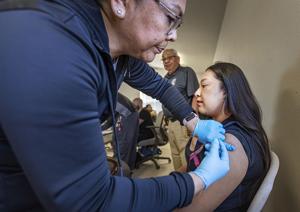
The New Mexico Health Care Authority is seeking input from healthcare professionals on how to allocate significant federal funding aimed at enhancing rural health services. The funding, part of the newly established Rural Health Transformation Program, totals $50 billion and is made possible through recent legislation signed into law by President Donald Trump. The state’s application for a share of these funds is due to the U.S. Centers for Medicare and Medicaid Services by November 5, 2023.
During a public forum held on a recent Wednesday, over 250 professionals from various sectors of the medical field, including doctors, telehealth developers, paramedics, and hospital executives, provided crucial feedback to officials. Participants highlighted priorities such as expanding behavioral health services, enhancing resources for mobile and telemedicine, and improving recruitment and retention of healthcare workers.
New Mexico Medicaid Director Dana Flannery expressed satisfaction with the feedback, noting that many of the priorities identified align with existing plans. “I’m very excited that a lot of what was stated today aligns with the input we’ve already received,” Flannery stated. This sentiment reflects a clear direction for the state’s application as officials prepare to utilize the funds effectively.
The Rural Health Transformation Program is a response to concerns that cuts to Medicaid and food assistance could jeopardize rural health services, potentially leading to the closure of several hospitals. The New Mexico Health Care Authority estimates that the recent budget changes could result in the closure of six to eight rural hospitals in the state by 2028. The federal initiative is designed to counteract these potential losses, providing funds that must be allocated towards specific areas, including payments to healthcare providers, chronic disease management, and technological advancements.
Of the $50 billion earmarked for this program, $25 billion will be distributed equally among all states, while the remaining $25 billion will depend on the strength of individual state applications. The New Mexico Health Care Authority is currently crafting its application for a portion of this funding, though experts caution it may not fully address the state’s rural healthcare challenges. According to analysis from the health research organization KFF, the funding represents only 37% of the anticipated losses due to Medicaid cuts in rural areas.
At the public meeting, healthcare professionals emphasized the urgent need for more staff across various roles. While specialists such as pediatricians and cardiologists are available in urban centers like Albuquerque and Santa Fe, accessing these professionals remains a challenge in rural regions. Dr. Larry Shandler, a representative from the New Mexico Pediatric Society, advocated for higher Medicaid reimbursement rates to attract more doctors to underserved areas. Earlier this year, New Mexico implemented rate increases for behavioral health, primary care, and maternal and child health services in an effort to address this issue.
The importance of enhancing telehealth infrastructure was also discussed, as it could help bridge the gap in healthcare access in remote areas. However, concerns were raised regarding internet connectivity, with the Federal Communications Commission estimating that approximately 10% of addresses in New Mexico are underserved or unserved in terms of reliable internet access.
In addition to telehealth, many attendees stressed the necessity of mobile medical resources, including paramedicine and mobile integrated health clinics. Paramedic Faith Applewhite highlighted the potential of emergency medical technicians to deliver care directly to communities, stating, “We can really be the boots on the ground to deliver that healthcare.”
As the New Mexico Health Care Authority moves forward with its application for federal assistance, securing grant funding will be essential. Flannery concluded the meeting with a call to action, urging attendees to create a competitive application that could secure vital resources for rural healthcare. “Let’s apply and have a very competitive application so that we can bring home this opportunity,” she said, emphasizing the importance of collaboration in addressing the state’s healthcare needs.

Robinhood Stock Surges 2.5% Today Amid Tech Market Recovery

Philadelphia’s Earth Month Kicks Off with Free Events in Parks

GSK’s Inhaler Decision Sparks Health Concerns for Children

Bradford’s Fish Fry Fridays Offer Community Spirit and Flavor

Speculation Rises on Shutdowns During Trump’s Potential Presidency

Samsung Galaxy Watch 9 to Feature Larger Battery, Report Reveals

Inventors Find New Purpose Through Unconventional Paths

UConn Huskies Aim for Back-to-Back Titles in 2026 NCAA Tournament

U.S. Mine Countermeasure Ships Dock in Malaysia for Logistics Stop

University of Hawaiʻi at Mānoa Joins $25.6M AI Initiative for Disaster Monitoring

$2.2 Million Boost for Cancer Research and Training in Hawaiʻi

ALMA Discovers Companion Orbiting Red Giant Star π 1 Gruis

Sacituzumab Govitecan Shows Promise for HR+/HER2− Breast Cancer

币安人生 Sees $15.92 Million in Trading Volume Amid Market Fluctuations

New Gel Offers Hope for Regrowing Tooth Enamel in Dentistry

CAVA Group Shares Surge 5.1% Amid Mixed Analyst Ratings

Christian Bale in Talks to Join Leonardo DiCaprio in Heat 2

Supreme Court to Review Birthright Citizenship for Children of Immigrants
-
Science9 months ago
University of Hawaiʻi at Mānoa Joins $25.6M AI Initiative for Disaster Monitoring
-
 Health8 months ago
$2.2 Million Boost for Cancer Research and Training in Hawaiʻi
-
 Science9 months ago
ALMA Discovers Companion Orbiting Red Giant Star π 1 Gruis
-
 Health7 months ago
Sacituzumab Govitecan Shows Promise for HR+/HER2− Breast Cancer
-
Politics5 months ago
币安人生 Sees $15.92 Million in Trading Volume Amid Market Fluctuations
-
 Health9 months ago
New Gel Offers Hope for Regrowing Tooth Enamel in Dentistry
-
 Business8 months ago
CAVA Group Shares Surge 5.1% Amid Mixed Analyst Ratings
-
 Entertainment9 months ago
Christian Bale in Talks to Join Leonardo DiCaprio in Heat 2
-
 Politics8 months ago
Supreme Court to Review Birthright Citizenship for Children of Immigrants
-

 Lifestyle9 months ago
Art Deco and Traditional Designs Set to Transform Homes in 2026
-

 Lifestyle8 months ago
Fernando Mendoza Secures Maxwell and O’Brien Awards Ahead of Heisman
-

 World8 months ago
Swiss Residents Reject 50% Inheritance Tax on Wealthy