
Health
Scientists Illuminate Microplastics to Uncover Their Impact on Health

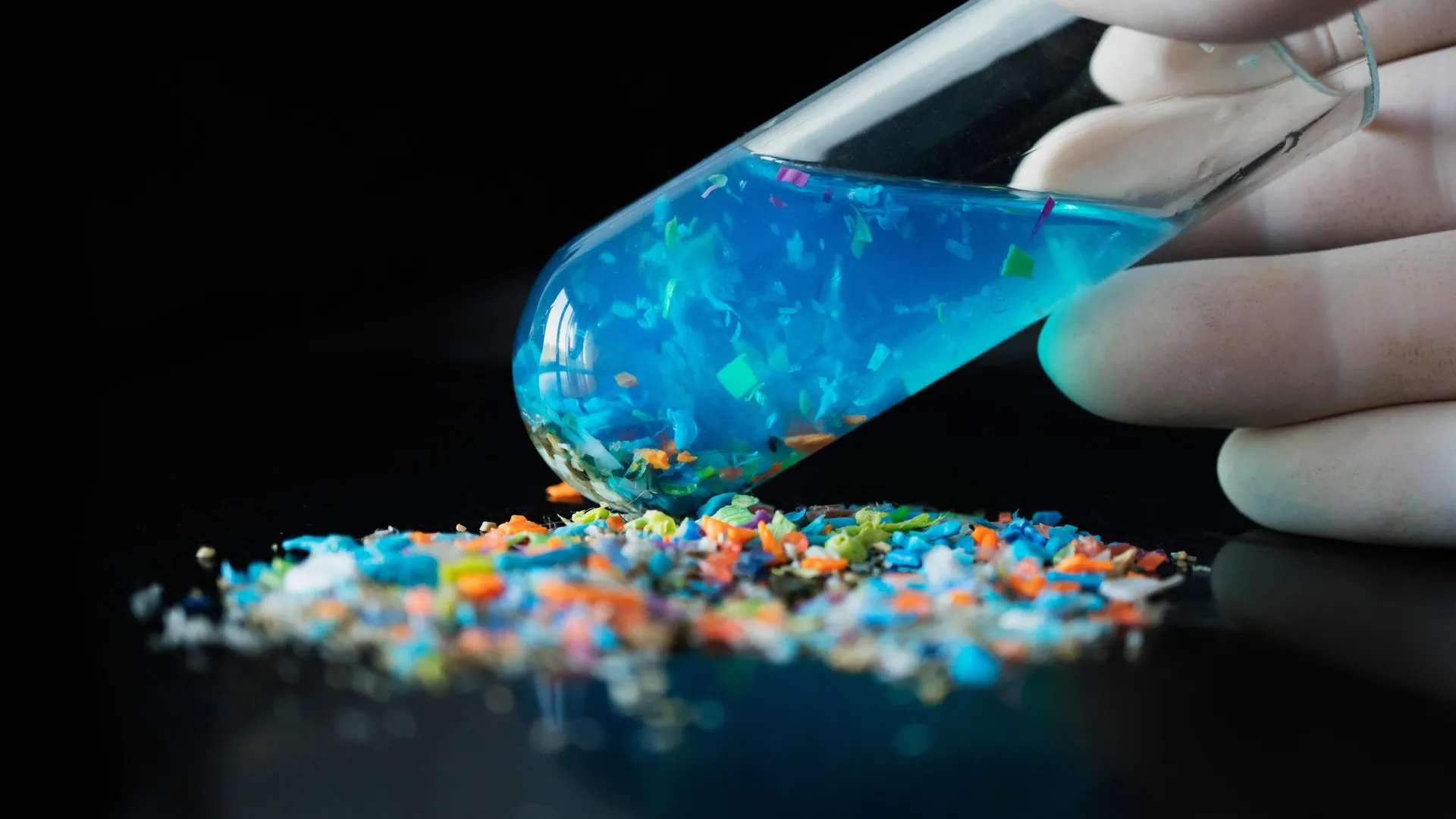
Researchers have developed a groundbreaking method to visualize microplastics and nanoplastics within living organisms, addressing a critical gap in understanding the effects of these particles on human health. This innovative fluorescence-based technique allows scientists to track the movement, transformation, and degradation of microplastics in real time.
Microplastics, tiny plastic fragments measuring less than five millimeters, have infiltrated ecosystems globally, appearing in ocean depths, agricultural soils, and even human tissues. Despite their pervasive presence, the biological impact of these particles remains largely unclear. A new study led by a team at Shenyang Agricultural University aims to shed light on this issue with an advanced tracking system.
Revolutionary Fluorescence Technique
The research introduces a novel approach known as fluorescent monomer controlled synthesis. Unlike traditional methods that require the application of a fluorescent dye to plastic particles, this technique incorporates light-emitting components directly into the molecular structure of the plastic. This innovation enhances the stability of the signal, allowing for continuous observation without the drawbacks of conventional labeling techniques, which often suffer from fading signals and reduced brightness in complex biological environments.
According to Wenhong Fan, the corresponding author of the study, “Most current methods give us only a snapshot in time. We can measure how many particles are present in a tissue, but we cannot directly observe how they travel, accumulate, transform, or break down inside living organisms.” This new method promises to change that by enabling dynamic tracking of microplastics throughout their life cycle—from ingestion and internal transport to transformation and eventual breakdown.
The annual production of plastic worldwide exceeds 460 million tons, with millions of tons entering the environment each year. Microplastics have been detected in various organisms, including marine life, birds, and human tissues, raising concerns about their potential impact on health. Laboratory studies have suggested associations between microplastic exposure and health issues such as inflammation, organ damage, and developmental problems.
Implications for Health and Environment
While still in the experimental phase, the research is grounded in established principles of polymer chemistry and biocompatible fluorescence imaging. The authors emphasize the potential of this technique to enhance our understanding of how microplastics interact with biological systems. Fan asserts, “Clarifying the transport and transformation processes of microplastics inside organisms is essential for assessing their true ecological and health risks.”
As global concern regarding plastic pollution escalates, tools that reveal the behavior of microplastics within living systems could become pivotal in refining risk assessments and shaping future environmental policies. The ability to dynamically track these particles offers a pathway to a more nuanced understanding of their toxicity mechanisms and long-term effects.
This research contributes significantly to the ongoing effort to unravel the complexities of microplastic interactions in biological contexts. By leveraging innovative imaging techniques, scientists hope to fill critical knowledge gaps and inform public health strategies as well as environmental regulations.
The findings were published on February 13, 2026, in a study provided by the Biochar Editorial Office at Shenyang Agricultural University, marking a significant step forward in environmental health research.

Robinhood Stock Surges 2.5% Today Amid Tech Market Recovery

Philadelphia’s Earth Month Kicks Off with Free Events in Parks

GSK’s Inhaler Decision Sparks Health Concerns for Children

Bradford’s Fish Fry Fridays Offer Community Spirit and Flavor

Speculation Rises on Shutdowns During Trump’s Potential Presidency

Samsung Galaxy Watch 9 to Feature Larger Battery, Report Reveals

Inventors Find New Purpose Through Unconventional Paths

UConn Huskies Aim for Back-to-Back Titles in 2026 NCAA Tournament

U.S. Mine Countermeasure Ships Dock in Malaysia for Logistics Stop

University of Hawaiʻi at Mānoa Joins $25.6M AI Initiative for Disaster Monitoring

$2.2 Million Boost for Cancer Research and Training in Hawaiʻi

ALMA Discovers Companion Orbiting Red Giant Star π 1 Gruis

Sacituzumab Govitecan Shows Promise for HR+/HER2− Breast Cancer

币安人生 Sees $15.92 Million in Trading Volume Amid Market Fluctuations

New Gel Offers Hope for Regrowing Tooth Enamel in Dentistry

CAVA Group Shares Surge 5.1% Amid Mixed Analyst Ratings

Christian Bale in Talks to Join Leonardo DiCaprio in Heat 2

Supreme Court to Review Birthright Citizenship for Children of Immigrants
-
Science9 months ago
University of Hawaiʻi at Mānoa Joins $25.6M AI Initiative for Disaster Monitoring
-
 Health7 months ago
$2.2 Million Boost for Cancer Research and Training in Hawaiʻi
-
 Science8 months ago
ALMA Discovers Companion Orbiting Red Giant Star π 1 Gruis
-
 Health7 months ago
Sacituzumab Govitecan Shows Promise for HR+/HER2− Breast Cancer
-
Politics5 months ago
币安人生 Sees $15.92 Million in Trading Volume Amid Market Fluctuations
-
 Health8 months ago
New Gel Offers Hope for Regrowing Tooth Enamel in Dentistry
-
 Business7 months ago
CAVA Group Shares Surge 5.1% Amid Mixed Analyst Ratings
-
 Entertainment8 months ago
Christian Bale in Talks to Join Leonardo DiCaprio in Heat 2
-
 Politics7 months ago
Supreme Court to Review Birthright Citizenship for Children of Immigrants
-

 Lifestyle8 months ago
Art Deco and Traditional Designs Set to Transform Homes in 2026
-

 Lifestyle7 months ago
Fernando Mendoza Secures Maxwell and O’Brien Awards Ahead of Heisman
-

 World8 months ago
Swiss Residents Reject 50% Inheritance Tax on Wealthy