
Health
Trump’s Erratic Behavior Raises Questions About Mental Fitness

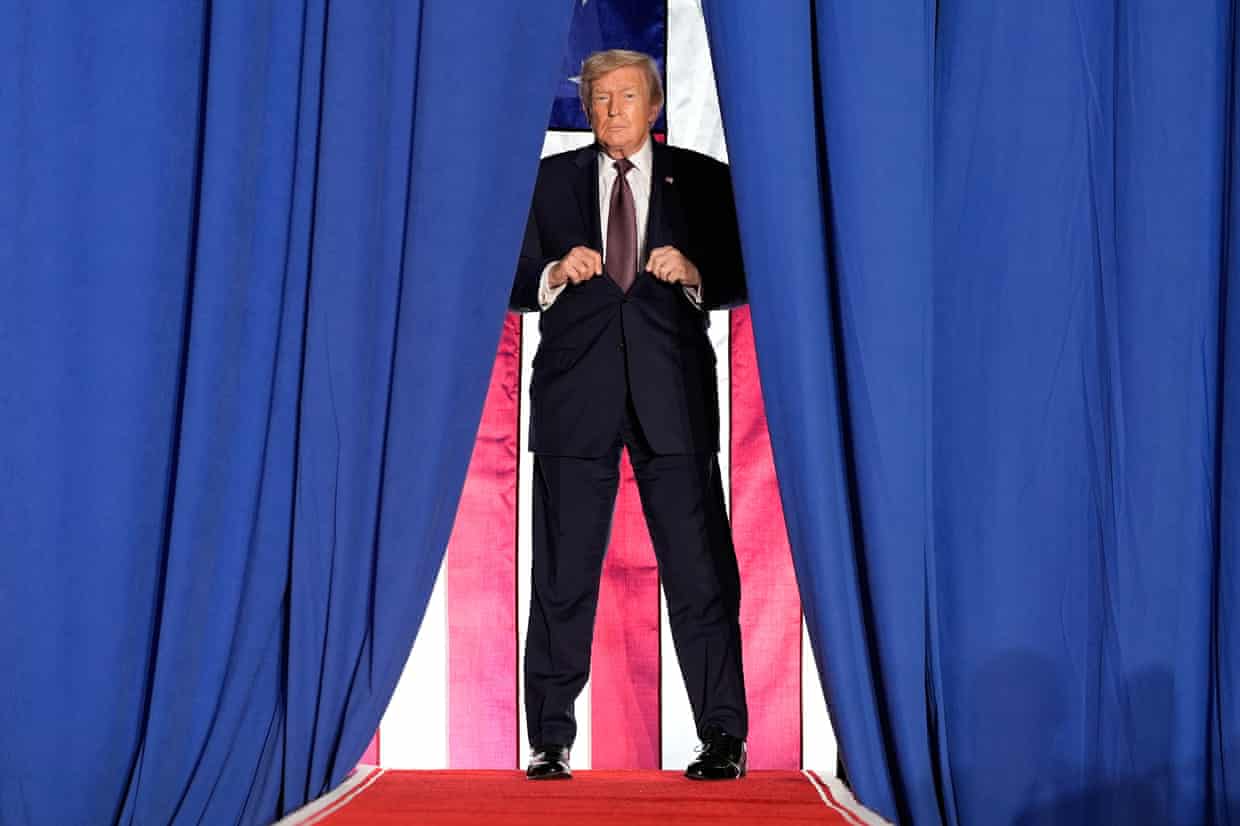
Throughout 2025, questions surrounding the mental fitness of Donald Trump have intensified, particularly as he approaches his 80th birthday in June. In a December address from the White House, Trump claimed his administration had brought “more positive change” than any government in US history. However, his erratic and often confusing behavior throughout the year has sparked significant concern among observers and political analysts.
Trump’s second term has been characterized by instances that some might consider troubling. Reports indicate that he has appeared to fall asleep during meetings and has struggled to maintain focus during public appearances. Instances of rambling on unrelated topics, such as discussing interior decor or animals like whales and birds, have drawn scrutiny.
During a meeting with Ursula von der Leyen, President of the European Commission, Trump abruptly shifted from a discussion on immigration to a lengthy tirade about wind energy. He claimed, without evidence, that windmills drive whales “loco” and that they kill birds. It is important to note that studies show the proportion of birds killed by wind turbines is minimal compared to those killed by cats and other factors.
A particularly notable incident occurred in mid-July when Trump recounted an anecdote about his late uncle, John Trump, allegedly teaching Ted Kaczynski, the Unabomber, at the Massachusetts Institute of Technology (MIT). Trump stated, “I said: ‘What kind of a student was he, Uncle John? Dr. John Trump.’ And then he said: ‘Seriously, good.’” This story raised eyebrows, as Kaczynski was not a student at MIT and Trump’s uncle passed away in 1985, long before Kaczynski was publicly identified.
In September, Trump addressed the nation’s top military commanders in Virginia, where he touted his alleged achievements while disparaging Joe Biden. He said, “We were not respected with Biden. They looked at him falling down stairs every day.” His remarks about Biden continually falling down stairs were not only politically charged but also reflected an unusual fixation that has fueled speculation regarding his mental state.
The White House has consistently defended Trump, with spokespersons asserting that his “mental sharpness is second to none.” Ronny Jackson, a Republican congressman and former physician to Trump, claimed he was the “healthiest president this nation has ever seen.” Still, skepticism persists as reports indicate that Democrats plan to leverage concerns about Trump’s mental acuity during the upcoming midterm elections.
In November, Trump underwent an MRI, but he could not recall which body part was scanned. His public appearances have also been marked by confusion, such as mixing up Albania with Armenia when discussing a peace deal and making puzzling statements about autism. During an announcement of grants to investigate autism, he remarked, “Nothing bad can happen, it can only good happen.”
Compounding these issues, Trump has exhibited a pattern of inflammatory remarks. In December alone, he referred to Somali immigrants as “garbage” and made controversial statements blaming filmmaker Rob Reiner for a personal tragedy. This behavior has drawn criticism from both sides of the political aisle, further complicating his public image.
Despite a reduced schedule—where scheduled events typically begin around noon and conclude by 17:00—Trump’s administration has maintained a robust defense of his health and mental acuity. A White House official commented that not all of the president’s meetings are included in daily press guidance, suggesting a more active role than perceived.
As public confidence wanes, a Pew Research Center survey from November indicated that only 56% of US adults express a significant level of trust in national news organizations, marking an 11-point drop since March 2025. Moreover, a Gallup poll revealed that only 36% of American adults approved of Trump’s performance, the lowest rating of his second term.
The questions surrounding Trump’s mental fitness and overall health are likely to persist, especially as he navigates the political landscape leading up to the midterms. With a history of unpredictable behavior, the discourse surrounding Trump’s capabilities is set to remain a critical focal point in American politics.

Robinhood Stock Surges 2.5% Today Amid Tech Market Recovery

Philadelphia’s Earth Month Kicks Off with Free Events in Parks

GSK’s Inhaler Decision Sparks Health Concerns for Children

Bradford’s Fish Fry Fridays Offer Community Spirit and Flavor

Speculation Rises on Shutdowns During Trump’s Potential Presidency

Samsung Galaxy Watch 9 to Feature Larger Battery, Report Reveals

Inventors Find New Purpose Through Unconventional Paths

UConn Huskies Aim for Back-to-Back Titles in 2026 NCAA Tournament

U.S. Mine Countermeasure Ships Dock in Malaysia for Logistics Stop

University of Hawaiʻi at Mānoa Joins $25.6M AI Initiative for Disaster Monitoring

$2.2 Million Boost for Cancer Research and Training in Hawaiʻi

ALMA Discovers Companion Orbiting Red Giant Star π 1 Gruis

Sacituzumab Govitecan Shows Promise for HR+/HER2− Breast Cancer

币安人生 Sees $15.92 Million in Trading Volume Amid Market Fluctuations

New Gel Offers Hope for Regrowing Tooth Enamel in Dentistry

CAVA Group Shares Surge 5.1% Amid Mixed Analyst Ratings

Christian Bale in Talks to Join Leonardo DiCaprio in Heat 2

Supreme Court to Review Birthright Citizenship for Children of Immigrants
-
Science9 months ago
University of Hawaiʻi at Mānoa Joins $25.6M AI Initiative for Disaster Monitoring
-
 Health8 months ago
$2.2 Million Boost for Cancer Research and Training in Hawaiʻi
-
 Science9 months ago
ALMA Discovers Companion Orbiting Red Giant Star π 1 Gruis
-
 Health7 months ago
Sacituzumab Govitecan Shows Promise for HR+/HER2− Breast Cancer
-
Politics5 months ago
币安人生 Sees $15.92 Million in Trading Volume Amid Market Fluctuations
-
 Health9 months ago
New Gel Offers Hope for Regrowing Tooth Enamel in Dentistry
-
 Business8 months ago
CAVA Group Shares Surge 5.1% Amid Mixed Analyst Ratings
-
 Entertainment9 months ago
Christian Bale in Talks to Join Leonardo DiCaprio in Heat 2
-
 Politics8 months ago
Supreme Court to Review Birthright Citizenship for Children of Immigrants
-

 Lifestyle9 months ago
Art Deco and Traditional Designs Set to Transform Homes in 2026
-

 Lifestyle8 months ago
Fernando Mendoza Secures Maxwell and O’Brien Awards Ahead of Heisman
-

 World8 months ago
Swiss Residents Reject 50% Inheritance Tax on Wealthy