
Lifestyle
Florida Manatee Population Surges, Sparking Water Quality Concerns

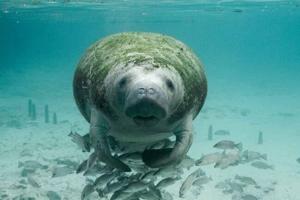
The manatee population in Florida has experienced a remarkable surge, increasing by nearly 600 percent over the past three decades. This rise has led to growing concerns about the potential impact of their congregation in Three Sisters Springs, particularly regarding water quality. Each winter, hundreds of these gentle giants gather in the warm waters of the springs located in Citrus County, attracting tourists eager to swim alongside them.
However, some local residents and visitors are questioning whether the waste produced by such a large number of manatees could be harming the springs’ water quality. On December 31, 2023, volunteers observed over 300 manatees huddled in the springs, prompting inquiries about the safety of swimming in the area during peak manatee season. Concerns are primarily focused on whether the animals might compromise water quality through their waste and the sediment disturbance caused by their movements.
Research conducted by the University of Florida has shed light on this issue. The study focused on the relationship between manatees and the ecosystem of Three Sisters Springs, measuring factors such as nitrogen and phosphorus levels, as well as algae growth. The findings indicate that while manatees do stir up sediment as they swim, graze, and rest, they are not significant sources of water pollution.
Instead, the disturbances they create can temporarily increase the concentration of particles in the water. A recent analysis of spring-fed ecosystems in Kings Bay revealed that sediment disturbance during the winter months can lead to a rise in suspended material of more than 40 percent. Despite the increased turbidity, scientists clarify that this should not be equated with harmful pollution, which typically stems from human activity.
Human factors, including fertilizer runoff and leaking septic systems, pose a much greater threat to water quality in the springs. These sources contribute excessive nutrients, which can promote algae growth and block sunlight, ultimately harming the very aquatic vegetation that manatees rely on for food. Therefore, while manatees do influence the ecosystem, their impact is mainly through physical movement rather than pollution through waste.
To better understand the dynamics between manatees and water quality, researchers face challenges related to water sampling. The use of Three Sisters Springs by manatees is dictated by environmental conditions rather than a strict timeline, leading to variability in their presence. For instance, the latest water sample from the springs was collected in the summer of 2024, outside of the peak winter season when manatees are most abundant.
Compounding this issue is the inconsistency in water testing, which is conducted by various entities including the University of Florida, environmental volunteers, and the Southwest Florida Water Management District. To address these gaps, the Crystal River National Wildlife Refuge has initiated focused monitoring efforts. These efforts include tracking turbidity and nutrient levels during specific periods to gain a clearer picture of how both wildlife and visitors interact with the spring ecosystem.
Despite the concerns surrounding water quality, scientists emphasize that Three Sisters Springs functions more like a flushing system than a stagnant body of water. The continuous flow of fresh groundwater through the springs helps to dilute and carry away materials, preventing significant waste accumulation over time. This natural process plays a crucial role in maintaining the ecological balance of the springs, benefiting both the local wildlife and the visitors who come to appreciate these remarkable marine mammals.

Robinhood Stock Surges 2.5% Today Amid Tech Market Recovery

Philadelphia’s Earth Month Kicks Off with Free Events in Parks

GSK’s Inhaler Decision Sparks Health Concerns for Children

Bradford’s Fish Fry Fridays Offer Community Spirit and Flavor

Speculation Rises on Shutdowns During Trump’s Potential Presidency

Samsung Galaxy Watch 9 to Feature Larger Battery, Report Reveals

Inventors Find New Purpose Through Unconventional Paths

UConn Huskies Aim for Back-to-Back Titles in 2026 NCAA Tournament

U.S. Mine Countermeasure Ships Dock in Malaysia for Logistics Stop

University of Hawaiʻi at Mānoa Joins $25.6M AI Initiative for Disaster Monitoring

$2.2 Million Boost for Cancer Research and Training in Hawaiʻi

ALMA Discovers Companion Orbiting Red Giant Star π 1 Gruis

Sacituzumab Govitecan Shows Promise for HR+/HER2− Breast Cancer

币安人生 Sees $15.92 Million in Trading Volume Amid Market Fluctuations

New Gel Offers Hope for Regrowing Tooth Enamel in Dentistry

CAVA Group Shares Surge 5.1% Amid Mixed Analyst Ratings

Christian Bale in Talks to Join Leonardo DiCaprio in Heat 2

Supreme Court to Review Birthright Citizenship for Children of Immigrants
-
Science9 months ago
University of Hawaiʻi at Mānoa Joins $25.6M AI Initiative for Disaster Monitoring
-
 Health7 months ago
$2.2 Million Boost for Cancer Research and Training in Hawaiʻi
-
 Science8 months ago
ALMA Discovers Companion Orbiting Red Giant Star π 1 Gruis
-
 Health7 months ago
Sacituzumab Govitecan Shows Promise for HR+/HER2− Breast Cancer
-
Politics5 months ago
币安人生 Sees $15.92 Million in Trading Volume Amid Market Fluctuations
-
 Health9 months ago
New Gel Offers Hope for Regrowing Tooth Enamel in Dentistry
-
 Business7 months ago
CAVA Group Shares Surge 5.1% Amid Mixed Analyst Ratings
-
 Entertainment8 months ago
Christian Bale in Talks to Join Leonardo DiCaprio in Heat 2
-
 Politics7 months ago
Supreme Court to Review Birthright Citizenship for Children of Immigrants
-

 Lifestyle8 months ago
Art Deco and Traditional Designs Set to Transform Homes in 2026
-

 Lifestyle7 months ago
Fernando Mendoza Secures Maxwell and O’Brien Awards Ahead of Heisman
-

 World8 months ago
Swiss Residents Reject 50% Inheritance Tax on Wealthy