
Lifestyle
Unearthing the Origins of Superstitions: Black Cats to Broken Mirrors

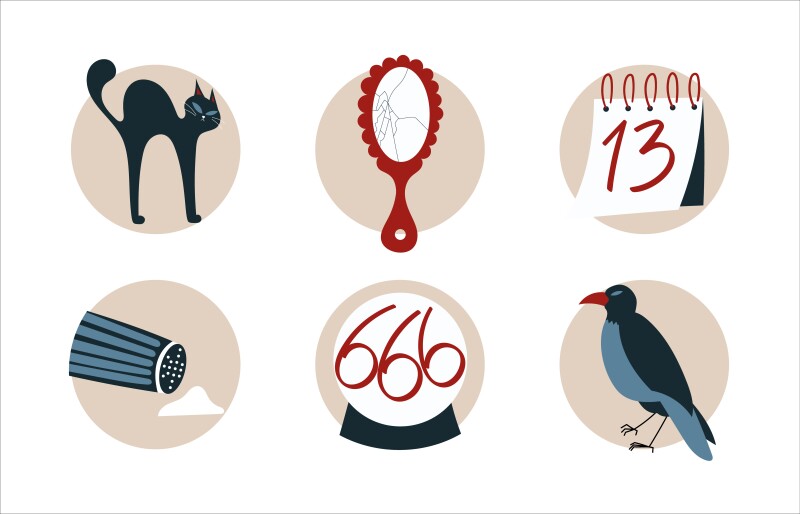
Superstitions have long captivated human imagination, with beliefs surrounding black cats, Friday the 13th, and broken mirrors permeating cultures worldwide. These associations often stem from ancient myths, religious narratives, and societal fears that have evolved over centuries. Understanding the origins of these superstitions reveals insights into human psychology and cultural development.
Black Cats: From Demons to Deities
The belief that black cats bring bad luck has its roots in European history, particularly during the Middle Ages. During this period, cats became entangled with witchcraft, and black cats were viewed as demonic companions to witches. A papal decree issued by Pope Gregory IX in 1233 intensified this association, linking black cats to heretical rituals and fuelling public fear. This superstition was further propagated during witch hunts, ultimately making its way to the Americas with early settlers.
Contrastingly, not all cultures share this negative view of black cats. In ancient Egypt, they were venerated and associated with the goddess Bastet, symbolizing protection and fertility. Japanese folklore presents a different narrative, viewing a black cat crossing a woman’s path as an omen of good fortune in finding a partner. Likewise, sailors historically believed that having a black cat on board would ensure a safe journey.
Friday the 13th: A Day of Misfortune
The superstition surrounding Friday the 13th finds its origins in a blend of religious and historical contexts. In Christian tradition, the Last Supper featured thirteen attendees, with Judas Iscariot being the 13th guest who betrayed Jesus. The crucifixion of Jesus, which occurred on a Friday, has further solidified this date as unlucky. According to the Library of Congress, some historians suggest that the Christian Church sought to discredit Friday, named after the goddess Frigg or Freya, to undermine pagan practices.
The historical event of October 13, 1307, when King Philip IV of France ordered the mass arrest and execution of the Knights Templar, also contributes to this superstition. Additionally, in Norse mythology, the mischief of the god Loki, who was the uninvited 13th guest at a banquet leading to the death of Balder, reinforces the negative perception of the number 13.
Broken Mirrors: Reflections of the Soul
The belief that breaking a mirror brings seven years of bad luck traces back to ancient Roman traditions. Romans held that mirrors reflected the soul, and damaging one could harm the spirit itself. According to the University of South Carolina, they believed it took seven years for the soul to regenerate, thus linking broken mirrors to a prolonged period of misfortune.
Over time, this superstition has evolved with various remedies proposed to negate the bad luck associated with breaking a mirror. Common practices include grinding the shards into dust, burying the pieces, or tossing them into flowing water.
Two Mirrors: Portals to the Unknown
One of the more eerie superstitions involves the phenomenon of two mirrors facing each other, which some cultures believe creates a “ghost portal.” This idea stems from the infinite reflections that occur between the mirrors, potentially trapping spirits or allowing negative energy to flow between dimensions. Some variations suggest that this configuration can serve as a doorway for malevolent entities, complicating the natural flow of energy in a space.
As these beliefs illustrate, superstitions are deeply rooted in human history and culture, often reflecting societal fears and historical events. While some may dismiss these notions as mere folklore, they continue to influence behaviors and perceptions around the world.
Whether one subscribes to these superstitions or not, they offer a fascinating glimpse into the collective human psyche and the stories that shape our understanding of luck, fate, and the unknown.

Robinhood Stock Surges 2.5% Today Amid Tech Market Recovery

Philadelphia’s Earth Month Kicks Off with Free Events in Parks

GSK’s Inhaler Decision Sparks Health Concerns for Children

Bradford’s Fish Fry Fridays Offer Community Spirit and Flavor

Speculation Rises on Shutdowns During Trump’s Potential Presidency

Samsung Galaxy Watch 9 to Feature Larger Battery, Report Reveals

Inventors Find New Purpose Through Unconventional Paths

UConn Huskies Aim for Back-to-Back Titles in 2026 NCAA Tournament

U.S. Mine Countermeasure Ships Dock in Malaysia for Logistics Stop

University of Hawaiʻi at Mānoa Joins $25.6M AI Initiative for Disaster Monitoring

$2.2 Million Boost for Cancer Research and Training in Hawaiʻi

ALMA Discovers Companion Orbiting Red Giant Star π 1 Gruis

Sacituzumab Govitecan Shows Promise for HR+/HER2− Breast Cancer

币安人生 Sees $15.92 Million in Trading Volume Amid Market Fluctuations

New Gel Offers Hope for Regrowing Tooth Enamel in Dentistry

CAVA Group Shares Surge 5.1% Amid Mixed Analyst Ratings

Christian Bale in Talks to Join Leonardo DiCaprio in Heat 2

Supreme Court to Review Birthright Citizenship for Children of Immigrants
-
Science9 months ago
University of Hawaiʻi at Mānoa Joins $25.6M AI Initiative for Disaster Monitoring
-
 Health7 months ago
$2.2 Million Boost for Cancer Research and Training in Hawaiʻi
-
 Science9 months ago
ALMA Discovers Companion Orbiting Red Giant Star π 1 Gruis
-
 Health7 months ago
Sacituzumab Govitecan Shows Promise for HR+/HER2− Breast Cancer
-
Politics5 months ago
币安人生 Sees $15.92 Million in Trading Volume Amid Market Fluctuations
-
 Health9 months ago
New Gel Offers Hope for Regrowing Tooth Enamel in Dentistry
-
 Business8 months ago
CAVA Group Shares Surge 5.1% Amid Mixed Analyst Ratings
-
 Entertainment8 months ago
Christian Bale in Talks to Join Leonardo DiCaprio in Heat 2
-
 Politics8 months ago
Supreme Court to Review Birthright Citizenship for Children of Immigrants
-

 Lifestyle8 months ago
Art Deco and Traditional Designs Set to Transform Homes in 2026
-

 Lifestyle8 months ago
Fernando Mendoza Secures Maxwell and O’Brien Awards Ahead of Heisman
-

 World8 months ago
Swiss Residents Reject 50% Inheritance Tax on Wealthy