
Politics
California Cardrooms Challenge Attorney General’s Blackjack Ban

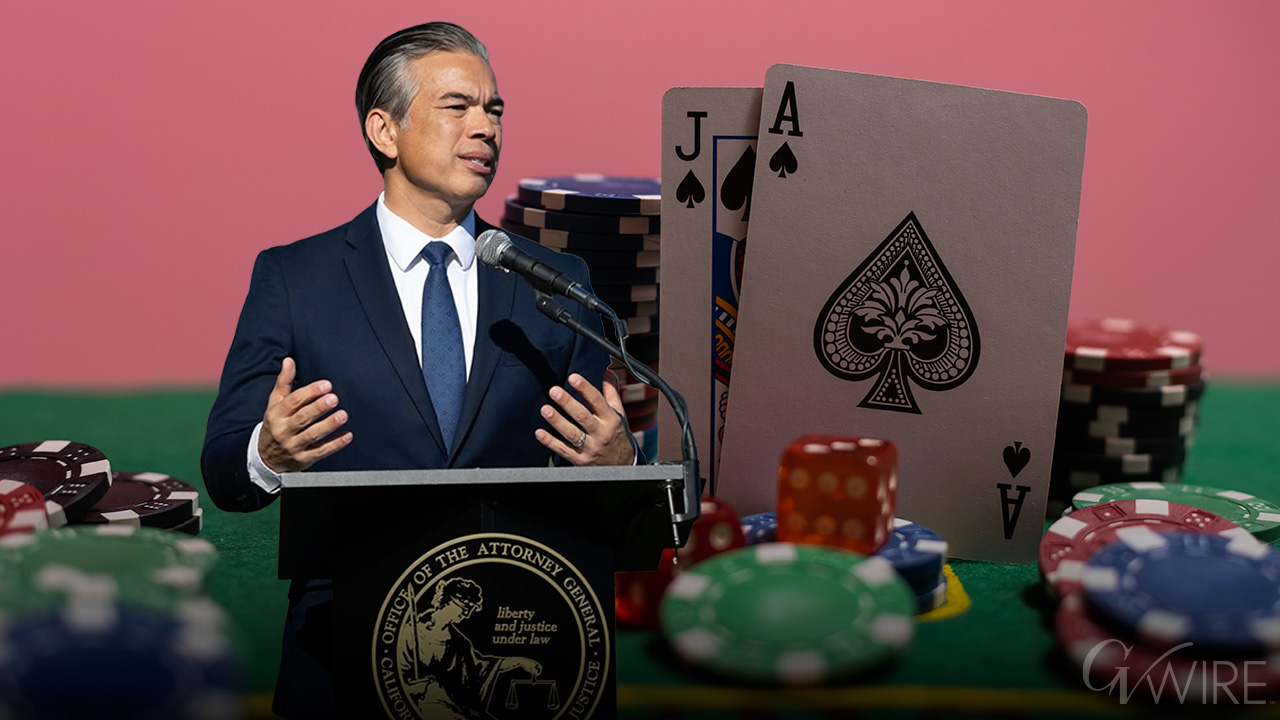
Three cardroom associations in California have initiated legal action against state Attorney General Rob Bonta, contesting his recent ban on blackjack and modifications to other card games. This lawsuit, filed on Friday, claims Bonta’s actions represent an “unprecedented power grab” that threatens the livelihoods of cardroom operators across the state.
Beginning April 1, 2024, blackjack will no longer be permitted under Bonta’s interpretation of a 19th century state law. The California Department of Justice has also imposed new regulations that restrict how cardrooms conduct player-dealer games. The associations, including the California Gaming Association, the California Cardroom Alliance, and Communities for California Cardrooms, assert that these changes will severely impact their business operations and local tax revenues.
Legal Action Against Regulatory Changes
In a statement, Kyle Kirkland, president of the gaming association and owner of Club One Casino in Fresno, criticized the regulations for reversing decades of established law. He emphasized that the ban disregards the economic ramifications of eliminating blackjack, a game that has been legally played for decades.
“Attorney General Bonta’s regulations threaten to eliminate more than half of California’s cardroom jobs and wipe out a critical source of revenue for dozens of cities,” Kirkland stated.
The lawsuit claims that Bonta has failed to substantiate his decision with any public safety concerns or address the 1,764 public comments submitted regarding these regulations. Instead, the associations argue that the new rules lack a factual basis and have been adopted in the face of strong opposition from various stakeholders, including city officials, employees, and the cardrooms themselves.
Economic Implications of the Ban
According to the California Department of Justice, the ban could lead to a loss of $396 million across the state’s 86 licensed cardrooms. The impact of this regulation could also result in a significant diversion of revenue to Native American gaming casinos, which remain unaffected by the ban. The department estimates that approximately 25% of the revenue currently generated by cardrooms would shift to these tribal casinos.
Furthermore, the loss of blackjack could potentially eliminate over 50% of cardroom jobs, forcing many establishments to close their doors. This is particularly concerning for cities that rely on the tax revenue generated by cardrooms. For instance, Club One Casino contributes around $1 million annually to Fresno’s general fund, supporting vital programs such as public safety and youth services.
The city of San Jose has communicated to the Attorney General that revenues from cardrooms are essential for funding police, fire, and emergency services. Meanwhile, the city of Commerce is considering a 1/4-cent sales tax on the June ballot to offset losses anticipated from the blackjack ban.
Kirkland’s previous comments indicated that Bonta’s new interpretation of the law aligns with a broader push from Native American gaming interests. According to reports, tribal communities contributed at least $101,500 to Bonta’s campaign from 2023 to summer 2024, raising questions about potential motivations behind the regulatory changes.
As the legal battle unfolds, the outcome could have lasting implications not only for the cardroom industry but also for local economies dependent on the revenue these establishments provide. The lawsuit seeks to overturn the regulations imposed by Bonta and restore the legality of blackjack and other player-dealer games in California.

Robinhood Stock Surges 2.5% Today Amid Tech Market Recovery

Philadelphia’s Earth Month Kicks Off with Free Events in Parks

GSK’s Inhaler Decision Sparks Health Concerns for Children

Bradford’s Fish Fry Fridays Offer Community Spirit and Flavor

Speculation Rises on Shutdowns During Trump’s Potential Presidency

Samsung Galaxy Watch 9 to Feature Larger Battery, Report Reveals

Inventors Find New Purpose Through Unconventional Paths

UConn Huskies Aim for Back-to-Back Titles in 2026 NCAA Tournament

U.S. Mine Countermeasure Ships Dock in Malaysia for Logistics Stop

University of Hawaiʻi at Mānoa Joins $25.6M AI Initiative for Disaster Monitoring

$2.2 Million Boost for Cancer Research and Training in Hawaiʻi

ALMA Discovers Companion Orbiting Red Giant Star π 1 Gruis

Sacituzumab Govitecan Shows Promise for HR+/HER2− Breast Cancer

币安人生 Sees $15.92 Million in Trading Volume Amid Market Fluctuations

New Gel Offers Hope for Regrowing Tooth Enamel in Dentistry

CAVA Group Shares Surge 5.1% Amid Mixed Analyst Ratings

Christian Bale in Talks to Join Leonardo DiCaprio in Heat 2

Supreme Court to Review Birthright Citizenship for Children of Immigrants
-
Science8 months ago
University of Hawaiʻi at Mānoa Joins $25.6M AI Initiative for Disaster Monitoring
-
 Health7 months ago
$2.2 Million Boost for Cancer Research and Training in Hawaiʻi
-
 Science8 months ago
ALMA Discovers Companion Orbiting Red Giant Star π 1 Gruis
-
 Health7 months ago
Sacituzumab Govitecan Shows Promise for HR+/HER2− Breast Cancer
-
Politics4 months ago
币安人生 Sees $15.92 Million in Trading Volume Amid Market Fluctuations
-
 Health8 months ago
New Gel Offers Hope for Regrowing Tooth Enamel in Dentistry
-
 Business7 months ago
CAVA Group Shares Surge 5.1% Amid Mixed Analyst Ratings
-
 Entertainment8 months ago
Christian Bale in Talks to Join Leonardo DiCaprio in Heat 2
-
 Politics7 months ago
Supreme Court to Review Birthright Citizenship for Children of Immigrants
-

 Lifestyle8 months ago
Art Deco and Traditional Designs Set to Transform Homes in 2026
-

 Lifestyle7 months ago
Fernando Mendoza Secures Maxwell and O’Brien Awards Ahead of Heisman
-

 World7 months ago
Swiss Residents Reject 50% Inheritance Tax on Wealthy