
Politics
Homesteading Renaissance: The Nearings’ Legacy Inspires New Generations

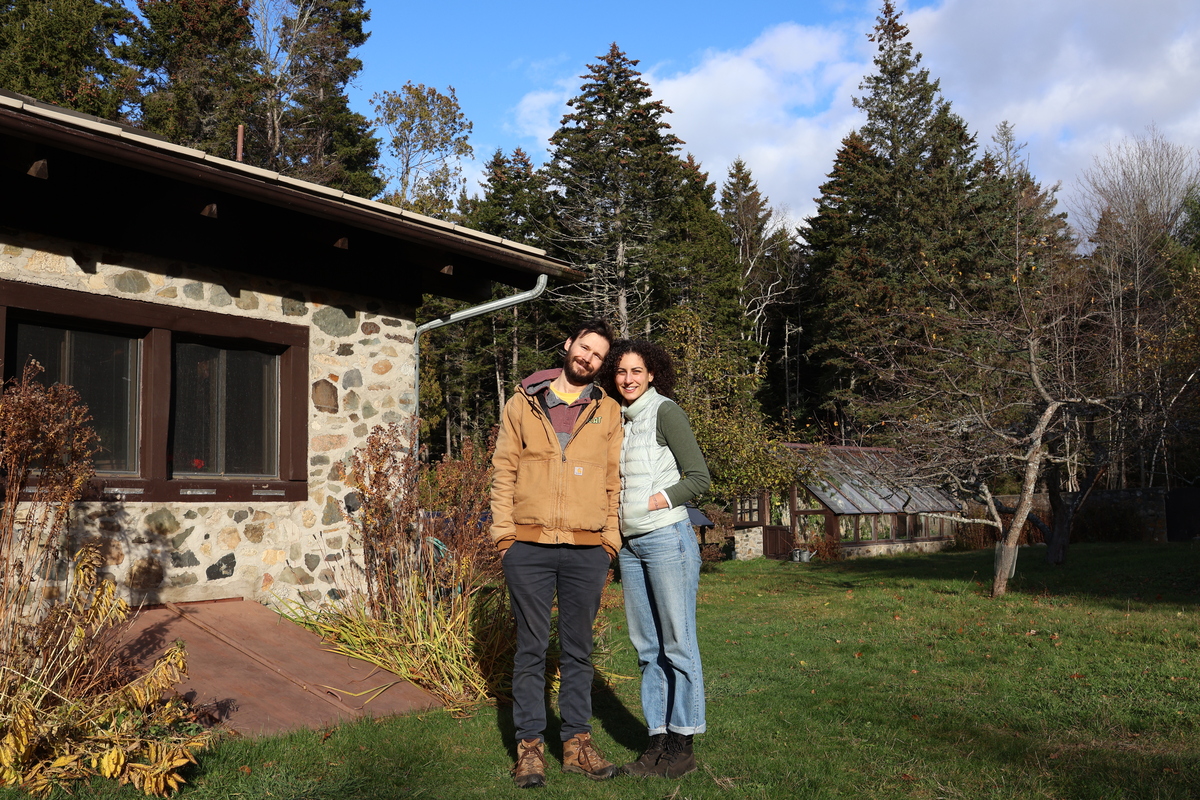
The legacy of homesteading icons Helen and Scott Nearing continues to thrive at their former farm in Brooksville, Maine, now known as the Good Life Center. This year, thousands of visitors have flocked to the site, drawn by the Nearings’ philosophy of “living sanely and simply in a troubled world.” Their stone home and gardens, built by hand and overlooking Penobscot Bay, remain a beacon for those seeking sustainable living and self-reliance.
New stewards Jordan Humphrey and Lucy Marcus, who began their journey as traveling farmsitters during the pandemic, have taken on the responsibility of preserving this legacy. Inspired by the Nearings’ commitment to hard work, vegetarianism, and pacifism, they embody the spirit of adapting to modern challenges while honoring the couple’s principles. The center’s board chair, Rachael M Rollson, emphasizes the ongoing relevance of the Nearings’ ideas, particularly as society continues to grapple with significant upheaval.
Changing Dynamics in Homesteading
While the Nearings advocated for a lifestyle rooted in pacifism and self-reliance, the landscape of homesteading has shifted in recent years. The rise of conservative and libertarian perspectives within the movement contrasts sharply with the Nearings’ ideals. A new presidential administration has introduced a politically charged narrative surrounding healthy living, challenging the perception of homesteading as primarily a progressive endeavor.
The COVID-19 pandemic has contributed to a resurgence in interest in homesteading as individuals seek to cultivate self-sufficiency amidst uncertainty. Despite the escalating costs of land and various technological and climate challenges, the principles championed by the Nearings continue to resonate.
“We’re still in a troubled world,”
said Rollson, referencing the subtitle of the Nearings’ influential book, “How to Live Sanely and Simply in a Troubled World.”
The impact of the Nearings’ work has been profound, particularly since the reprint of their seminal book, “Living the Good Life,” in 1954, which sparked the back-to-the-land movement in Maine. Following their deaths—Scott at age 100 in 1983 and Helen at 91 in 1995—the Good Life Center has remained committed to preserving their legacy and educating the public about their philosophies.
Community and Self-Reliance in Modern Times
The growing rightward shift within homesteading communities, including various developments and influencers advocating conservative values, stands in stark contrast to the Nearings’ advocacy for social justice and pacifism. While these conservative threads have gained traction in other regions, they have not significantly influenced the Nearing legacy in coastal and mid-Maine, according to board members and staff at the center.
Many of the societal issues that Scott Nearing critiqued decades ago—such as income inequality and distrust of government—remain relevant today. Margot Kelley, a Maine writer and author of “Foodtopia,” notes that populist responses to these issues have historically prompted back-to-the-land movements in America. She explains that many individuals increasingly feel disconnected from the traditional systems that are supposed to support them, leading them to seek alternative lifestyles.
The pandemic has intensified this sense of distrust, prompting individuals like Warren Berkowitz, who moved to Maine in the late 1970s after being inspired by the Nearings, to reflect on their own paths to self-sufficiency. Berkowitz and his wife have become integral members of their local homesteading community, which shapes the identity of the Blue Hill peninsula.
As the Good Life Center looks to the future, the leadership recognizes the need to adapt its messaging to the current climate. The increasing unaffordability of land poses significant challenges for aspiring homesteaders, and the center is exploring collaborative models that emphasize community over individualism. Rollson remarks that the center is taking “big strides” to promote the Nearings’ messages and engage more actively with the public.
In a notable development, the Good Life Center has been nominated for the National Register of Historic Places, highlighting its social significance. The review by the National Park Service is set for early next year, further cementing the Nearings’ impact on contemporary society.
As the center evolves, it aims to foster a sense of community and shared responsibility, reflecting the Nearings’ belief that self-reliance does not equate to isolation. Rollson explains that the couple’s vision for a “good life” encompasses personal responsibility and collective action.
In the face of ongoing challenges—including climate change and technological advancements—the Nearings’ principles remain vital. With increasing interest in self-sufficiency and sustainable living, the Good Life Center continues to serve as a resource for those seeking answers and inspiration in a rapidly changing world.

Robinhood Stock Surges 2.5% Today Amid Tech Market Recovery

Philadelphia’s Earth Month Kicks Off with Free Events in Parks

GSK’s Inhaler Decision Sparks Health Concerns for Children

Bradford’s Fish Fry Fridays Offer Community Spirit and Flavor

Speculation Rises on Shutdowns During Trump’s Potential Presidency

Samsung Galaxy Watch 9 to Feature Larger Battery, Report Reveals

Inventors Find New Purpose Through Unconventional Paths

UConn Huskies Aim for Back-to-Back Titles in 2026 NCAA Tournament

U.S. Mine Countermeasure Ships Dock in Malaysia for Logistics Stop

University of Hawaiʻi at Mānoa Joins $25.6M AI Initiative for Disaster Monitoring

$2.2 Million Boost for Cancer Research and Training in Hawaiʻi

ALMA Discovers Companion Orbiting Red Giant Star π 1 Gruis

Sacituzumab Govitecan Shows Promise for HR+/HER2− Breast Cancer

币安人生 Sees $15.92 Million in Trading Volume Amid Market Fluctuations

New Gel Offers Hope for Regrowing Tooth Enamel in Dentistry

CAVA Group Shares Surge 5.1% Amid Mixed Analyst Ratings

Christian Bale in Talks to Join Leonardo DiCaprio in Heat 2

Supreme Court to Review Birthright Citizenship for Children of Immigrants
-
Science9 months ago
University of Hawaiʻi at Mānoa Joins $25.6M AI Initiative for Disaster Monitoring
-
 Health8 months ago
$2.2 Million Boost for Cancer Research and Training in Hawaiʻi
-
 Science9 months ago
ALMA Discovers Companion Orbiting Red Giant Star π 1 Gruis
-
 Health7 months ago
Sacituzumab Govitecan Shows Promise for HR+/HER2− Breast Cancer
-
Politics5 months ago
币安人生 Sees $15.92 Million in Trading Volume Amid Market Fluctuations
-
 Health9 months ago
New Gel Offers Hope for Regrowing Tooth Enamel in Dentistry
-
 Business8 months ago
CAVA Group Shares Surge 5.1% Amid Mixed Analyst Ratings
-
 Entertainment9 months ago
Christian Bale in Talks to Join Leonardo DiCaprio in Heat 2
-
 Politics8 months ago
Supreme Court to Review Birthright Citizenship for Children of Immigrants
-

 Lifestyle9 months ago
Art Deco and Traditional Designs Set to Transform Homes in 2026
-

 Lifestyle8 months ago
Fernando Mendoza Secures Maxwell and O’Brien Awards Ahead of Heisman
-

 World8 months ago
Swiss Residents Reject 50% Inheritance Tax on Wealthy