
Politics
House Votes Down Resolution to Limit Trump’s Military Actions in Venezuela

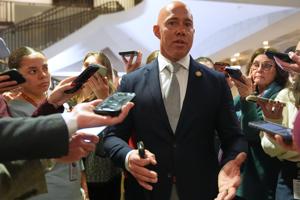
The U.S. House of Representatives voted against a resolution aimed at restricting President Donald Trump from deploying military forces in Venezuela. The Democratic-backed measure was defeated on January 5, 2026, after a tied vote failed to secure the majority required for passage.
The resolution sought to prevent any military action by the Trump administration without congressional approval. However, the vote concluded at 210-210, falling short of the necessary support. This development indicates a significant division within the House regarding foreign military engagements.
Republican Rep. Brian Mast of Florida, a vocal supporter of the President’s policies on Venezuela, expressed his views following the vote. Speaking to reporters at the U.S. Capitol, Mast emphasized the importance of maintaining a strong stance against the Venezuelan government led by President Nicolas Maduro. He highlighted the administration’s commitment to reestablishing order in the region, particularly as the U.S. considers its diplomatic posture towards Venezuela.
The backdrop to this legislative action reveals a potential shift in U.S.-Venezuela relations. Reports indicate that the Trump administration is contemplating the reopening of its embassy in Caracas, a move that could signal a willingness to engage with the Maduro government. This development comes amidst ongoing humanitarian concerns and political unrest in Venezuela.
While the resolution’s defeat reflects a lack of consensus, it also underscores the complexities of international relations and military intervention. Critics of military action argue that it could exacerbate the already dire situation in Venezuela, where political and economic crises have led to significant human suffering.
The outcome of this vote may have implications for future U.S. foreign policy in Latin America, particularly regarding approaches to authoritarian regimes. As Congress navigates its role in authorizing military action, the focus will likely remain on balancing national interests with humanitarian considerations.
The House’s decision on this resolution stands as a testament to the ongoing debate over the use of military force and the role of legislative oversight in U.S. foreign affairs. As discussions continue, the future of U.S.-Venezuela relations remains uncertain.

Robinhood Stock Surges 2.5% Today Amid Tech Market Recovery

Philadelphia’s Earth Month Kicks Off with Free Events in Parks

GSK’s Inhaler Decision Sparks Health Concerns for Children

Bradford’s Fish Fry Fridays Offer Community Spirit and Flavor

Speculation Rises on Shutdowns During Trump’s Potential Presidency

Samsung Galaxy Watch 9 to Feature Larger Battery, Report Reveals

Inventors Find New Purpose Through Unconventional Paths

UConn Huskies Aim for Back-to-Back Titles in 2026 NCAA Tournament

U.S. Mine Countermeasure Ships Dock in Malaysia for Logistics Stop

University of Hawaiʻi at Mānoa Joins $25.6M AI Initiative for Disaster Monitoring

$2.2 Million Boost for Cancer Research and Training in Hawaiʻi

ALMA Discovers Companion Orbiting Red Giant Star π 1 Gruis

Sacituzumab Govitecan Shows Promise for HR+/HER2− Breast Cancer

币安人生 Sees $15.92 Million in Trading Volume Amid Market Fluctuations

New Gel Offers Hope for Regrowing Tooth Enamel in Dentistry

CAVA Group Shares Surge 5.1% Amid Mixed Analyst Ratings

Christian Bale in Talks to Join Leonardo DiCaprio in Heat 2

Supreme Court to Review Birthright Citizenship for Children of Immigrants
-
Science9 months ago
University of Hawaiʻi at Mānoa Joins $25.6M AI Initiative for Disaster Monitoring
-
 Health7 months ago
$2.2 Million Boost for Cancer Research and Training in Hawaiʻi
-
 Science8 months ago
ALMA Discovers Companion Orbiting Red Giant Star π 1 Gruis
-
 Health7 months ago
Sacituzumab Govitecan Shows Promise for HR+/HER2− Breast Cancer
-
Politics5 months ago
币安人生 Sees $15.92 Million in Trading Volume Amid Market Fluctuations
-
 Health9 months ago
New Gel Offers Hope for Regrowing Tooth Enamel in Dentistry
-
 Business7 months ago
CAVA Group Shares Surge 5.1% Amid Mixed Analyst Ratings
-
 Entertainment8 months ago
Christian Bale in Talks to Join Leonardo DiCaprio in Heat 2
-
 Politics7 months ago
Supreme Court to Review Birthright Citizenship for Children of Immigrants
-

 Lifestyle8 months ago
Art Deco and Traditional Designs Set to Transform Homes in 2026
-

 Lifestyle7 months ago
Fernando Mendoza Secures Maxwell and O’Brien Awards Ahead of Heisman
-

 World8 months ago
Swiss Residents Reject 50% Inheritance Tax on Wealthy