
Politics
North Dakota Education Leaders Debate Costs of Inauguration Ceremony

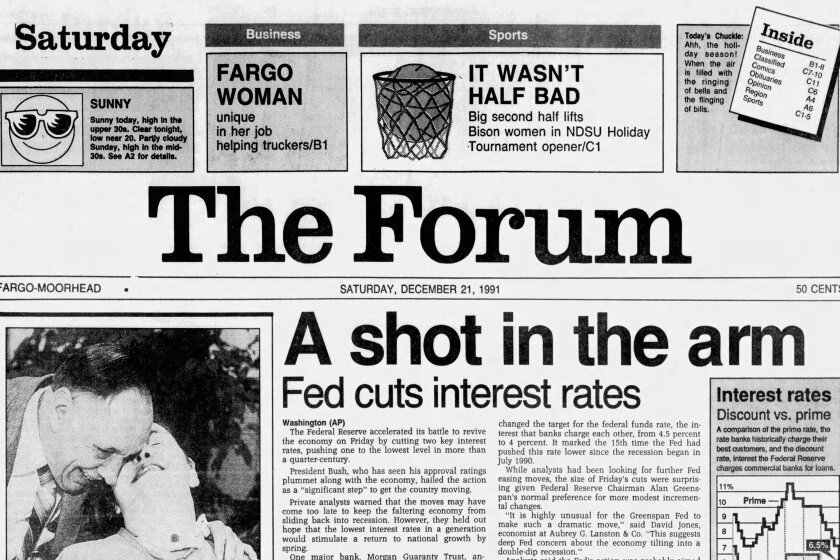
On November 6, 1991, the inauguration of Chancellor Douglas Treadway sparked a heated debate among North Dakota lawmakers and higher education officials regarding its costs and the implications of such expenditures. The ceremony, which totaled nearly $24,150, faced scrutiny for being excessive, particularly in light of recent criticism surrounding the university system’s financial decisions.
The event drew attention after Treadway publicly criticized North Dakota State University’s $27,135 logo, prompting questions about the propriety of spending on ceremonial occasions. Darlene Leinen, president of the North Dakota Board of Higher Education, defended the inauguration, stating it was funded entirely through private sources, not taxpayer dollars or tuition fees. “I don’t think the two issues are analogous,” Leinen remarked, emphasizing the importance of the ceremony in unifying the newly established university system.
Despite this, Republican lawmaker Bob Martinson condemned the cost, labeling it an example of unnecessary spending within higher education. He asserted that the funds could have been better allocated toward student scholarships or athletic programs. “That’s a lot of money put out for egos,” Martinson stated, expressing concerns about the ceremony’s extravagant nature.
“If this is a new beginning, I challenge them to say what will be different,”
Martinson added, suggesting that the event resembled a “coronation” rather than a meaningful inauguration. He noted that although Treadway did not initiate the celebration, the chancellor could have declined participation in the lavish event.
In a recent meeting of the higher education board, Treadway aimed to quell public discontent regarding the logo, advocating for a more fiscally responsible approach to university branding. Leinen reiterated that the inauguration was intended to celebrate the newly formed university system rather than solely Treadway’s appointment. “We just thought it was very important to get all the diverse groups together and hoped it would be a unifying experience,” she explained.
The official cost for the inauguration, held at the Bismarck Civic Center, was reported to be $26,950, although this was offset by $2,800 collected from meal contributions, resulting in a net expenditure of $24,150. Approximately 1,000 to 1,500 guests attended the event, which featured a catered meal and performances by college musical groups.
While many institutions collaborated to fund the inauguration, some expressed dissatisfaction with the financial contribution. William Goetz, president of the Dickinson State University (DSU) Foundation, voiced his reservations about the expenditure, acknowledging the mismatch between public sentiment and the nature of the ceremony. He indicated that the $1,350 cost was significant for DSU’s small foundation, which typically manages a modest annual budget.
The distribution of costs among the state-supported institutions varied, based on their size. The University of North Dakota contributed $6,375, while North Dakota State University accounted for $6,250. Smaller institutions such as Minot State University and Bismarck State College contributed $2,610 and $1,660 respectively.
In response to the backlash, Treadway acknowledged his ongoing adjustment to the cultural expectations of North Dakota. “We want to be responsive to the people,” he said, emphasizing the administration’s commitment to addressing public concerns about spending and the priorities of the university system.
As discussions continue over the appropriateness of such expenditures in higher education, the inauguration of Chancellor Douglas Treadway serves as a focal point for broader conversations about funding and priorities within North Dakota’s academic landscape.

Robinhood Stock Surges 2.5% Today Amid Tech Market Recovery

Philadelphia’s Earth Month Kicks Off with Free Events in Parks

GSK’s Inhaler Decision Sparks Health Concerns for Children

Bradford’s Fish Fry Fridays Offer Community Spirit and Flavor

Speculation Rises on Shutdowns During Trump’s Potential Presidency

Samsung Galaxy Watch 9 to Feature Larger Battery, Report Reveals

Inventors Find New Purpose Through Unconventional Paths

UConn Huskies Aim for Back-to-Back Titles in 2026 NCAA Tournament

U.S. Mine Countermeasure Ships Dock in Malaysia for Logistics Stop

University of Hawaiʻi at Mānoa Joins $25.6M AI Initiative for Disaster Monitoring

$2.2 Million Boost for Cancer Research and Training in Hawaiʻi

ALMA Discovers Companion Orbiting Red Giant Star π 1 Gruis

Sacituzumab Govitecan Shows Promise for HR+/HER2− Breast Cancer

币安人生 Sees $15.92 Million in Trading Volume Amid Market Fluctuations

New Gel Offers Hope for Regrowing Tooth Enamel in Dentistry

CAVA Group Shares Surge 5.1% Amid Mixed Analyst Ratings

Christian Bale in Talks to Join Leonardo DiCaprio in Heat 2

Supreme Court to Review Birthright Citizenship for Children of Immigrants
-
Science9 months ago
University of Hawaiʻi at Mānoa Joins $25.6M AI Initiative for Disaster Monitoring
-
 Health8 months ago
$2.2 Million Boost for Cancer Research and Training in Hawaiʻi
-
 Science9 months ago
ALMA Discovers Companion Orbiting Red Giant Star π 1 Gruis
-
 Health7 months ago
Sacituzumab Govitecan Shows Promise for HR+/HER2− Breast Cancer
-
Politics5 months ago
币安人生 Sees $15.92 Million in Trading Volume Amid Market Fluctuations
-
 Health9 months ago
New Gel Offers Hope for Regrowing Tooth Enamel in Dentistry
-
 Business8 months ago
CAVA Group Shares Surge 5.1% Amid Mixed Analyst Ratings
-
 Entertainment9 months ago
Christian Bale in Talks to Join Leonardo DiCaprio in Heat 2
-
 Politics8 months ago
Supreme Court to Review Birthright Citizenship for Children of Immigrants
-

 Lifestyle9 months ago
Art Deco and Traditional Designs Set to Transform Homes in 2026
-

 Lifestyle8 months ago
Fernando Mendoza Secures Maxwell and O’Brien Awards Ahead of Heisman
-

 World8 months ago
Swiss Residents Reject 50% Inheritance Tax on Wealthy