
Politics
Russia Allegedly Develops Anti-Satellite Weapon Targeting Starlink

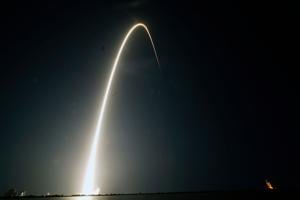
Western intelligence agencies have raised concerns that Russia is developing a new anti-satellite weapon designed to target Elon Musk‘s Starlink satellite constellation. This weapon, described as a “zone-effect” system, reportedly aims to deploy destructive clouds of shrapnel into orbit, potentially jeopardizing Western space capabilities that have been vital for Ukraine during its ongoing conflict with Russia.
According to intelligence findings seen by The Associated Press, this weapon could release hundreds of thousands of small, high-density pellets into the orbits of Starlink satellites. Analysts warn that while the intention may be to disable multiple satellites simultaneously, the use of such a weapon could lead to catastrophic collateral damage that affects other critical space systems.
Challenges in development and deployment
Experts who have not seen the intelligence findings express skepticism about the feasibility of such a weapon. Victoria Samson, a space-security specialist at the Secure World Foundation, stated, “I don’t buy it. Like, I really don’t. I would be very surprised if they were to do something like that.” In contrast, Brig. Gen. Christopher Horner, commander of the Canadian military’s Space Division, acknowledged that previous allegations regarding Russia’s pursuit of space-based weapons cannot be dismissed.
“It’s not implausible,” he noted, adding, “If the reporting on the nuclear weapons system is accurate… it wouldn’t strike me as shocking that something just short of that, but equally damaging, is within their wheelhouse of development.”
Russian officials have historically criticized Western space superiority. The Kremlin, through spokesperson Dmitry Peskov, has not responded to inquiries about these latest allegations. Russia has called for global efforts to prevent the deployment of weapons in space, insisting that it has no intention of using nuclear weapons in orbital warfare.
Starlink’s crucial role in the Ukraine conflict
The intelligence findings indicate that Russia views Starlink as a significant threat. The satellite network has been instrumental in providing high-speed internet for battlefield communications, weapon targeting, and civilian connectivity amid Russian strikes. Throughout the ongoing conflict, Russia has warned that commercial satellites supporting Ukraine’s military could become legitimate targets.
Recent developments indicate that Russia has introduced a new ground-based missile system, the S-500, capable of engaging low-orbit targets. Unlike previous missile tests that destroyed defunct satellites, this new system is designed to target multiple Starlink satellites simultaneously, with the potential for pellets to be released from formations of small satellites yet to be launched.
Concerns over debris and space sustainability
Experts remain wary of the implications of deploying a weapon that uses pellets to target satellites. Horner expressed doubts about how effectively such pellets could be controlled to avoid collateral damage to other satellites. He noted, “You blow up a box full of BBs,” suggesting that the resulting debris could blanket entire orbital regions, impacting all satellites in similar orbits.
The intelligence findings did not specify a timeline for when Russia might be able to deploy such a system, nor did they detail whether it has been tested. An official familiar with the findings indicated that the development is active, but specifics remain classified.
Some analysts believe that this research may be experimental. Samson suggested that scientists might pursue such ideas as theoretical exercises, hoping to secure government funding for research. She also posited that the emergence of this supposed threat could be an attempt to provoke a response from the international community, driving calls for increased spending on counter-space capabilities.
Potential global repercussions
The pellets envisioned in this weapon would be small enough to evade detection by existing ground- and space-based monitoring systems, complicating attribution of any attacks. Clayton Swope, a specialist at the Center for Strategic and International Studies, noted that while undetected pellets would complicate accountability, damage to satellites would likely lead to conclusions about the source of the threat.
“The most damage would probably be done to the solar panels because they’re the most fragile part,” Swope explained. Even minor impacts from small debris could severely disrupt satellite operations.
After any such attack, debris would eventually re-enter Earth’s atmosphere, posing risks to other orbiting systems. Starlink satellites operate at an altitude of approximately 550 kilometers (340 miles), while other critical infrastructure, such as China’s Tiangong space station and the International Space Station, operates at lower orbits, increasing their exposure to potential threats.
The chaotic consequences of deploying such a weapon may allow Russia to intimidate its adversaries without direct engagement. As Swope suggested, “It definitely feels like a weapon of fear, looking for some kind of deterrence.”
Ultimately, the potential drawbacks of an indiscriminate pellet weapon could lead Russia to reconsider its development. As Samson highlighted, Russia has invested substantial resources into becoming a space power, and the use of such a weapon might severely limit its own capabilities in space. “I don’t know that they would be willing to give up that much,” she concluded.
This evolving situation raises critical questions about the future of space security and the balance of power in an increasingly contested domain.

Robinhood Stock Surges 2.5% Today Amid Tech Market Recovery

Philadelphia’s Earth Month Kicks Off with Free Events in Parks

GSK’s Inhaler Decision Sparks Health Concerns for Children

Bradford’s Fish Fry Fridays Offer Community Spirit and Flavor

Speculation Rises on Shutdowns During Trump’s Potential Presidency

Samsung Galaxy Watch 9 to Feature Larger Battery, Report Reveals

Inventors Find New Purpose Through Unconventional Paths

UConn Huskies Aim for Back-to-Back Titles in 2026 NCAA Tournament

U.S. Mine Countermeasure Ships Dock in Malaysia for Logistics Stop

University of Hawaiʻi at Mānoa Joins $25.6M AI Initiative for Disaster Monitoring

$2.2 Million Boost for Cancer Research and Training in Hawaiʻi

ALMA Discovers Companion Orbiting Red Giant Star π 1 Gruis

Sacituzumab Govitecan Shows Promise for HR+/HER2− Breast Cancer

币安人生 Sees $15.92 Million in Trading Volume Amid Market Fluctuations

New Gel Offers Hope for Regrowing Tooth Enamel in Dentistry

CAVA Group Shares Surge 5.1% Amid Mixed Analyst Ratings

Christian Bale in Talks to Join Leonardo DiCaprio in Heat 2

Supreme Court to Review Birthright Citizenship for Children of Immigrants
-
Science9 months ago
University of Hawaiʻi at Mānoa Joins $25.6M AI Initiative for Disaster Monitoring
-
 Health8 months ago
$2.2 Million Boost for Cancer Research and Training in Hawaiʻi
-
 Science9 months ago
ALMA Discovers Companion Orbiting Red Giant Star π 1 Gruis
-
 Health7 months ago
Sacituzumab Govitecan Shows Promise for HR+/HER2− Breast Cancer
-
Politics5 months ago
币安人生 Sees $15.92 Million in Trading Volume Amid Market Fluctuations
-
 Health9 months ago
New Gel Offers Hope for Regrowing Tooth Enamel in Dentistry
-
 Business8 months ago
CAVA Group Shares Surge 5.1% Amid Mixed Analyst Ratings
-
 Entertainment9 months ago
Christian Bale in Talks to Join Leonardo DiCaprio in Heat 2
-
 Politics8 months ago
Supreme Court to Review Birthright Citizenship for Children of Immigrants
-

 Lifestyle9 months ago
Art Deco and Traditional Designs Set to Transform Homes in 2026
-

 Lifestyle8 months ago
Fernando Mendoza Secures Maxwell and O’Brien Awards Ahead of Heisman
-

 World8 months ago
Swiss Residents Reject 50% Inheritance Tax on Wealthy