
Politics
Texas Governor Abbott Backs Trump’s Controversial Guard Deployment

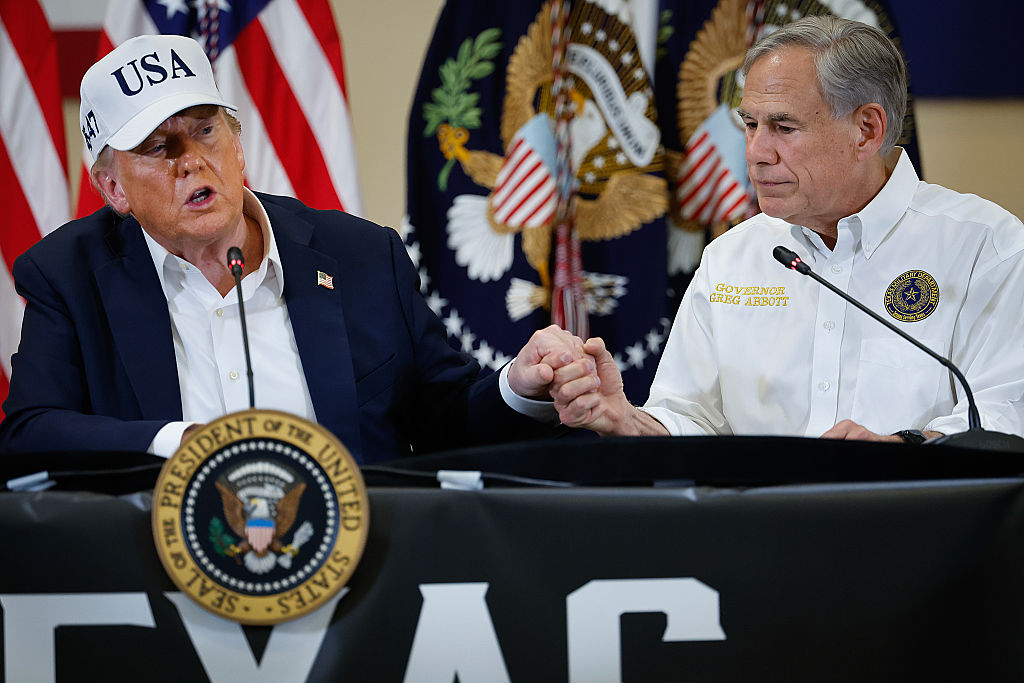
Texas Governor Greg Abbott has publicly supported President Donald Trump in a contentious plan to deploy members of the Texas National Guard to Illinois and Oregon. This decision has reignited discussions about the balance of power between state and federal authorities, particularly in light of Abbott’s previous strong stances on state sovereignty.
Last year, Abbott joined a bipartisan group of governors in condemning a Biden administration proposal that aimed to transfer Air National Guard units to the newly established U.S. Space Force. He deemed the plan an “intolerable threat,” asserting in an open letter to the president that it undermined the authority of governors over their own guard forces. Despite Texas not being among the affected states, Abbott’s opposition was clear.
Fast forward to today, Abbott has declared his “full authorization” for Trump’s deployment of Texas National Guard troops to assist federal law enforcement in enforcing immigration laws. This move has drawn criticism from governors of both parties, who argue it represents an overreach of federal power and an infringement on state rights.
On a recent appearance on Fox News, Abbott defended the deployment, stating that the president has the authority to mobilize guard members to ensure public safety. He affirmed that he and Trump are “closely aligned” in prioritizing the country’s safety. However, this alignment has raised eyebrows given Abbott’s historical commitment to defending state rights.
Abbott’s support for Trump’s expansion of federal power marks a significant departure from his past principles. According to constitutional experts, this shift exemplifies a phenomenon known as partisan federalism, where political leaders’ commitment to state sovereignty fluctuates based on party control at the federal level. Victoria Nourse, a professor at Georgetown University Law Center, noted that Abbott’s actions could have long-term consequences for Texas, suggesting that political gains today may undermine state power in the future.
Concerns about the implications of Abbott’s endorsement of federal power extend beyond political theory. Oklahoma Governor Kevin Stitt, a fellow Republican, expressed surprise at Abbott’s decision to send Texas troops to Illinois, emphasizing the importance of state rights. Legal experts have voiced similar concerns, arguing that Abbott’s actions undermine the cooperative spirit traditionally held among states.
Abbott’s history of advocating for states’ rights is well-documented. In January 2016, he published a lengthy essay criticizing the Obama administration for what he described as excessive executive overreach. He proposed the “Texas Plan,” a series of constitutional amendments aimed at re-establishing the balance of power between the federal government and states.
Notably, Abbott’s recent actions illustrate a willingness to bend his previously staunch views on state sovereignty to align with Trump’s administration. This includes directing state agencies to assist in immigration enforcement and providing data related to voter registration, actions that some legal experts argue effectively deputize Texas state resources for federal initiatives.
The deployment of Texas National Guard troops under Trump’s interpretation of federal law has faced legal challenges. Federal judges have temporarily halted the deployment after Illinois and Oregon filed lawsuits, contending that the move violates the 10th Amendment, which reserves powers not explicitly granted to the federal government for the states.
As this legal battle unfolds, the situation remains complex. The U.S. Supreme Court has placed the Illinois case on its emergency docket, meaning a ruling could significantly impact the status of the Texas troops.
Abbott’s cooperation with Trump raises questions about the future of state authority in the face of federal demands. While Abbott is currently focused on securing a fourth term in office, experts warn that his actions could have lasting repercussions on the delicate balance of power between state and federal government.
With the political landscape continually shifting, Abbott may find that his current alignment with federal authority could complicate his ability to advocate for states’ rights in future administrations.

Robinhood Stock Surges 2.5% Today Amid Tech Market Recovery

Philadelphia’s Earth Month Kicks Off with Free Events in Parks

GSK’s Inhaler Decision Sparks Health Concerns for Children

Bradford’s Fish Fry Fridays Offer Community Spirit and Flavor

Speculation Rises on Shutdowns During Trump’s Potential Presidency

Samsung Galaxy Watch 9 to Feature Larger Battery, Report Reveals

Inventors Find New Purpose Through Unconventional Paths

UConn Huskies Aim for Back-to-Back Titles in 2026 NCAA Tournament

U.S. Mine Countermeasure Ships Dock in Malaysia for Logistics Stop

University of Hawaiʻi at Mānoa Joins $25.6M AI Initiative for Disaster Monitoring

$2.2 Million Boost for Cancer Research and Training in Hawaiʻi

ALMA Discovers Companion Orbiting Red Giant Star π 1 Gruis

Sacituzumab Govitecan Shows Promise for HR+/HER2− Breast Cancer

币安人生 Sees $15.92 Million in Trading Volume Amid Market Fluctuations

New Gel Offers Hope for Regrowing Tooth Enamel in Dentistry

CAVA Group Shares Surge 5.1% Amid Mixed Analyst Ratings

Christian Bale in Talks to Join Leonardo DiCaprio in Heat 2

Supreme Court to Review Birthright Citizenship for Children of Immigrants
-
Science9 months ago
University of Hawaiʻi at Mānoa Joins $25.6M AI Initiative for Disaster Monitoring
-
 Health7 months ago
$2.2 Million Boost for Cancer Research and Training in Hawaiʻi
-
 Science9 months ago
ALMA Discovers Companion Orbiting Red Giant Star π 1 Gruis
-
 Health7 months ago
Sacituzumab Govitecan Shows Promise for HR+/HER2− Breast Cancer
-
Politics5 months ago
币安人生 Sees $15.92 Million in Trading Volume Amid Market Fluctuations
-
 Health9 months ago
New Gel Offers Hope for Regrowing Tooth Enamel in Dentistry
-
 Business8 months ago
CAVA Group Shares Surge 5.1% Amid Mixed Analyst Ratings
-
 Entertainment9 months ago
Christian Bale in Talks to Join Leonardo DiCaprio in Heat 2
-
 Politics8 months ago
Supreme Court to Review Birthright Citizenship for Children of Immigrants
-

 Lifestyle9 months ago
Art Deco and Traditional Designs Set to Transform Homes in 2026
-

 Lifestyle8 months ago
Fernando Mendoza Secures Maxwell and O’Brien Awards Ahead of Heisman
-

 World8 months ago
Swiss Residents Reject 50% Inheritance Tax on Wealthy