
Politics
Trump Shares False Claim About Obama’s “Obamacare Royalties”

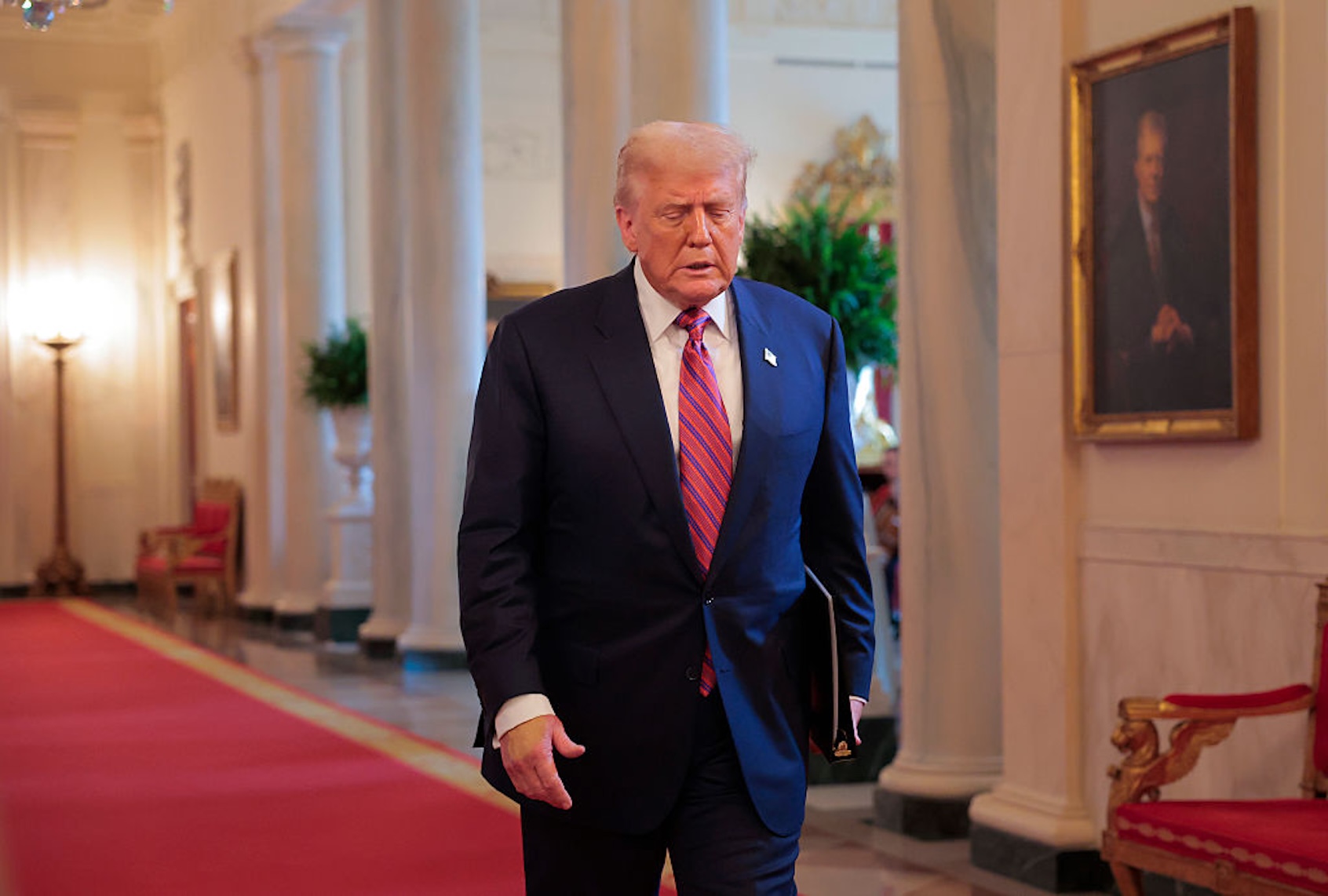
President Donald Trump recently amplified a satirical claim suggesting that former President Barack Obama has received royalties from the federal government for the use of the term “Obamacare.” This claim, which surfaced on the online publication known as the Dunning-Kruger Times, was shared with Trump’s 11 million followers on Truth Social, despite its clear fictional nature.
The post claimed, “DOGE halts yearly payments of $2.5 million to Barack Obama for ‘royalties linked to Obamacare,’” stating that Obama has allegedly collected a total of $40 million since 2010. However, as of now, the term “Obamacare” is not trademarked, and there are no actual royalty payments being made to Obama.
The Dunning-Kruger Times, which takes its name from a psychological phenomenon where individuals overestimate their knowledge, explicitly states that its content is fictional. On its About page, the site clarifies, “Everything on this website is fiction. It is not a lie, and it is not fake news because it is not real. If you believe that it is real, you should have your head examined.” The publication emphasizes that any resemblance to actual people or events is purely coincidental.
Trump’s post, which he accompanied with an exclamatory “Wow!”, was met with varying reactions, showcasing the polarizing nature of his social media presence. Critics have pointed to this instance as part of a broader trend where misinformation gains traction online, particularly among political figures and their followers.
The sharing of such satirical content raises concerns about the responsibilities of public figures in the digital age. With platforms like Truth Social allowing for rapid dissemination of information, the potential for misunderstanding or misrepresentation increases significantly.
As discussions around health care continue to shape political discourse, the impact of misinformation on public perception and policy cannot be understated. This incident serves as a reminder of the need for critical engagement with information, especially when it comes from unofficial sources.
The situation underscores the importance of verifying claims before sharing them, particularly in a political context where the stakes can be high. As more individuals turn to social media for news, the line between fact and fiction can often blur, leading to confusion and mistrust among the public.

Robinhood Stock Surges 2.5% Today Amid Tech Market Recovery

Philadelphia’s Earth Month Kicks Off with Free Events in Parks

GSK’s Inhaler Decision Sparks Health Concerns for Children

Bradford’s Fish Fry Fridays Offer Community Spirit and Flavor

Speculation Rises on Shutdowns During Trump’s Potential Presidency

Samsung Galaxy Watch 9 to Feature Larger Battery, Report Reveals

Inventors Find New Purpose Through Unconventional Paths

UConn Huskies Aim for Back-to-Back Titles in 2026 NCAA Tournament

U.S. Mine Countermeasure Ships Dock in Malaysia for Logistics Stop

University of Hawaiʻi at Mānoa Joins $25.6M AI Initiative for Disaster Monitoring

$2.2 Million Boost for Cancer Research and Training in Hawaiʻi

ALMA Discovers Companion Orbiting Red Giant Star π 1 Gruis

Sacituzumab Govitecan Shows Promise for HR+/HER2− Breast Cancer

币安人生 Sees $15.92 Million in Trading Volume Amid Market Fluctuations

New Gel Offers Hope for Regrowing Tooth Enamel in Dentistry

CAVA Group Shares Surge 5.1% Amid Mixed Analyst Ratings

Christian Bale in Talks to Join Leonardo DiCaprio in Heat 2

Supreme Court to Review Birthright Citizenship for Children of Immigrants
-
Science9 months ago
University of Hawaiʻi at Mānoa Joins $25.6M AI Initiative for Disaster Monitoring
-
 Health7 months ago
$2.2 Million Boost for Cancer Research and Training in Hawaiʻi
-
 Science9 months ago
ALMA Discovers Companion Orbiting Red Giant Star π 1 Gruis
-
 Health7 months ago
Sacituzumab Govitecan Shows Promise for HR+/HER2− Breast Cancer
-
Politics5 months ago
币安人生 Sees $15.92 Million in Trading Volume Amid Market Fluctuations
-
 Health9 months ago
New Gel Offers Hope for Regrowing Tooth Enamel in Dentistry
-
 Business8 months ago
CAVA Group Shares Surge 5.1% Amid Mixed Analyst Ratings
-
 Entertainment8 months ago
Christian Bale in Talks to Join Leonardo DiCaprio in Heat 2
-
 Politics8 months ago
Supreme Court to Review Birthright Citizenship for Children of Immigrants
-

 Lifestyle8 months ago
Art Deco and Traditional Designs Set to Transform Homes in 2026
-

 Lifestyle8 months ago
Fernando Mendoza Secures Maxwell and O’Brien Awards Ahead of Heisman
-

 World8 months ago
Swiss Residents Reject 50% Inheritance Tax on Wealthy