
Politics
Veteran Protests Flag Order by Burning Flag Near White House

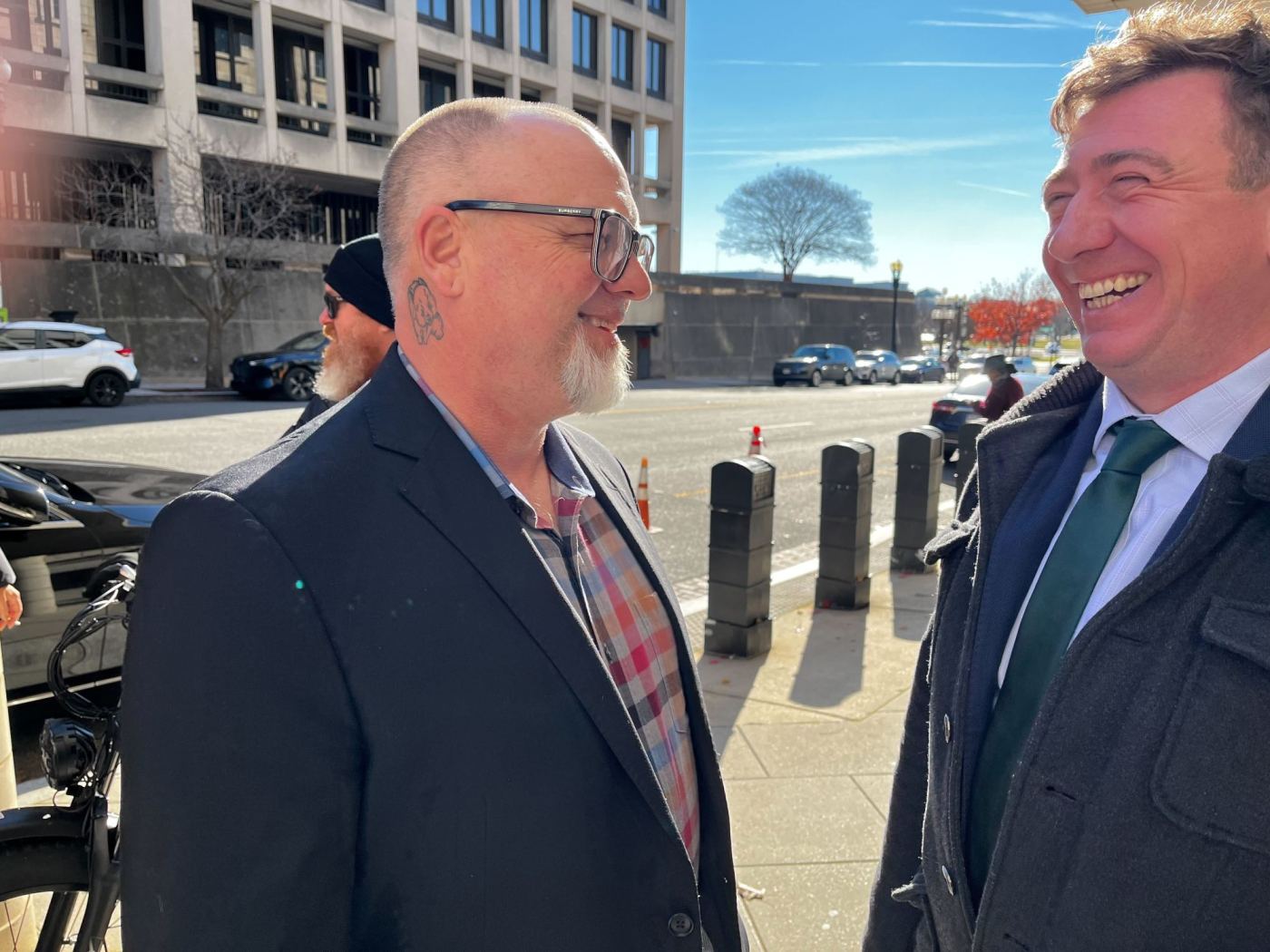
A U.S. Army veteran, Jan Carey, faces misdemeanor charges after he burned an American flag in protest of an executive order signed by former President Donald Trump. The incident occurred on August 25, 2024, in Lafayette Square, directly across from the White House. Carey asserts that his actions were a form of political expression protected under the First Amendment.
According to court documents, the 54-year-old combat veteran announced his intent to burn the flag using a bullhorn, declaring his status as an Army veteran. He stated, “That was my way of pushing back. He (Trump) said, ‘You can’t burn the flag.’ I said, ‘Oh yes, we can,’ and I burned the flag.” Carey’s actions have sparked significant debate regarding the intersection of free speech and public safety.
Carey is charged with lighting a fire in an undesignated area, which allegedly caused property damage and posed a safety hazard. Each count carries a potential penalty of up to six months in jail. He has pleaded not guilty to the charges.
Legal Context and Political Reactions
The legal backdrop of flag burning in the United States is complex. The Supreme Court ruled in the landmark case, Texas v. Johnson, that flag burning constitutes symbolic speech protected by the First Amendment. Nevertheless, individuals can face charges for related offenses, such as endangering public safety during demonstrations.
Prosecutors from the office of Washington U.S. Attorney Jeanine Pirro emphasized that Carey is being prosecuted for his actions that allegedly violated federal regulations aimed at protecting public safety, not for his expression. In a brief dated November 14, they dismissed Carey’s claims of vindictive prosecution as unfounded.
The controversy surrounding flag burning has intensified political discourse. In July 2024, former Maryland Governor Larry Hogan condemned flag burning during protests against Israel’s actions in Gaza, stating it is “disgusting and disgraceful.” In contrast, Democratic Representative Jamie Raskin criticized Trump’s order as hypocritical, pointing to the pardons granted to individuals involved in the January 6, 2021, Capitol riot.
Carey’s actions came in response to Trump’s executive order, which called for the Justice Department to “vigorously prosecute those who violate our laws in ways that involve desecrating the flag.” The order suggested that flag burning is often employed by foreign nationals to intimidate Americans.
Upcoming Court Proceedings
During a recent court hearing, Chief U.S. District Judge James Boasberg did not hear oral arguments nor rule on a defense motion to dismiss the case. A status hearing is set for January 28, 2024. Carey’s legal team argues that the prosecution is an overreach, claiming the government misapplies regulations generally used for wilderness areas to penalize his protest.
One of Carey’s attorneys, Nick Place, asserted that the executive order effectively instructs authorities to punish individuals for exercising their First Amendment rights, particularly the right to burn the flag. The government countered that Carey’s actions posed a threat to public safety, alleging he used a lighter and flammable materials in a manner that endangered bystanders.
Carey, who retired from the Army in 2012 after multiple deployments, expressed that his protest was intended to be safe and meaningful. He was supported by a small group of fellow veterans who attended the court hearing, standing quietly in solidarity.
As the case progresses, it will likely continue to fuel discussions around free speech, public safety, and the boundaries of protest in the United States. The outcome will not only impact Carey but may also influence future interpretations of the First Amendment in relation to acts perceived as desecration of national symbols.

Robinhood Stock Surges 2.5% Today Amid Tech Market Recovery

Philadelphia’s Earth Month Kicks Off with Free Events in Parks

GSK’s Inhaler Decision Sparks Health Concerns for Children

Bradford’s Fish Fry Fridays Offer Community Spirit and Flavor

Speculation Rises on Shutdowns During Trump’s Potential Presidency

Samsung Galaxy Watch 9 to Feature Larger Battery, Report Reveals

Inventors Find New Purpose Through Unconventional Paths

UConn Huskies Aim for Back-to-Back Titles in 2026 NCAA Tournament

U.S. Mine Countermeasure Ships Dock in Malaysia for Logistics Stop

University of Hawaiʻi at Mānoa Joins $25.6M AI Initiative for Disaster Monitoring

$2.2 Million Boost for Cancer Research and Training in Hawaiʻi

ALMA Discovers Companion Orbiting Red Giant Star π 1 Gruis

Sacituzumab Govitecan Shows Promise for HR+/HER2− Breast Cancer

币安人生 Sees $15.92 Million in Trading Volume Amid Market Fluctuations

New Gel Offers Hope for Regrowing Tooth Enamel in Dentistry

CAVA Group Shares Surge 5.1% Amid Mixed Analyst Ratings

Christian Bale in Talks to Join Leonardo DiCaprio in Heat 2

Supreme Court to Review Birthright Citizenship for Children of Immigrants
-
Science9 months ago
University of Hawaiʻi at Mānoa Joins $25.6M AI Initiative for Disaster Monitoring
-
 Health8 months ago
$2.2 Million Boost for Cancer Research and Training in Hawaiʻi
-
 Science9 months ago
ALMA Discovers Companion Orbiting Red Giant Star π 1 Gruis
-
 Health7 months ago
Sacituzumab Govitecan Shows Promise for HR+/HER2− Breast Cancer
-
Politics5 months ago
币安人生 Sees $15.92 Million in Trading Volume Amid Market Fluctuations
-
 Health9 months ago
New Gel Offers Hope for Regrowing Tooth Enamel in Dentistry
-
 Business8 months ago
CAVA Group Shares Surge 5.1% Amid Mixed Analyst Ratings
-
 Entertainment9 months ago
Christian Bale in Talks to Join Leonardo DiCaprio in Heat 2
-
 Politics8 months ago
Supreme Court to Review Birthright Citizenship for Children of Immigrants
-

 Lifestyle9 months ago
Art Deco and Traditional Designs Set to Transform Homes in 2026
-

 Lifestyle8 months ago
Fernando Mendoza Secures Maxwell and O’Brien Awards Ahead of Heisman
-

 World8 months ago
Swiss Residents Reject 50% Inheritance Tax on Wealthy