
Politics
Virginia Democrats Propose Redistricting Amendment Ahead of 2026

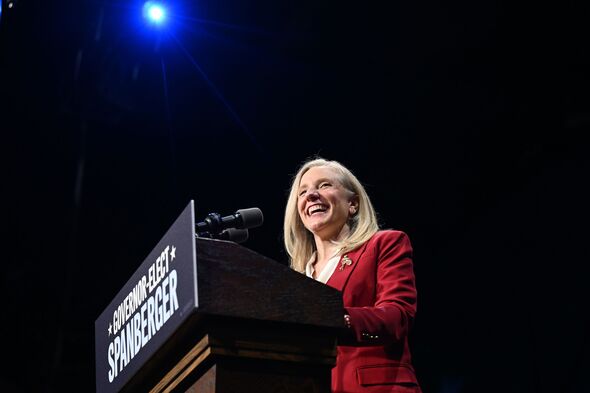
Democrats in Virginia are moving forward with plans to introduce a constitutional amendment that would enable the use of a new congressional map in the upcoming 2026 elections. This initiative follows a successful effort by Democratic lawmakers to leverage their slim majorities in the state House of Delegates and Senate to amend the state’s constitution. If enacted, the amendment would allow the legislature to bypass the bipartisan commission responsible for drawing Virginia’s political maps.
In a significant political shift, Virginia voters elected Abigail Spanberger as governor on November 7, 2023, with a decisive 15-percentage-point victory over Republican Lt. Gov. Winsome Earle-Sears. This victory expanded the majority of House Speaker Don Scott from 51–49 to 64–36. According to Senator Mamie Locke (D–Hampton), the changes reflect a positive view of the Democratic Party’s direction in Virginia. “What we were doing was not something that they saw as a negative,” Locke stated in an interview with VPM News.
The proposed amendment is seen as a strategic move to redraw congressional maps in a way that could potentially flip at least two U.S. House seats currently held by Republicans. During a discussion on WAMU’s The Politics Hour, Senate Majority Leader Scott Surovell highlighted two seats that are “pretty obviously in play,” acknowledging the challenges ahead but remaining optimistic about the possibilities.
Democrats are also positioning themselves to counteract anticipated Republican-led redistricting efforts that are unfolding across the country. Governor-elect Spanberger has not committed to endorsing new maps but has indicated a willingness to keep options open. Her spokesperson, Connor Joseph, emphasized Spanberger’s awareness of growing public concerns regarding election integrity, particularly in light of the Trump Administration’s impact on voter trust.
The broader context indicates that redistricting is a contentious issue nationwide. In states like Texas and Indiana, Republican lawmakers have faced scrutiny for their redistricting plans, which critics argue may disproportionately affect Democratic representation. In Texas, for instance, the redrawn map is currently under review by the U.S. Supreme Court due to allegations of racial gerrymandering.
Despite these challenges, Democrats across the United States find themselves in a difficult position, controlling fewer state legislatures than their Republican counterparts, which limits their influence over the redistricting process. Locke noted that discussions about the implications of redistricting in Texas and Indiana have not yet occurred within the Virginia Democratic caucus.
The proposed amendment would empower the Virginia General Assembly to draw new congressional maps, a task that proved difficult in 2021 when the Virginia Redistricting Commission, which included both elected officials and non-elected Virginians, failed to reach a consensus. This failure ultimately prompted the Supreme Court of Virginia to intervene and establish new maps for the 2023 elections.
As Virginia prepares for the 2026 elections, the prospect of a new congressional map is shaping up to be a significant factor in the state’s political landscape, reflecting the ongoing national dialogue around fair representation and electoral integrity.

Robinhood Stock Surges 2.5% Today Amid Tech Market Recovery

Philadelphia’s Earth Month Kicks Off with Free Events in Parks

GSK’s Inhaler Decision Sparks Health Concerns for Children

Bradford’s Fish Fry Fridays Offer Community Spirit and Flavor

Speculation Rises on Shutdowns During Trump’s Potential Presidency

Samsung Galaxy Watch 9 to Feature Larger Battery, Report Reveals

Inventors Find New Purpose Through Unconventional Paths

UConn Huskies Aim for Back-to-Back Titles in 2026 NCAA Tournament

U.S. Mine Countermeasure Ships Dock in Malaysia for Logistics Stop

University of Hawaiʻi at Mānoa Joins $25.6M AI Initiative for Disaster Monitoring

$2.2 Million Boost for Cancer Research and Training in Hawaiʻi

ALMA Discovers Companion Orbiting Red Giant Star π 1 Gruis

Sacituzumab Govitecan Shows Promise for HR+/HER2− Breast Cancer

币安人生 Sees $15.92 Million in Trading Volume Amid Market Fluctuations

New Gel Offers Hope for Regrowing Tooth Enamel in Dentistry

CAVA Group Shares Surge 5.1% Amid Mixed Analyst Ratings

Christian Bale in Talks to Join Leonardo DiCaprio in Heat 2

Supreme Court to Review Birthright Citizenship for Children of Immigrants
-
Science9 months ago
University of Hawaiʻi at Mānoa Joins $25.6M AI Initiative for Disaster Monitoring
-
 Health8 months ago
$2.2 Million Boost for Cancer Research and Training in Hawaiʻi
-
 Science9 months ago
ALMA Discovers Companion Orbiting Red Giant Star π 1 Gruis
-
 Health7 months ago
Sacituzumab Govitecan Shows Promise for HR+/HER2− Breast Cancer
-
Politics5 months ago
币安人生 Sees $15.92 Million in Trading Volume Amid Market Fluctuations
-
 Health9 months ago
New Gel Offers Hope for Regrowing Tooth Enamel in Dentistry
-
 Business8 months ago
CAVA Group Shares Surge 5.1% Amid Mixed Analyst Ratings
-
 Entertainment9 months ago
Christian Bale in Talks to Join Leonardo DiCaprio in Heat 2
-
 Politics8 months ago
Supreme Court to Review Birthright Citizenship for Children of Immigrants
-

 Lifestyle9 months ago
Art Deco and Traditional Designs Set to Transform Homes in 2026
-

 Lifestyle8 months ago
Fernando Mendoza Secures Maxwell and O’Brien Awards Ahead of Heisman
-

 World8 months ago
Swiss Residents Reject 50% Inheritance Tax on Wealthy