
Science
Algorithms Unlock Complex Chemistry of Propane to Propylene

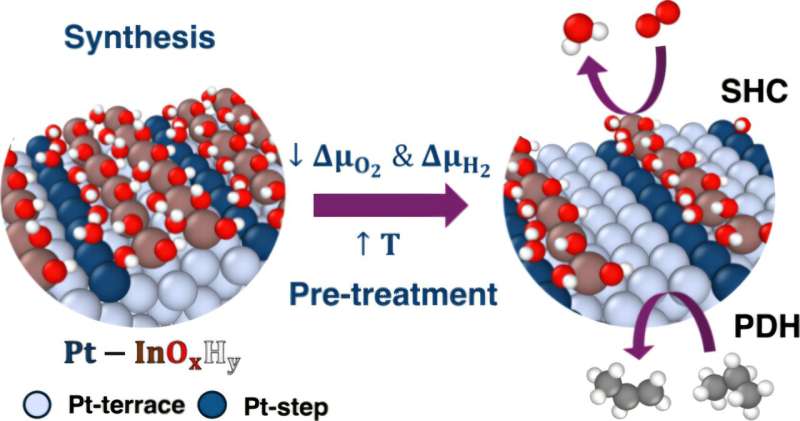
Numerous everyday products, such as plastic containers and outdoor furniture, trace their origins back to a critical transformation: converting propane into propylene. Recent advancements from researchers at the University of Rochester have shed light on this complex chemical process by developing algorithms that reveal the atomic dynamics involved in this conversion. Their study was published in the Journal of the American Chemical Society on November 13, 2025.
In 2021, a significant study demonstrated a method for using tandem nanoscale catalysts to merge multiple steps of the propane-to-propylene transformation into a single reaction. This innovative approach promises to enhance yield and reduce costs for companies. However, understanding the atomic-level interactions remained elusive, which limited the application of this technique across other industrial processes.
The research team, led by Siddharth Deshpande, an assistant professor in the Department of Chemical and Sustainability Engineering, utilized advanced algorithms to explore the intricate reactions involved. “There are so many different possibilities of what’s happening at the catalytic active sites, so we need an algorithmic approach to very easily yet logically screen through the large amount of possibilities that exist and focus on the most important ones,” Deshpande explained.
Through their analysis, Deshpande and Ph.D. student Snehitha Srirangam discovered unexpected insights regarding the role of oxide in the reaction. They found that the oxide exhibited a preference for growing around defective metal sites, which proved vital for the stability of the catalyst. Interestingly, despite the oxide’s ability to exist in various chemical compositions, it consistently maintained its functional relationship with these defective sites.
Deshpande emphasized the broader implications of their findings. He noted that the team’s algorithmic methods could be applied to better understand other chemical reactions, such as methanol synthesis, which is essential for producing a wide range of products, from paints to fuel cells. This understanding could ultimately lead to more efficient production strategies for propylene and other industrial materials, moving beyond traditional trial-and-error approaches that have dominated the field for decades.
“Our approach is very general and can open the doors to understanding many of these processes that have remained an enigma for decades,” Deshpande stated. “We know these processes work, and we produce tons of these chemicals, but we have much to learn about why exactly they’re working.”
The research marks a significant step forward in chemical engineering, with the potential to reshape production methods in industries reliant on propylene and similar compounds. As the team continues to refine their algorithms and insights, the future of efficient chemical manufacturing may become clearer, paving the way for innovations that could benefit both industry and consumers alike.

Robinhood Stock Surges 2.5% Today Amid Tech Market Recovery

Philadelphia’s Earth Month Kicks Off with Free Events in Parks

GSK’s Inhaler Decision Sparks Health Concerns for Children

Bradford’s Fish Fry Fridays Offer Community Spirit and Flavor

Speculation Rises on Shutdowns During Trump’s Potential Presidency

Samsung Galaxy Watch 9 to Feature Larger Battery, Report Reveals

Inventors Find New Purpose Through Unconventional Paths

UConn Huskies Aim for Back-to-Back Titles in 2026 NCAA Tournament

U.S. Mine Countermeasure Ships Dock in Malaysia for Logistics Stop

University of Hawaiʻi at Mānoa Joins $25.6M AI Initiative for Disaster Monitoring

$2.2 Million Boost for Cancer Research and Training in Hawaiʻi

ALMA Discovers Companion Orbiting Red Giant Star π 1 Gruis

Sacituzumab Govitecan Shows Promise for HR+/HER2− Breast Cancer

币安人生 Sees $15.92 Million in Trading Volume Amid Market Fluctuations

New Gel Offers Hope for Regrowing Tooth Enamel in Dentistry

CAVA Group Shares Surge 5.1% Amid Mixed Analyst Ratings

Christian Bale in Talks to Join Leonardo DiCaprio in Heat 2

Supreme Court to Review Birthright Citizenship for Children of Immigrants
-
Science9 months ago
University of Hawaiʻi at Mānoa Joins $25.6M AI Initiative for Disaster Monitoring
-
 Health8 months ago
$2.2 Million Boost for Cancer Research and Training in Hawaiʻi
-
 Science9 months ago
ALMA Discovers Companion Orbiting Red Giant Star π 1 Gruis
-
 Health8 months ago
Sacituzumab Govitecan Shows Promise for HR+/HER2− Breast Cancer
-
Politics6 months ago
币安人生 Sees $15.92 Million in Trading Volume Amid Market Fluctuations
-
 Health9 months ago
New Gel Offers Hope for Regrowing Tooth Enamel in Dentistry
-
 Business8 months ago
CAVA Group Shares Surge 5.1% Amid Mixed Analyst Ratings
-
 Entertainment9 months ago
Christian Bale in Talks to Join Leonardo DiCaprio in Heat 2
-
 Politics8 months ago
Supreme Court to Review Birthright Citizenship for Children of Immigrants
-

 Lifestyle9 months ago
Art Deco and Traditional Designs Set to Transform Homes in 2026
-

 Lifestyle8 months ago
Fernando Mendoza Secures Maxwell and O’Brien Awards Ahead of Heisman
-

 World9 months ago
Swiss Residents Reject 50% Inheritance Tax on Wealthy