
Science
Expedition 74 Crew Engages in Vital Research as ISS Orbit Boosted

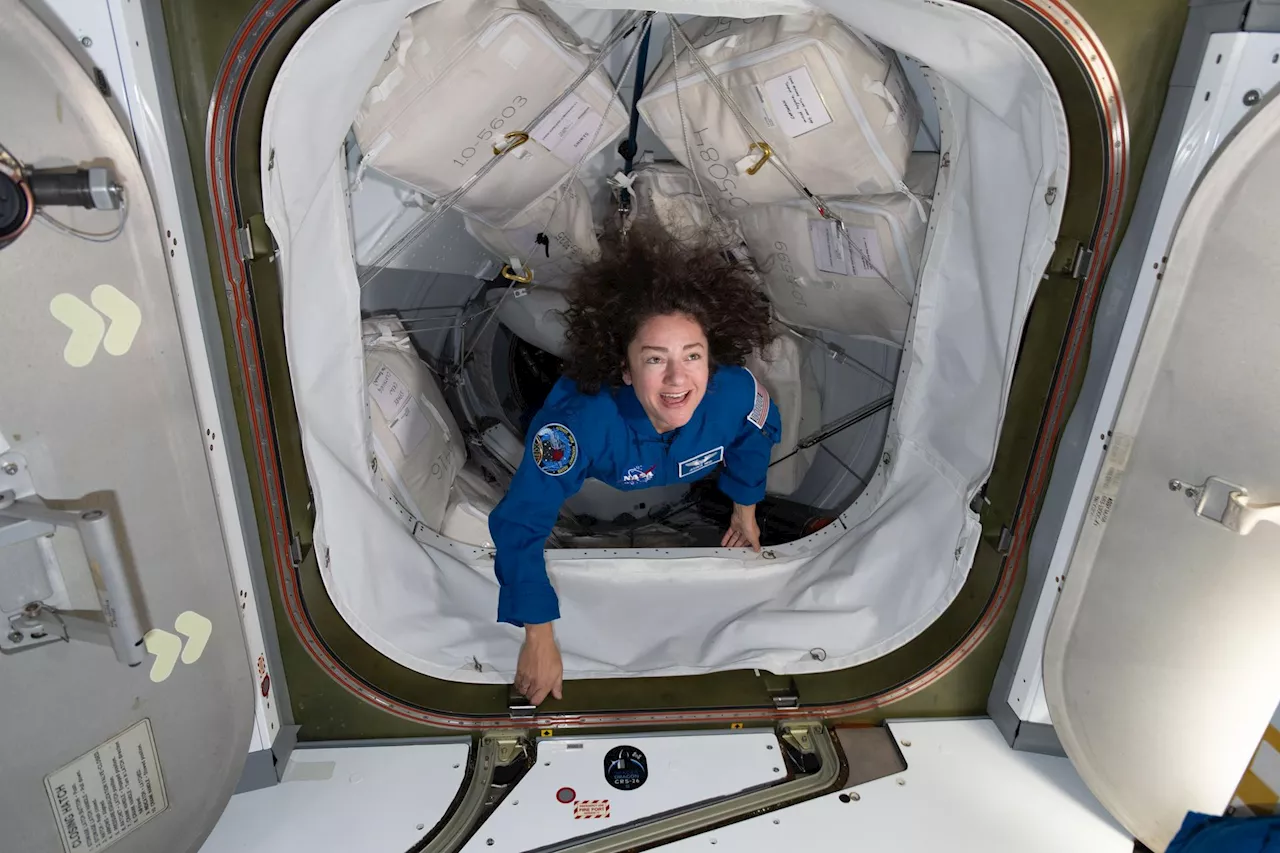
The Expedition 74 crew aboard the International Space Station (ISS) focused on essential human research on Thursday, March 15, 2024, while the station’s orbit was elevated following a thruster maneuver by the Progress 93 cargo spacecraft. This ongoing research aims to enhance astronaut health during extended missions in space, addressing critical factors such as stress management and physical fitness.
As part of their research efforts, Flight Engineers Jessica Meir from NASA and Sophie Adenot from the European Space Agency (ESA) began the day by examining methods to reduce stress and improve sleep quality for astronauts in a microgravity environment. Upon waking, the two astronauts completed a questionnaire assessing their emotional states and stress levels. They subsequently collected saliva samples to allow scientists to analyze their stress responses and immune system functions.
The study, known as RelaxPro, sponsored by ESA, investigates non-invasive relaxation and meditation techniques that could contribute to better astronaut health, ultimately promoting mission success. In the afternoon, Meir and Adenot collaborated to set up equipment for the Advanced Resistive Exercise Device (ARED) Kinematics exercise study in the Tranquility module. This involved positioning cameras to accurately capture workout sessions, crucial for understanding the effects of weightlessness on muscle and bone health.
Meanwhile, NASA Flight Engineer Jack Hathaway organized biomedical sampling hardware and retrieved samples from a science freezer for analysis. He also prepared food packs in the Harmony module for future crew use and worked on loading cargo into a SpaceX Dragon spacecraft designated for return to Earth. Later, Hathaway and Meir participated in a communication session with mission controllers, discussing their recent experience with the Dragon crew spacecraft during its docking on February 14.
NASA Flight Engineer Chris Williams contributed to two biomedical sessions with Meir, assisting her in drawing blood samples to assess bone health. Toward the end of their shift, Meir utilized medical imaging equipment to examine Williams’ eyes, with ground-based doctors monitoring the effects of microgravity on his retina, optic nerve, and cornea. Williams also conducted maintenance work in the Kibo laboratory module, uninstalling the Solid Combustion Experiment Module after it successfully completed its scientific objectives.
Russian astronaut Andrey Fedyaev, in his second spaceflight, engaged in advanced human research projects on Thursday. He utilized virtual reality goggles to evaluate his sense of balance and orientation while in space. Additionally, he tested artificial intelligence tools designed to convert speech into text, improving documentation processes for communications with ground controllers. Station Commander Sergey Kud-Sverchkov assisted Fedyaev with these studies while preparing for potential medical emergencies aboard the ISS.
Flight Engineer Sergei Mikaev concentrated on maintaining the Roscosmos segment of the station, inventorying hardware and ensuring the proper operation of the Elektron oxygen generator. He checked the water tanks for air bubbles, vital for the life support system’s continuous functionality.
The Progress 93 spacecraft executed a thruster burn lasting 10 minutes and 55 seconds, raising the ISS’s altitude by approximately 2 miles, resulting in a new orbit of 269.2 x 255 statute miles. This maneuver paves the way for the upcoming launch of the Progress 94 resupply spacecraft.
For ongoing updates about the ISS and its activities, follow the official space station blog and social media accounts on X, Facebook, and Instagram.

Robinhood Stock Surges 2.5% Today Amid Tech Market Recovery

Philadelphia’s Earth Month Kicks Off with Free Events in Parks

GSK’s Inhaler Decision Sparks Health Concerns for Children

Bradford’s Fish Fry Fridays Offer Community Spirit and Flavor

Speculation Rises on Shutdowns During Trump’s Potential Presidency

Samsung Galaxy Watch 9 to Feature Larger Battery, Report Reveals

Inventors Find New Purpose Through Unconventional Paths

UConn Huskies Aim for Back-to-Back Titles in 2026 NCAA Tournament

U.S. Mine Countermeasure Ships Dock in Malaysia for Logistics Stop

University of Hawaiʻi at Mānoa Joins $25.6M AI Initiative for Disaster Monitoring

$2.2 Million Boost for Cancer Research and Training in Hawaiʻi

ALMA Discovers Companion Orbiting Red Giant Star π 1 Gruis

Sacituzumab Govitecan Shows Promise for HR+/HER2− Breast Cancer

币安人生 Sees $15.92 Million in Trading Volume Amid Market Fluctuations

New Gel Offers Hope for Regrowing Tooth Enamel in Dentistry

CAVA Group Shares Surge 5.1% Amid Mixed Analyst Ratings

Christian Bale in Talks to Join Leonardo DiCaprio in Heat 2

Supreme Court to Review Birthright Citizenship for Children of Immigrants
-
Science8 months ago
University of Hawaiʻi at Mānoa Joins $25.6M AI Initiative for Disaster Monitoring
-
 Health7 months ago
$2.2 Million Boost for Cancer Research and Training in Hawaiʻi
-
 Science8 months ago
ALMA Discovers Companion Orbiting Red Giant Star π 1 Gruis
-
 Health7 months ago
Sacituzumab Govitecan Shows Promise for HR+/HER2− Breast Cancer
-
Politics4 months ago
币安人生 Sees $15.92 Million in Trading Volume Amid Market Fluctuations
-
 Health8 months ago
New Gel Offers Hope for Regrowing Tooth Enamel in Dentistry
-
 Business7 months ago
CAVA Group Shares Surge 5.1% Amid Mixed Analyst Ratings
-
 Entertainment8 months ago
Christian Bale in Talks to Join Leonardo DiCaprio in Heat 2
-
 Politics7 months ago
Supreme Court to Review Birthright Citizenship for Children of Immigrants
-

 Lifestyle8 months ago
Art Deco and Traditional Designs Set to Transform Homes in 2026
-

 Lifestyle7 months ago
Fernando Mendoza Secures Maxwell and O’Brien Awards Ahead of Heisman
-

 World8 months ago
Swiss Residents Reject 50% Inheritance Tax on Wealthy