
Science
Exploring Natural Networks: Insights from Mouse Brains to Cosmos

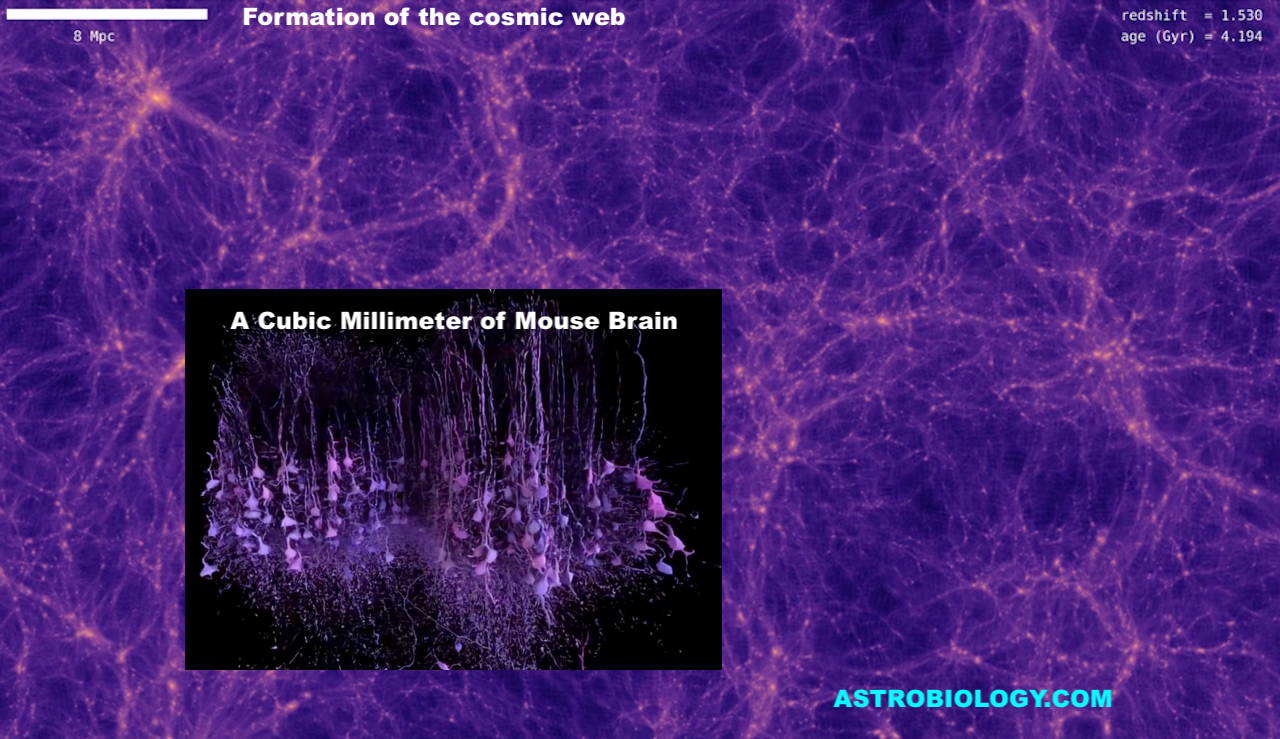
Recent research has revealed striking parallels between the structure of natural networks at vastly different scales, specifically comparing the intricate formation of a cubic millimeter of a mouse brain to the expansive cosmic web. This exploration, which bridges the fields of astrobiology, neuroscience, and cosmology, highlights the interconnectedness of life and the universe in surprising ways.
Connections Between Brain and Cosmos
The study examines how both the mouse brain and the cosmic web exhibit complex network structures that facilitate communication and connectivity. The mouse brain, a model organism in neuroscience, showcases a network of neurons that transmit information through synaptic connections. In contrast, the cosmic web, a large-scale structure of the universe, consists of galaxies and dark matter forming vast filaments.
This research emphasizes that the same principles underlying the formation of networks can be observed across different scales. The findings may enhance our understanding of how complex systems evolve, whether in biological organisms or in celestial formations.
According to scientists at NASA’s Astrobiology Institute, these insights could inform future studies on the origins of life and the potential for intelligent beings beyond Earth. The similarities in network structure raise questions about the fundamental processes that govern organization in nature.
The Significance of Astrobiology
Astrobiology is an interdisciplinary field that seeks to understand the conditions under which life can exist, both on Earth and elsewhere in the universe. By studying the structural similarities between the brain and cosmic networks, researchers can gain a deeper appreciation of the evolutionary strategies that have resulted in such complexity.
This cross-disciplinary approach not only enhances our understanding of biological systems but also offers a template for investigating potential life forms in extraterrestrial environments. The implications of this research extend beyond theoretical frameworks, as they could influence future missions aimed at exploring the cosmos.
As NASA continues to advance its astrobiology initiatives, the integration of findings from neuroscience and cosmology may lead to groundbreaking discoveries. By recognizing the connections between these fields, scientists can push the boundaries of our understanding and perhaps uncover new forms of life that share similar network characteristics.
The ongoing study of natural networks exemplifies how knowledge in one area can inform and enhance another, ultimately broadening our perspective on life itself. As researchers delve deeper into these connections, we may find that the universe, much like the brain, is a vast network of possibilities waiting to be explored.

Robinhood Stock Surges 2.5% Today Amid Tech Market Recovery

Philadelphia’s Earth Month Kicks Off with Free Events in Parks

GSK’s Inhaler Decision Sparks Health Concerns for Children

Bradford’s Fish Fry Fridays Offer Community Spirit and Flavor

Speculation Rises on Shutdowns During Trump’s Potential Presidency

Samsung Galaxy Watch 9 to Feature Larger Battery, Report Reveals

Inventors Find New Purpose Through Unconventional Paths

UConn Huskies Aim for Back-to-Back Titles in 2026 NCAA Tournament

U.S. Mine Countermeasure Ships Dock in Malaysia for Logistics Stop

University of Hawaiʻi at Mānoa Joins $25.6M AI Initiative for Disaster Monitoring

$2.2 Million Boost for Cancer Research and Training in Hawaiʻi

ALMA Discovers Companion Orbiting Red Giant Star π 1 Gruis

Sacituzumab Govitecan Shows Promise for HR+/HER2− Breast Cancer

币安人生 Sees $15.92 Million in Trading Volume Amid Market Fluctuations

New Gel Offers Hope for Regrowing Tooth Enamel in Dentistry

CAVA Group Shares Surge 5.1% Amid Mixed Analyst Ratings

Christian Bale in Talks to Join Leonardo DiCaprio in Heat 2

Supreme Court to Review Birthright Citizenship for Children of Immigrants
-
Science9 months ago
University of Hawaiʻi at Mānoa Joins $25.6M AI Initiative for Disaster Monitoring
-
 Health7 months ago
$2.2 Million Boost for Cancer Research and Training in Hawaiʻi
-
 Science9 months ago
ALMA Discovers Companion Orbiting Red Giant Star π 1 Gruis
-
 Health7 months ago
Sacituzumab Govitecan Shows Promise for HR+/HER2− Breast Cancer
-
Politics5 months ago
币安人生 Sees $15.92 Million in Trading Volume Amid Market Fluctuations
-
 Health9 months ago
New Gel Offers Hope for Regrowing Tooth Enamel in Dentistry
-
 Business8 months ago
CAVA Group Shares Surge 5.1% Amid Mixed Analyst Ratings
-
 Entertainment8 months ago
Christian Bale in Talks to Join Leonardo DiCaprio in Heat 2
-
 Politics8 months ago
Supreme Court to Review Birthright Citizenship for Children of Immigrants
-

 Lifestyle8 months ago
Art Deco and Traditional Designs Set to Transform Homes in 2026
-

 Lifestyle8 months ago
Fernando Mendoza Secures Maxwell and O’Brien Awards Ahead of Heisman
-

 World8 months ago
Swiss Residents Reject 50% Inheritance Tax on Wealthy