
Science
Manganese Catalysts Show Promise for Sustainable Hydrogen Production

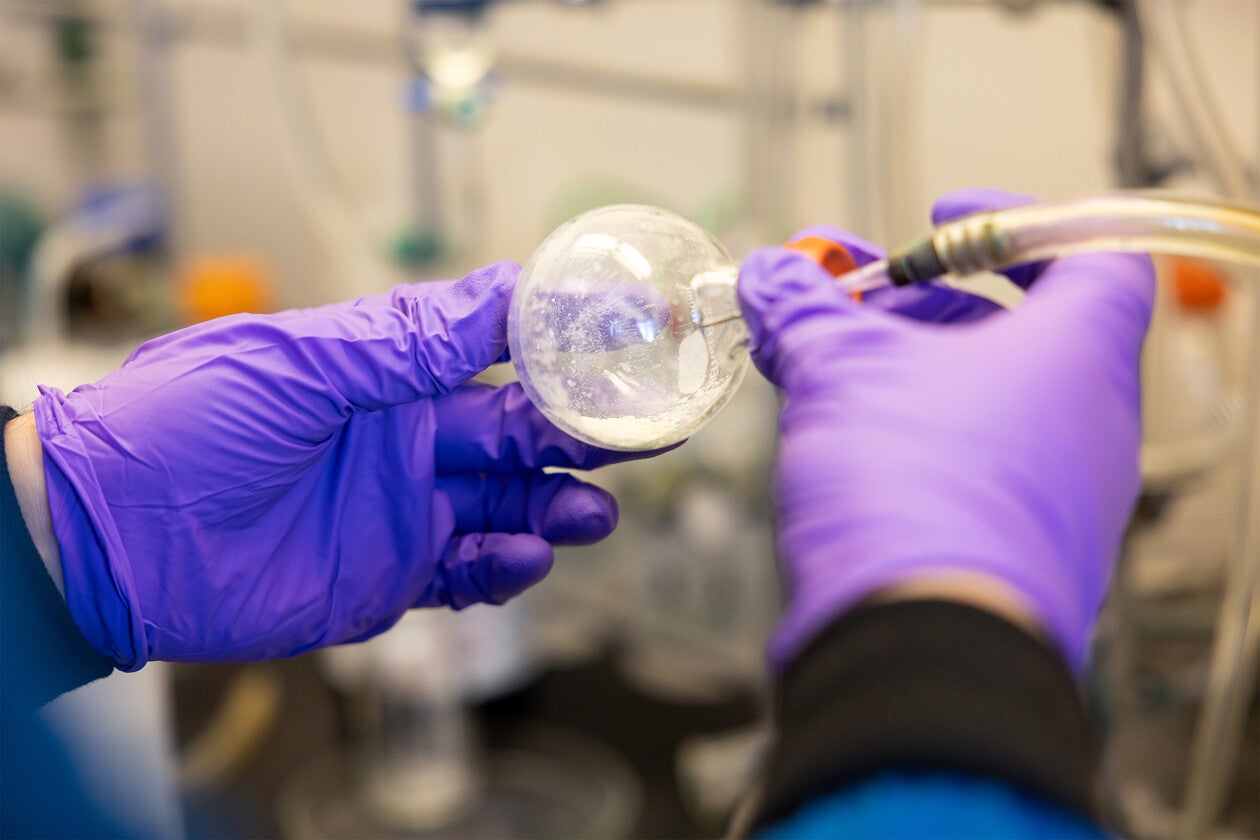
The recent study conducted by researchers at Yale University and the University of Missouri highlights the potential of manganese as an effective catalyst for converting carbon dioxide into formate. This breakthrough could pave the way for more sustainable hydrogen production, a crucial element for future fuel cell technology. The findings, published in the journal Chem, were led by Yale postdoctoral researcher Justin Wedal and Missouri graduate research assistant Kyler Virtue, under the guidance of senior authors Nilay Hazari and Wesley Bernskoetter.
Enhancing the Lifespan of Manganese Catalysts
The challenge of producing hydrogen sustainably has become increasingly urgent as the world seeks alternatives to fossil fuel-derived feedstocks. Nilay Hazari, the John Randolph Huffman Professor of Chemistry at Yale, emphasized the importance of utilizing carbon dioxide in this effort. “Carbon dioxide utilization is a priority right now,” he stated, as researchers look for renewable chemical feedstocks.
Formate, a compound that can be derived from carbon dioxide, is considered a promising hydrogen source for fuel cells. Currently, industrial production of formate relies heavily on fossil fuels, raising sustainability concerns. The new study proposes a shift towards creating formate from atmospheric carbon dioxide, effectively transforming a greenhouse gas into a valuable chemical.
Traditionally, effective catalysts have relied on precious metals, which are costly and less abundant. In contrast, while metal catalysts that are more widely available have been explored, they often suffer from rapid decomposition, limiting their effectiveness in carbon dioxide conversion. The research team at Yale and Missouri tackled this issue by developing manganese-based catalysts that significantly extended their catalytic lifetime.
Innovative Ligand Design
The key innovation in this study involved stabilizing the manganese catalysts through a novel ligand design. By incorporating an additional donor atom into the ligands that bond with the metal, the researchers achieved a level of effectiveness that surpasses many precious metal catalysts. “I’m excited to see the ligand design pay off in such a meaningful way,” Wedal remarked.
This advancement not only enhances the potential for manganese in hydrogen production but also suggests broader applications for their approach in other catalytic transformations beyond carbon dioxide conversion.
The research received funding from the U.S. Department of Energy’s Office of Science and included contributions from Yale’s Brandon Mercado and Nicole Piekut as co-authors. As nations strive for greater sustainability, the work of these researchers marks a significant step toward harnessing abundant materials like manganese for future energy solutions.

Robinhood Stock Surges 2.5% Today Amid Tech Market Recovery

Philadelphia’s Earth Month Kicks Off with Free Events in Parks

GSK’s Inhaler Decision Sparks Health Concerns for Children

Bradford’s Fish Fry Fridays Offer Community Spirit and Flavor

Speculation Rises on Shutdowns During Trump’s Potential Presidency

Samsung Galaxy Watch 9 to Feature Larger Battery, Report Reveals

Inventors Find New Purpose Through Unconventional Paths

UConn Huskies Aim for Back-to-Back Titles in 2026 NCAA Tournament

U.S. Mine Countermeasure Ships Dock in Malaysia for Logistics Stop

University of Hawaiʻi at Mānoa Joins $25.6M AI Initiative for Disaster Monitoring

$2.2 Million Boost for Cancer Research and Training in Hawaiʻi

ALMA Discovers Companion Orbiting Red Giant Star π 1 Gruis

Sacituzumab Govitecan Shows Promise for HR+/HER2− Breast Cancer

币安人生 Sees $15.92 Million in Trading Volume Amid Market Fluctuations

New Gel Offers Hope for Regrowing Tooth Enamel in Dentistry

CAVA Group Shares Surge 5.1% Amid Mixed Analyst Ratings

Christian Bale in Talks to Join Leonardo DiCaprio in Heat 2

Supreme Court to Review Birthright Citizenship for Children of Immigrants
-
Science9 months ago
University of Hawaiʻi at Mānoa Joins $25.6M AI Initiative for Disaster Monitoring
-
 Health7 months ago
$2.2 Million Boost for Cancer Research and Training in Hawaiʻi
-
 Science9 months ago
ALMA Discovers Companion Orbiting Red Giant Star π 1 Gruis
-
 Health7 months ago
Sacituzumab Govitecan Shows Promise for HR+/HER2− Breast Cancer
-
Politics5 months ago
币安人生 Sees $15.92 Million in Trading Volume Amid Market Fluctuations
-
 Health9 months ago
New Gel Offers Hope for Regrowing Tooth Enamel in Dentistry
-
 Business8 months ago
CAVA Group Shares Surge 5.1% Amid Mixed Analyst Ratings
-
 Entertainment8 months ago
Christian Bale in Talks to Join Leonardo DiCaprio in Heat 2
-
 Politics8 months ago
Supreme Court to Review Birthright Citizenship for Children of Immigrants
-

 Lifestyle8 months ago
Art Deco and Traditional Designs Set to Transform Homes in 2026
-

 Lifestyle8 months ago
Fernando Mendoza Secures Maxwell and O’Brien Awards Ahead of Heisman
-

 World8 months ago
Swiss Residents Reject 50% Inheritance Tax on Wealthy