
Science
Massachusetts Faces Brain Drain as Leading Researchers Relocate

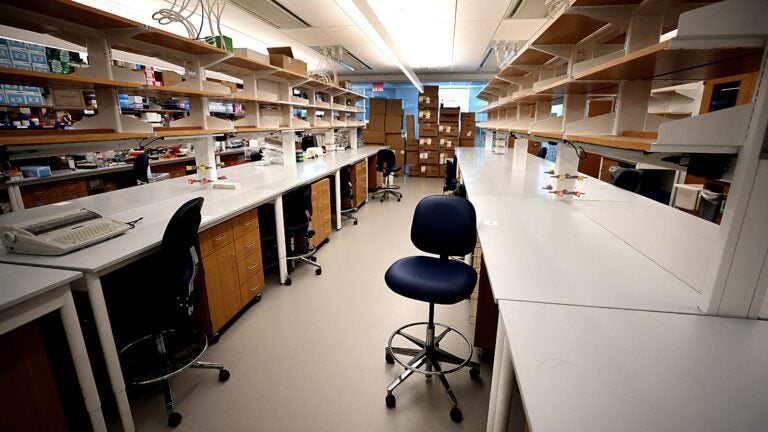
A significant shift is occurring in Massachusetts’ biomedical landscape as a number of prominent researchers relocate due to federal funding cuts and restrictive immigration policies. Notable figures include a leading cancer scientist leaving Harvard University after two decades, an expert on aging transitioning to a municipal research position in New York City, and a women’s health researcher moving to Canada. Their departures highlight a growing concern that Massachusetts, long regarded as a global hub for biomedical research, is experiencing a brain drain that jeopardizes its economy and the fight against critical diseases such as childhood cancers, Alzheimer’s, and sickle cell.
To gauge the impact of these changes, the Boston Globe collaborated with the MassINC Polling Group, reaching out to nearly 4,000 scientists funded by the National Institutes of Health (NIH). Among the respondents, 367 completed the survey, revealing alarming trends: over two-thirds advised their students to consider careers outside academia, while one-third reported layoffs in their labs. Furthermore, more than 16% have lost researchers to institutions abroad since the Trump administration took office.
The survey results painted a dismal picture, with 68% of respondents indicating that funding cuts and policy changes had significantly curtailed their research activities. Many participants expressed deep concern over the long-term implications for scientific innovation in the state. As one researcher from Boston Children’s Hospital poignantly remarked, “This is a generational loss of innovation, technology, and economic power.”
Impacts on Research and the Economy
The ramifications of these shifts extend beyond individual researchers. The Massachusetts economy, heavily reliant on its research institutions, is at risk. According to analyses by the Massachusetts Biotechnology Council and STAT, the state lost between $47 million and $100 million in NIH funding in the last fiscal year, resulting in disruptions to numerous clinical trials. Governor Maura Healey highlighted that these funding disruptions have affected at least 13,000 patients and 18 clinical trials for conditions including colon cancer and strokes.
Healey emphasized the urgency of restoring funding, warning that the current climate is driving talent abroad. Canada, for example, has announced a $1.7 billion investment over 12 years to attract researchers, presenting a stark contrast to the tightening policies in the United States. “We have people I know in labs who have been on the cusps of treatments and cures,” Healey stated, questioning the rationale behind such detrimental policies.
While some funding has been restored following court challenges, uncertainty remains a constant for researchers. The NIH awarded approximately $478 per capita in funding to Massachusetts residents last year, the highest in the nation. Yet, the Trump administration’s funding strategy, which includes reallocating grants to less research-intensive regions, poses a threat to the state’s vital scientific ecosystem.
Personal Stories of Displacement and Adaptation
The personal stories of those affected reveal the profound emotional and professional toll of these changes. Rachael Sirianni, a biomedical engineer at UMass Chan Medical School, expressed her frustration at the inability to predict the future of her research on pediatric cancers. Once boasting a team of eight full-time researchers, she has now been forced to operate with only three, a dramatic reduction that has severely hindered her productivity.
Similarly, John Quackenbush, a leading cancer researcher at Harvard, has announced plans to move his lab to Texas following the abrupt termination of a major grant program he relied on. Quackenbush had anticipated a substantial award of nearly $7 million, but the loss of funding has compelled him to downsize his team significantly.
The impacts are felt widely, as many researchers are now considering opportunities outside Massachusetts. Survey results indicated that one in six respondents had applied for positions beyond state borders. Colleen Reynolds, a public health researcher who studied reproductive health in LGBTQ communities, left Massachusetts for a postdoctoral position in the Netherlands, seeking stability in an increasingly uncertain environment.
As these researchers navigate their futures, the consequences of the brain drain continue to unfold, raising concerns about the long-term viability of Massachusetts’ biomedical community. The collective loss of talent and expertise could have lasting effects on innovation and economic growth in the region.
In conclusion, the migration of key scientists from Massachusetts underscores the urgency of addressing funding and immigration policies that threaten the state’s reputation as a leader in biomedical research. As the landscape evolves, ongoing advocacy for supportive research environments will be critical to retain and attract the next generation of scientific talent.

Robinhood Stock Surges 2.5% Today Amid Tech Market Recovery

Philadelphia’s Earth Month Kicks Off with Free Events in Parks

GSK’s Inhaler Decision Sparks Health Concerns for Children

Bradford’s Fish Fry Fridays Offer Community Spirit and Flavor

Speculation Rises on Shutdowns During Trump’s Potential Presidency

Samsung Galaxy Watch 9 to Feature Larger Battery, Report Reveals

Inventors Find New Purpose Through Unconventional Paths

UConn Huskies Aim for Back-to-Back Titles in 2026 NCAA Tournament

U.S. Mine Countermeasure Ships Dock in Malaysia for Logistics Stop

University of Hawaiʻi at Mānoa Joins $25.6M AI Initiative for Disaster Monitoring

$2.2 Million Boost for Cancer Research and Training in Hawaiʻi

ALMA Discovers Companion Orbiting Red Giant Star π 1 Gruis

Sacituzumab Govitecan Shows Promise for HR+/HER2− Breast Cancer

币安人生 Sees $15.92 Million in Trading Volume Amid Market Fluctuations

New Gel Offers Hope for Regrowing Tooth Enamel in Dentistry

CAVA Group Shares Surge 5.1% Amid Mixed Analyst Ratings

Christian Bale in Talks to Join Leonardo DiCaprio in Heat 2

Supreme Court to Review Birthright Citizenship for Children of Immigrants
-
Science8 months ago
University of Hawaiʻi at Mānoa Joins $25.6M AI Initiative for Disaster Monitoring
-
 Health7 months ago
$2.2 Million Boost for Cancer Research and Training in Hawaiʻi
-
 Science8 months ago
ALMA Discovers Companion Orbiting Red Giant Star π 1 Gruis
-
 Health7 months ago
Sacituzumab Govitecan Shows Promise for HR+/HER2− Breast Cancer
-
Politics4 months ago
币安人生 Sees $15.92 Million in Trading Volume Amid Market Fluctuations
-
 Health8 months ago
New Gel Offers Hope for Regrowing Tooth Enamel in Dentistry
-
 Business7 months ago
CAVA Group Shares Surge 5.1% Amid Mixed Analyst Ratings
-
 Entertainment8 months ago
Christian Bale in Talks to Join Leonardo DiCaprio in Heat 2
-
 Politics7 months ago
Supreme Court to Review Birthright Citizenship for Children of Immigrants
-

 Lifestyle7 months ago
Fernando Mendoza Secures Maxwell and O’Brien Awards Ahead of Heisman
-

 Lifestyle8 months ago
Art Deco and Traditional Designs Set to Transform Homes in 2026
-

 World7 months ago
Swiss Residents Reject 50% Inheritance Tax on Wealthy