
Science
NASA’s StarBurst Advances Through Rigorous Testing for Launch

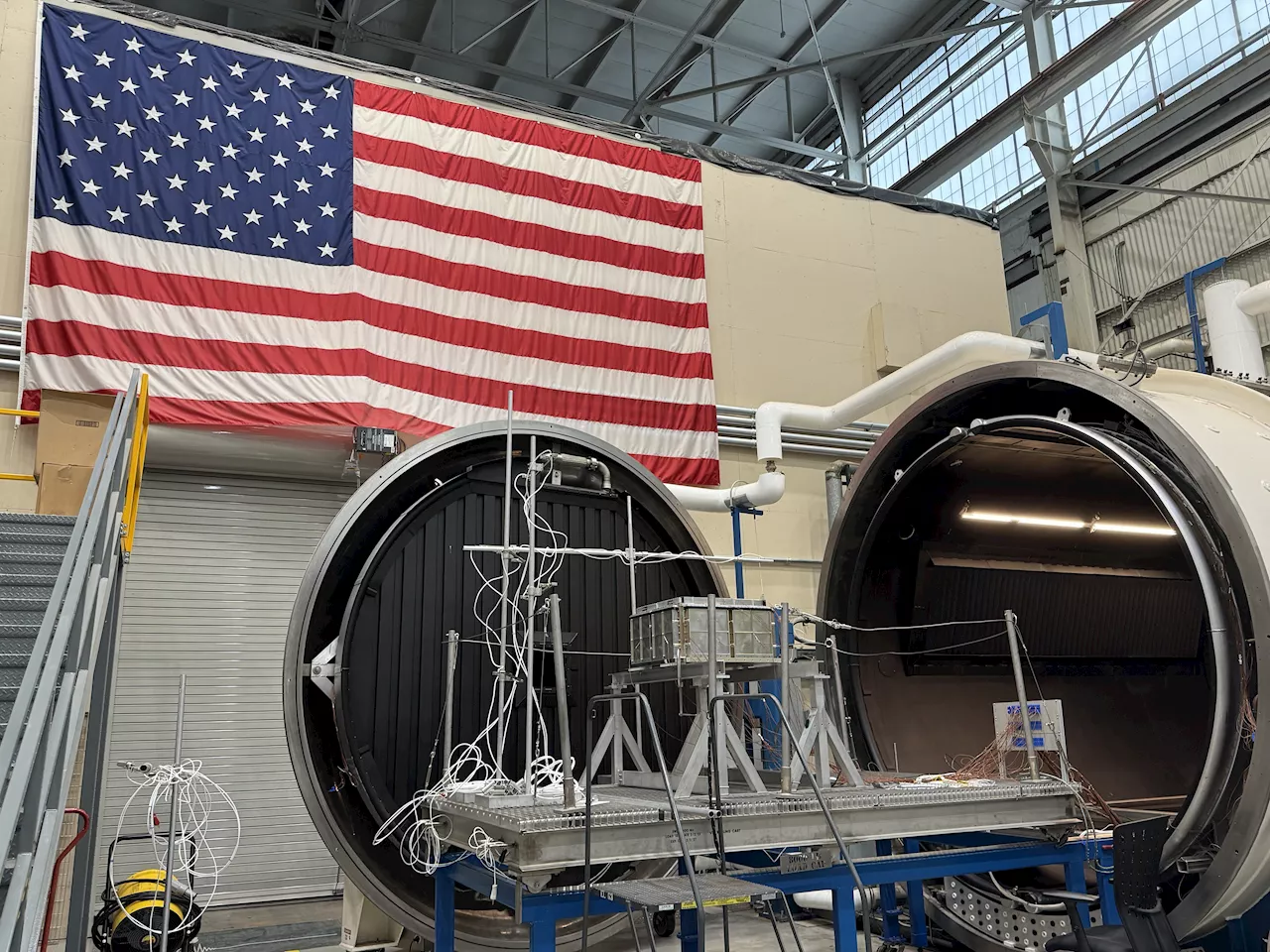
NASA’s StarBurst instrument has successfully navigated several critical testing phases, bringing it closer to its anticipated launch. The small satellite, designed to detect short gamma-ray bursts—some of the universe’s most powerful explosions—is now awaiting calibration following a successful integration at the University of Toronto and extensive testing at NASA’s Marshall Space Flight Center in Huntsville, Alabama.
StarBurst arrived at NASA Marshall in March 2025. During its time at the facility, the instrument underwent rigorous thermal testing in a vacuum chamber and flight vibration testing. The testing included continuous thermal assessments over 18 days, simulating the extreme conditions the satellite will face in space. Technicians placed radioactive material in the vacuum chamber, enabling StarBurst to detect gamma-ray signals during these tests.
Daniel Kocevski, principal investigator at NASA Marshall, stated, “NASA’s StarBurst mission is ready for its next stage of assembly and is one step closer to flight.” He emphasized that testing at Marshall has confirmed engineering models, enhancing understanding of how StarBurst will function in space while observing gamma-ray emissions from merging neutron stars. Such observations could provide valuable insights into the formation of heavy metals in the universe, including elements like gold and platinum.
In addition to thermal assessments, the StarBurst team conducted a “vibe test,” which involved securing the instrument to a specialized “shaker table.” This step simulated the vibrations and turbulence the satellite will encounter during launch. Following these preparations, the Marshall team shipped StarBurst to the Space Flight Laboratory at the University of Toronto in August 2025, where integration with the spacecraft bus took place.
Testing at Marshall has laid the groundwork for further evaluations planned post-integration, which will include functional and electromagnetic compatibility testing. StarBurst is scheduled for additional calibration, vibration, and thermal vacuum testing in the spring of 2026, with the goal of being launch-ready by June 2026.
NASA aims to launch StarBurst as early as 2027, coinciding with the next run of the Laser-Interferometer Gravitational Wave Observatory. This strategic timing is intended to maximize the likelihood of detecting gamma-ray bursts that align with gravitational wave events, a phenomenon that has only been observed once in conjunction.
StarBurst represents a collaborative initiative led by NASA’s Marshall Space Flight Center, involving partnerships with the U.S. Naval Research Laboratory, the University of Alabama Huntsville, the Universities Space Research Association, and the University of Toronto Institute for Aerospace Studies Space Flight Laboratory. This mission was selected under the NASA Astrophysics Pioneers program, which supports cost-effective, smaller hardware missions aimed at conducting significant astrophysical research.
As the project moves forward, NASA continues to refine its understanding of the cosmos, with StarBurst poised to contribute to groundbreaking discoveries in astrophysics.

Robinhood Stock Surges 2.5% Today Amid Tech Market Recovery

Philadelphia’s Earth Month Kicks Off with Free Events in Parks

GSK’s Inhaler Decision Sparks Health Concerns for Children

Bradford’s Fish Fry Fridays Offer Community Spirit and Flavor

Speculation Rises on Shutdowns During Trump’s Potential Presidency

Samsung Galaxy Watch 9 to Feature Larger Battery, Report Reveals

Inventors Find New Purpose Through Unconventional Paths

UConn Huskies Aim for Back-to-Back Titles in 2026 NCAA Tournament

U.S. Mine Countermeasure Ships Dock in Malaysia for Logistics Stop

University of Hawaiʻi at Mānoa Joins $25.6M AI Initiative for Disaster Monitoring

$2.2 Million Boost for Cancer Research and Training in Hawaiʻi

ALMA Discovers Companion Orbiting Red Giant Star π 1 Gruis

Sacituzumab Govitecan Shows Promise for HR+/HER2− Breast Cancer

币安人生 Sees $15.92 Million in Trading Volume Amid Market Fluctuations

New Gel Offers Hope for Regrowing Tooth Enamel in Dentistry

CAVA Group Shares Surge 5.1% Amid Mixed Analyst Ratings

Christian Bale in Talks to Join Leonardo DiCaprio in Heat 2

Supreme Court to Review Birthright Citizenship for Children of Immigrants
-
Science9 months ago
University of Hawaiʻi at Mānoa Joins $25.6M AI Initiative for Disaster Monitoring
-
 Health7 months ago
$2.2 Million Boost for Cancer Research and Training in Hawaiʻi
-
 Science9 months ago
ALMA Discovers Companion Orbiting Red Giant Star π 1 Gruis
-
 Health7 months ago
Sacituzumab Govitecan Shows Promise for HR+/HER2− Breast Cancer
-
Politics5 months ago
币安人生 Sees $15.92 Million in Trading Volume Amid Market Fluctuations
-
 Health9 months ago
New Gel Offers Hope for Regrowing Tooth Enamel in Dentistry
-
 Business8 months ago
CAVA Group Shares Surge 5.1% Amid Mixed Analyst Ratings
-
 Entertainment8 months ago
Christian Bale in Talks to Join Leonardo DiCaprio in Heat 2
-
 Politics8 months ago
Supreme Court to Review Birthright Citizenship for Children of Immigrants
-

 Lifestyle8 months ago
Art Deco and Traditional Designs Set to Transform Homes in 2026
-

 Lifestyle8 months ago
Fernando Mendoza Secures Maxwell and O’Brien Awards Ahead of Heisman
-

 World8 months ago
Swiss Residents Reject 50% Inheritance Tax on Wealthy