
Science
NASA’s Victor Glover to Manually Fly Orion in Artemis II Mission

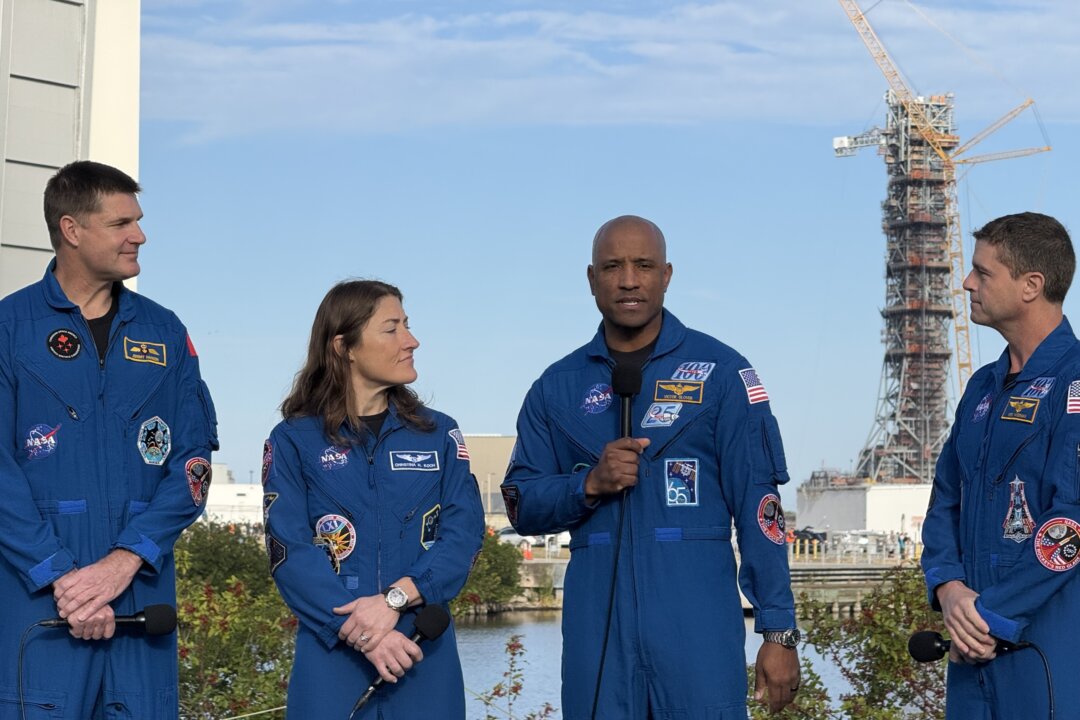
NASA has announced that Astronaut Victor Glover will manually pilot the Orion spacecraft during the upcoming Artemis II mission. This marks a significant moment in space exploration, as Glover’s flight will emulate the manual controls used by astronauts during the historic Apollo missions. He and his crew are set to launch from Cape Canaveral for a ten-day journey that will feature two critical manual flying demonstrations.
The first demonstration will occur shortly after launch, while the second will take place before returning to Earth. These maneuvers are designed to test the Orion spacecraft’s capabilities and ensure the crew’s proficiency in manual operations, similar to the early lunar missions. This hands-on approach not only honors the legacy of the Apollo program but also prepares astronauts for increasingly complex missions in deep space.
Evolution of Manual Control in Spaceflight
The role of manual control in spaceflight has evolved significantly since the Apollo era. While automation has taken center stage in modern spacecraft, the ability to manually operate a vehicle remains a critical skill. As technology advances, NASA’s Artemis program acknowledges the importance of retaining a human element in space exploration.
According to NASA, the dual demonstrations during Artemis II will provide valuable data on how manual control can complement automated systems. This approach reflects a broader trend in aerospace, where human judgment and flexibility become essential as missions grow more complicated. Glover’s role not only serves as a nod to history but also sets the stage for future missions that may require human intervention in unpredictable scenarios.
Preparing for Future Missions
The Artemis II mission is a key step towards returning humans to the lunar surface, with plans to establish a sustainable presence on the Moon by the end of the decade. As NASA prepares for these ambitious goals, the integration of manual flying skills remains a focal point. The challenges of deep space exploration demand versatility and adaptability, traits that manual control can provide in critical moments.
As Glover and his team prepare for launch, their journey will serve as a pivotal demonstration of how manual control can coexist with advanced technologies. This balance is crucial, not only for lunar missions but for future endeavors that may extend beyond our Moon. The Artemis program aims to pave the way for human exploration of Mars and other celestial bodies, where the complexities of navigation and control will be paramount.
In summary, Victor Glover‘s upcoming mission aboard the Orion spacecraft highlights the importance of manual control in an era dominated by automation. As NASA embarks on this new chapter in space exploration, the lessons learned from Artemis II will undoubtedly influence the future of human spaceflight.

Robinhood Stock Surges 2.5% Today Amid Tech Market Recovery

Philadelphia’s Earth Month Kicks Off with Free Events in Parks

GSK’s Inhaler Decision Sparks Health Concerns for Children

Bradford’s Fish Fry Fridays Offer Community Spirit and Flavor

Speculation Rises on Shutdowns During Trump’s Potential Presidency

Samsung Galaxy Watch 9 to Feature Larger Battery, Report Reveals

Inventors Find New Purpose Through Unconventional Paths

UConn Huskies Aim for Back-to-Back Titles in 2026 NCAA Tournament

U.S. Mine Countermeasure Ships Dock in Malaysia for Logistics Stop

University of Hawaiʻi at Mānoa Joins $25.6M AI Initiative for Disaster Monitoring

$2.2 Million Boost for Cancer Research and Training in Hawaiʻi

ALMA Discovers Companion Orbiting Red Giant Star π 1 Gruis

Sacituzumab Govitecan Shows Promise for HR+/HER2− Breast Cancer

币安人生 Sees $15.92 Million in Trading Volume Amid Market Fluctuations

New Gel Offers Hope for Regrowing Tooth Enamel in Dentistry

CAVA Group Shares Surge 5.1% Amid Mixed Analyst Ratings

Christian Bale in Talks to Join Leonardo DiCaprio in Heat 2

Supreme Court to Review Birthright Citizenship for Children of Immigrants
-
Science9 months ago
University of Hawaiʻi at Mānoa Joins $25.6M AI Initiative for Disaster Monitoring
-
 Health7 months ago
$2.2 Million Boost for Cancer Research and Training in Hawaiʻi
-
 Science8 months ago
ALMA Discovers Companion Orbiting Red Giant Star π 1 Gruis
-
 Health7 months ago
Sacituzumab Govitecan Shows Promise for HR+/HER2− Breast Cancer
-
Politics5 months ago
币安人生 Sees $15.92 Million in Trading Volume Amid Market Fluctuations
-
 Health9 months ago
New Gel Offers Hope for Regrowing Tooth Enamel in Dentistry
-
 Business7 months ago
CAVA Group Shares Surge 5.1% Amid Mixed Analyst Ratings
-
 Entertainment8 months ago
Christian Bale in Talks to Join Leonardo DiCaprio in Heat 2
-
 Politics7 months ago
Supreme Court to Review Birthright Citizenship for Children of Immigrants
-

 Lifestyle8 months ago
Art Deco and Traditional Designs Set to Transform Homes in 2026
-

 Lifestyle7 months ago
Fernando Mendoza Secures Maxwell and O’Brien Awards Ahead of Heisman
-

 World8 months ago
Swiss Residents Reject 50% Inheritance Tax on Wealthy