
Science
NASA’s Webb Telescope Discovers Unclassified Cosmic Objects

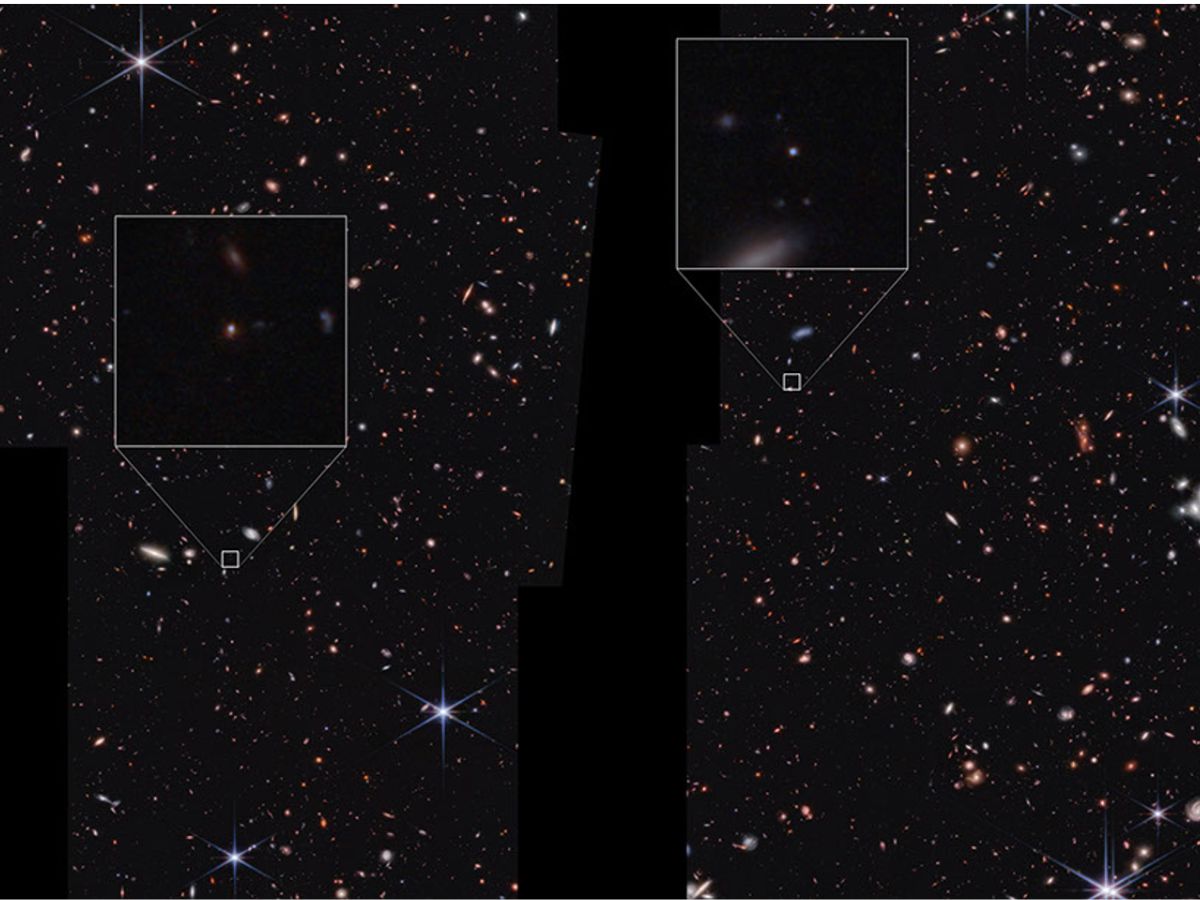
NASA’s James Webb Space Telescope has made a groundbreaking discovery, identifying cosmic objects that challenge existing astronomical classifications. This development, announced in October 2023, highlights the telescope’s capability to explore previously uncharted territories of the universe.
The Webb Telescope, launched in December 2021, has provided scientists with astonishing images and data, revealing details about the early universe. Among its recent findings are objects that do not fit into any established categories of celestial bodies. These unusual entities have sparked significant interest among astronomers, prompting further investigation into their origins and characteristics.
Researchers at NASA have stated that these findings could change our understanding of cosmic formation. According to Dr. Mark Clampin, the director of the Astrophysics Division at NASA, “The Webb Telescope is allowing us to see further back in time than ever before, uncovering mysteries that challenge our current models of the universe.” This statement underscores the implications of the discoveries made by the telescope, suggesting a potential reevaluation of fundamental astrophysical concepts.
Implications for Astronomy
The discovery of these strange objects raises important questions about the nature of the universe. Astronomers are particularly intrigued by their composition and the processes that led to their formation. Some of these objects may represent a new class of celestial bodies, offering insights into the conditions that existed shortly after the Big Bang.
This new information is critical for developing more accurate models of cosmic evolution. The James Webb Space Telescope, with its advanced instruments, is uniquely equipped to analyze the light emitted from these objects. This capability allows scientists to gather data on their chemical composition, distance, and age, which are crucial for understanding their role in the cosmic landscape.
Additionally, the findings could help bridge gaps in knowledge about dark matter and dark energy, two of the most enigmatic components of the universe. The identification of unclassified objects may provide new clues about their influence on cosmic structure and behavior.
Future Research and Exploration
As researchers delve deeper into these discoveries, they are planning follow-up observations using both the James Webb Space Telescope and other observatories, such as the Hubble Space Telescope. Combining data from multiple sources will enhance their understanding of these new celestial phenomena.
The scientific community anticipates that these investigations will yield substantial insights into the formation and evolution of galaxies and stars. As Dr. Clampin noted, “With each new discovery, we are rewriting the narrative of our universe.” The excitement surrounding these findings is palpable, as astronomers prepare to launch a new era of research fueled by Webb’s groundbreaking observations.
In conclusion, NASA’s James Webb Space Telescope has opened a new frontier in our understanding of the universe. The identification of strange, unclassified cosmic objects not only challenges existing theories but also inspires a wave of curiosity and research among scientists. As the exploration continues, the potential for discovery remains limitless, promising to illuminate the dark corners of our cosmic history.

Robinhood Stock Surges 2.5% Today Amid Tech Market Recovery

Philadelphia’s Earth Month Kicks Off with Free Events in Parks

GSK’s Inhaler Decision Sparks Health Concerns for Children

Bradford’s Fish Fry Fridays Offer Community Spirit and Flavor

Speculation Rises on Shutdowns During Trump’s Potential Presidency

Samsung Galaxy Watch 9 to Feature Larger Battery, Report Reveals

Inventors Find New Purpose Through Unconventional Paths

UConn Huskies Aim for Back-to-Back Titles in 2026 NCAA Tournament

U.S. Mine Countermeasure Ships Dock in Malaysia for Logistics Stop

University of Hawaiʻi at Mānoa Joins $25.6M AI Initiative for Disaster Monitoring

$2.2 Million Boost for Cancer Research and Training in Hawaiʻi

ALMA Discovers Companion Orbiting Red Giant Star π 1 Gruis

Sacituzumab Govitecan Shows Promise for HR+/HER2− Breast Cancer

币安人生 Sees $15.92 Million in Trading Volume Amid Market Fluctuations

New Gel Offers Hope for Regrowing Tooth Enamel in Dentistry

CAVA Group Shares Surge 5.1% Amid Mixed Analyst Ratings

Christian Bale in Talks to Join Leonardo DiCaprio in Heat 2

Supreme Court to Review Birthright Citizenship for Children of Immigrants
-
Science9 months ago
University of Hawaiʻi at Mānoa Joins $25.6M AI Initiative for Disaster Monitoring
-
 Health7 months ago
$2.2 Million Boost for Cancer Research and Training in Hawaiʻi
-
 Science9 months ago
ALMA Discovers Companion Orbiting Red Giant Star π 1 Gruis
-
 Health7 months ago
Sacituzumab Govitecan Shows Promise for HR+/HER2− Breast Cancer
-
Politics5 months ago
币安人生 Sees $15.92 Million in Trading Volume Amid Market Fluctuations
-
 Health9 months ago
New Gel Offers Hope for Regrowing Tooth Enamel in Dentistry
-
 Business8 months ago
CAVA Group Shares Surge 5.1% Amid Mixed Analyst Ratings
-
 Entertainment8 months ago
Christian Bale in Talks to Join Leonardo DiCaprio in Heat 2
-
 Politics8 months ago
Supreme Court to Review Birthright Citizenship for Children of Immigrants
-

 Lifestyle8 months ago
Art Deco and Traditional Designs Set to Transform Homes in 2026
-

 Lifestyle8 months ago
Fernando Mendoza Secures Maxwell and O’Brien Awards Ahead of Heisman
-

 World8 months ago
Swiss Residents Reject 50% Inheritance Tax on Wealthy