
Science
NOAA Unveils Groundbreaking Advances in Ocean and Atmospheric Science

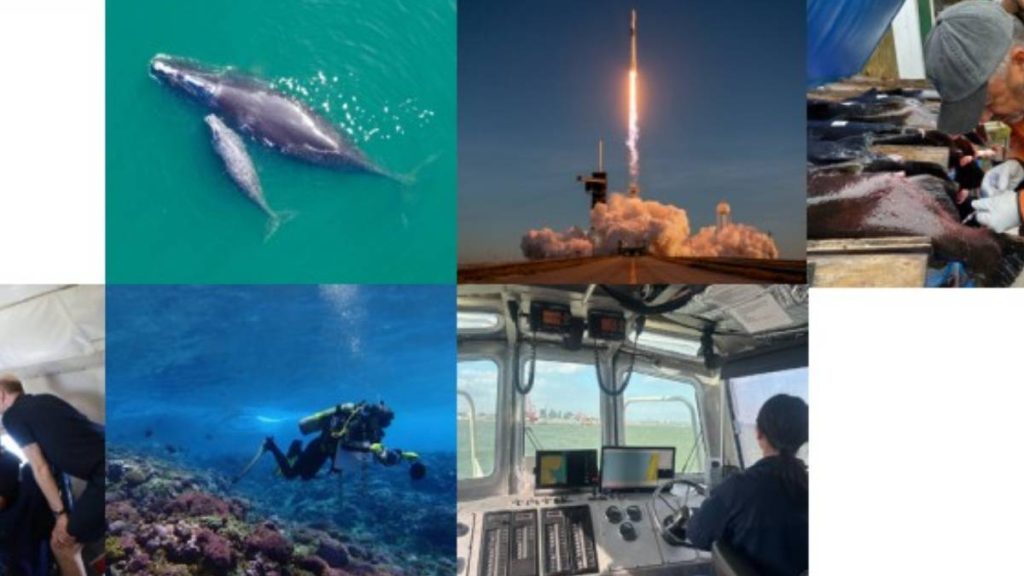
The National Oceanic and Atmospheric Administration (NOAA) has announced significant advancements in its 2025 Science Report, detailing innovative technologies and research aimed at enhancing weather forecasting and promoting environmental stewardship. Key breakthroughs include the launch of new satellites, advancements in hurricane data collection, and initiatives to monitor marine life, all designed to mitigate the impacts of hazardous weather and support sustainable resource management.
Satellite Innovations for Space Weather Observations
One of the standout achievements is the successful launch of the Space Weather Follow On-Lagrange 1 observatory from Kennedy Space Center in Florida in September 2025. This satellite, now referred to as SOLAR-1, is specifically designed for continuous operational space weather observations. It carries advanced instruments, including the Compact Coronagraph-2, which serves as an early warning system for coronal mass ejections and other solar phenomena that can affect Earth.
The data collected by SOLAR-1 will enhance alerts and forecasts provided by the NOAA Space Weather Prediction Center. These improvements will benefit a wide range of sectors, including aviation, agriculture, and defense, as well as human spaceflight operations. Solar storms can disrupt various systems, underscoring the importance of timely and accurate predictions.
Addressing Environmental Challenges
NOAA researchers have also responded swiftly to environmental crises, such as the 2025 Los Angeles fires. They collected debris and water samples off the California coast to assess the fires’ impact on marine ecosystems. By modifying an ongoing fisheries survey aboard the NOAA Ship Reuben Lasker, scientists gathered critical data to understand how the fires affected one of the country’s most vital marine environments.
In another innovative approach, NOAA tested advanced technologies to gather data within tropical cyclones. The Black Swift S0 drone, launched from NOAA’s WP-3D Hurricane Hunter aircraft, achieved record data collection in hurricanes, providing atmospheric insights from the storm’s lower levels. Additionally, the Skyfora StreamSonde, an ultra-lightweight instrument, offered detailed atmospheric readings, including a record wind gust of 252 mph measured during Hurricane Melissa.
The agency also deployed the C-Star, a wind-powered uncrewed surface vehicle, which transmitted valuable ocean surface data during the intense conditions of Category 5 Hurricane Humberto.
Protecting Marine Life with Technology
In a pioneering initiative, NOAA’s Geospatial Artificial Intelligence for Animals project harnessed satellite technology and artificial intelligence to monitor marine life from space. This advancement aims to aid in the conservation of the critically endangered North Atlantic right whale, which has a population of fewer than 380. By validating potential whale locations, scientists can implement protective measures without imposing broad restrictions on maritime activities.
Furthermore, NOAA and its partners introduced the Seasats Lightfish, an autonomous surface vehicle launched off the coast of Washington state. This vehicle is designed to detect harmful algal blooms before they reach coastal areas, protecting both fish populations and human health. Traditional sampling methods are often costly and labor-intensive, but the Seasats Lightfish can operate effectively over long distances on solar power, enhancing the frequency of observations.
The 2025 NOAA Science Report highlights the agency’s commitment to advancing scientific knowledge and developing technologies that address both immediate environmental challenges and long-term sustainability goals. As the world grapples with the impacts of climate change and extreme weather events, these breakthroughs underscore the critical role of scientific innovation in safeguarding our planet’s future.

Robinhood Stock Surges 2.5% Today Amid Tech Market Recovery

Philadelphia’s Earth Month Kicks Off with Free Events in Parks

GSK’s Inhaler Decision Sparks Health Concerns for Children

Bradford’s Fish Fry Fridays Offer Community Spirit and Flavor

Speculation Rises on Shutdowns During Trump’s Potential Presidency

Samsung Galaxy Watch 9 to Feature Larger Battery, Report Reveals

Inventors Find New Purpose Through Unconventional Paths

UConn Huskies Aim for Back-to-Back Titles in 2026 NCAA Tournament

U.S. Mine Countermeasure Ships Dock in Malaysia for Logistics Stop

University of Hawaiʻi at Mānoa Joins $25.6M AI Initiative for Disaster Monitoring

$2.2 Million Boost for Cancer Research and Training in Hawaiʻi

ALMA Discovers Companion Orbiting Red Giant Star π 1 Gruis

Sacituzumab Govitecan Shows Promise for HR+/HER2− Breast Cancer

币安人生 Sees $15.92 Million in Trading Volume Amid Market Fluctuations

New Gel Offers Hope for Regrowing Tooth Enamel in Dentistry

CAVA Group Shares Surge 5.1% Amid Mixed Analyst Ratings

Christian Bale in Talks to Join Leonardo DiCaprio in Heat 2

Supreme Court to Review Birthright Citizenship for Children of Immigrants
-
Science8 months ago
University of Hawaiʻi at Mānoa Joins $25.6M AI Initiative for Disaster Monitoring
-
 Health7 months ago
$2.2 Million Boost for Cancer Research and Training in Hawaiʻi
-
 Science8 months ago
ALMA Discovers Companion Orbiting Red Giant Star π 1 Gruis
-
 Health7 months ago
Sacituzumab Govitecan Shows Promise for HR+/HER2− Breast Cancer
-
Politics4 months ago
币安人生 Sees $15.92 Million in Trading Volume Amid Market Fluctuations
-
 Health8 months ago
New Gel Offers Hope for Regrowing Tooth Enamel in Dentistry
-
 Business7 months ago
CAVA Group Shares Surge 5.1% Amid Mixed Analyst Ratings
-
 Entertainment8 months ago
Christian Bale in Talks to Join Leonardo DiCaprio in Heat 2
-
 Politics7 months ago
Supreme Court to Review Birthright Citizenship for Children of Immigrants
-

 Lifestyle7 months ago
Fernando Mendoza Secures Maxwell and O’Brien Awards Ahead of Heisman
-

 Lifestyle8 months ago
Art Deco and Traditional Designs Set to Transform Homes in 2026
-

 World7 months ago
Swiss Residents Reject 50% Inheritance Tax on Wealthy