
Science
Red Rock Society Launches WWII POW Camp Archive Online

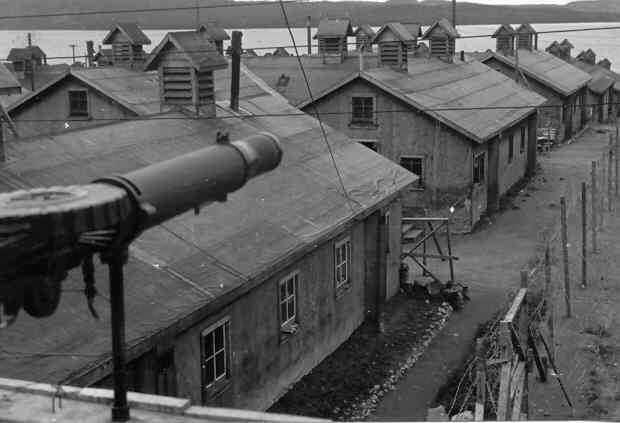
The Red Rock Historical Society is set to bring the story of a World War II prisoner of war camp online, supported by a generous $60,000 grant from Parks Canada. According to Brian Davis, president of the society, this initiative marks a significant step in preserving local history. “As you can imagine, it means everything,” Davis expressed, highlighting the excitement surrounding the project.
The primary focus of this digitization effort will be on photographs and artifacts from the 1920s through the 1940s, particularly related to Camp R, the internment camp located in Red Rock. “People are looking forward to this, and we’ve been very excited about this right since the get-go,” Davis stated. The society aims to share the rich history of this former mill town, which has a unique narrative tied to the war.
While Camp R takes center stage, the society is also documenting the history of the pulp and paper industry in Red Rock. According to Davis, “The construction camps were built for the workers that were building the original pulp and paper mill in Red Rock, and then when the war broke out, they were looking for places to house German POWs.”
Camp R operated from July 1940 until October 1941, accommodating civilian internees and enemy merchant seamen. As noted on the historical website POWSincanada.ca, Red Rock was selected as a site due to its vacant construction camps, which had been left empty after the local mill went bankrupt. During this time, the historic Red Rock Inn was thriving, serving as a lodging place for many officers and guards.
Unfortunately, the camp was closed in 1941 due to reported water issues. “It just wasn’t meant to be an internment camp, with those conditions,” Davis explained. Following its closure, the remaining prisoners were relocated to various camps in southern Ontario. Other notable POW sites in Northwestern Ontario include Camp 100 (W) – Neys and Camp 101 (X) – Angler.
The funding from Parks Canada will be delivered in two instalments. The first part was allocated for hiring an intern to assist with the digitization of artifacts. This initial funding allowed the society to meet its goals, making them eligible for the second instalment, which will support another intern’s efforts to continue digitizing and preparing materials for the new website.
Once the digitization process is complete and all documents are uploaded, residents will have access to this rich collection online. Davis anticipates that this process could take a few more months. For those interested in learning more about the project, purchasing a membership, or volunteering with the historical society, additional details are available on the Red Rock Historical Society’s Facebook page.

Robinhood Stock Surges 2.5% Today Amid Tech Market Recovery

Philadelphia’s Earth Month Kicks Off with Free Events in Parks

GSK’s Inhaler Decision Sparks Health Concerns for Children

Bradford’s Fish Fry Fridays Offer Community Spirit and Flavor

Speculation Rises on Shutdowns During Trump’s Potential Presidency

Samsung Galaxy Watch 9 to Feature Larger Battery, Report Reveals

Inventors Find New Purpose Through Unconventional Paths

UConn Huskies Aim for Back-to-Back Titles in 2026 NCAA Tournament

U.S. Mine Countermeasure Ships Dock in Malaysia for Logistics Stop

University of Hawaiʻi at Mānoa Joins $25.6M AI Initiative for Disaster Monitoring

$2.2 Million Boost for Cancer Research and Training in Hawaiʻi

ALMA Discovers Companion Orbiting Red Giant Star π 1 Gruis

Sacituzumab Govitecan Shows Promise for HR+/HER2− Breast Cancer

币安人生 Sees $15.92 Million in Trading Volume Amid Market Fluctuations

New Gel Offers Hope for Regrowing Tooth Enamel in Dentistry

CAVA Group Shares Surge 5.1% Amid Mixed Analyst Ratings

Christian Bale in Talks to Join Leonardo DiCaprio in Heat 2

Supreme Court to Review Birthright Citizenship for Children of Immigrants
-
Science9 months ago
University of Hawaiʻi at Mānoa Joins $25.6M AI Initiative for Disaster Monitoring
-
 Health7 months ago
$2.2 Million Boost for Cancer Research and Training in Hawaiʻi
-
 Science8 months ago
ALMA Discovers Companion Orbiting Red Giant Star π 1 Gruis
-
 Health7 months ago
Sacituzumab Govitecan Shows Promise for HR+/HER2− Breast Cancer
-
Politics5 months ago
币安人生 Sees $15.92 Million in Trading Volume Amid Market Fluctuations
-
 Health9 months ago
New Gel Offers Hope for Regrowing Tooth Enamel in Dentistry
-
 Business7 months ago
CAVA Group Shares Surge 5.1% Amid Mixed Analyst Ratings
-
 Entertainment8 months ago
Christian Bale in Talks to Join Leonardo DiCaprio in Heat 2
-
 Politics7 months ago
Supreme Court to Review Birthright Citizenship for Children of Immigrants
-

 Lifestyle8 months ago
Art Deco and Traditional Designs Set to Transform Homes in 2026
-

 Lifestyle7 months ago
Fernando Mendoza Secures Maxwell and O’Brien Awards Ahead of Heisman
-

 World8 months ago
Swiss Residents Reject 50% Inheritance Tax on Wealthy