
Science
Researchers Uncover Dual Role of p53 in Blood Vessel Growth

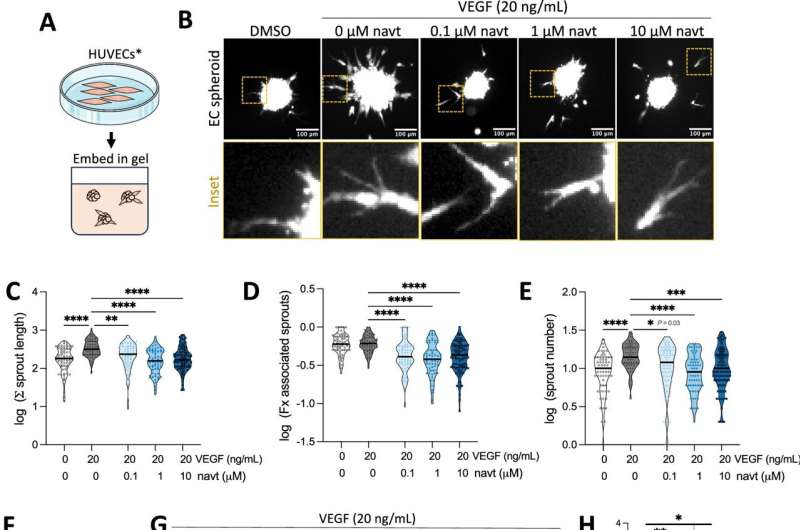
The protein p53, often referred to as the “guardian of the genome” due to its crucial role in cancer prevention, has been found to influence blood vessel growth in complex ways. A team of researchers at Karolinska Institutet has revealed that the activity levels of p53 can either slow or damage blood vessels, depending on the intensity of its response. This research was published on January 2, 2026, in the journal Cell Death & Disease.
Investigating p53’s Impact on Blood Vessel Cells
In their study, the researchers explored how variations in p53 levels affect the behavior of endothelial cells, which are critical for the formation of new blood vessels. By employing a new class of compounds to modulate p53 levels and utilizing advanced imaging techniques, the team was able to observe cellular responses during angiogenesis, the process of new vessel formation.
During angiogenesis, specialized cells in the blood vessel walls must divide, migrate, and assemble to create new vessels. However, in conditions such as cancer and certain eye diseases, this growth can become uncontrolled, exacerbating these conditions.
According to Pavitra Kannan, a researcher at the Department of Microbiology, Tumor and Cell Biology at Karolinska Institutet, the study revealed a significant sensitivity of blood vessel cells to varying levels of p53. “One of the most striking observations was how sensitive these blood vessel cells are even to very low p53 levels compared to other cell types,” Kannan stated.
Contrasting Effects of p53 Levels
The research indicates that lower levels of p53 cause endothelial cells to temporarily halt division, while elevated levels of p53 lead to permanent changes where these cells can neither divide nor survive. This duality illustrates how a single protein can yield contrasting cellular outcomes based on its activation levels.
Despite these divergent responses, both low and high p53 levels were found to inhibit blood vessel growth. This finding underscores the complexity of p53’s role in vascular biology and highlights its potential as a target for therapeutic interventions aimed at controlling abnormal vessel growth in diseases like cancer and certain ocular conditions.
The implications of this research extend beyond basic biology, offering insights into potential treatments for conditions characterized by abnormal angiogenesis. As noted in the study by Omayma Al-Radi and colleagues, understanding the pharmacological activation of p53 may pave the way for novel strategies to address these pressing health issues.
For further details, the study can be accessed through the journal Cell Death & Disease, DOI: 10.1038/s41419-025-08292-7.

Robinhood Stock Surges 2.5% Today Amid Tech Market Recovery

Philadelphia’s Earth Month Kicks Off with Free Events in Parks

GSK’s Inhaler Decision Sparks Health Concerns for Children

Bradford’s Fish Fry Fridays Offer Community Spirit and Flavor

Speculation Rises on Shutdowns During Trump’s Potential Presidency

Samsung Galaxy Watch 9 to Feature Larger Battery, Report Reveals

Inventors Find New Purpose Through Unconventional Paths

UConn Huskies Aim for Back-to-Back Titles in 2026 NCAA Tournament

U.S. Mine Countermeasure Ships Dock in Malaysia for Logistics Stop

University of Hawaiʻi at Mānoa Joins $25.6M AI Initiative for Disaster Monitoring

$2.2 Million Boost for Cancer Research and Training in Hawaiʻi

ALMA Discovers Companion Orbiting Red Giant Star π 1 Gruis

Sacituzumab Govitecan Shows Promise for HR+/HER2− Breast Cancer

币安人生 Sees $15.92 Million in Trading Volume Amid Market Fluctuations

New Gel Offers Hope for Regrowing Tooth Enamel in Dentistry

CAVA Group Shares Surge 5.1% Amid Mixed Analyst Ratings

Christian Bale in Talks to Join Leonardo DiCaprio in Heat 2

Supreme Court to Review Birthright Citizenship for Children of Immigrants
-
Science9 months ago
University of Hawaiʻi at Mānoa Joins $25.6M AI Initiative for Disaster Monitoring
-
 Health7 months ago
$2.2 Million Boost for Cancer Research and Training in Hawaiʻi
-
 Science9 months ago
ALMA Discovers Companion Orbiting Red Giant Star π 1 Gruis
-
 Health7 months ago
Sacituzumab Govitecan Shows Promise for HR+/HER2− Breast Cancer
-
Politics5 months ago
币安人生 Sees $15.92 Million in Trading Volume Amid Market Fluctuations
-
 Health9 months ago
New Gel Offers Hope for Regrowing Tooth Enamel in Dentistry
-
 Business8 months ago
CAVA Group Shares Surge 5.1% Amid Mixed Analyst Ratings
-
 Entertainment9 months ago
Christian Bale in Talks to Join Leonardo DiCaprio in Heat 2
-
 Politics8 months ago
Supreme Court to Review Birthright Citizenship for Children of Immigrants
-

 Lifestyle8 months ago
Art Deco and Traditional Designs Set to Transform Homes in 2026
-

 Lifestyle8 months ago
Fernando Mendoza Secures Maxwell and O’Brien Awards Ahead of Heisman
-

 World8 months ago
Swiss Residents Reject 50% Inheritance Tax on Wealthy