
Science
Study Reveals CEO Accents Impact Everyday Investors’ Choices

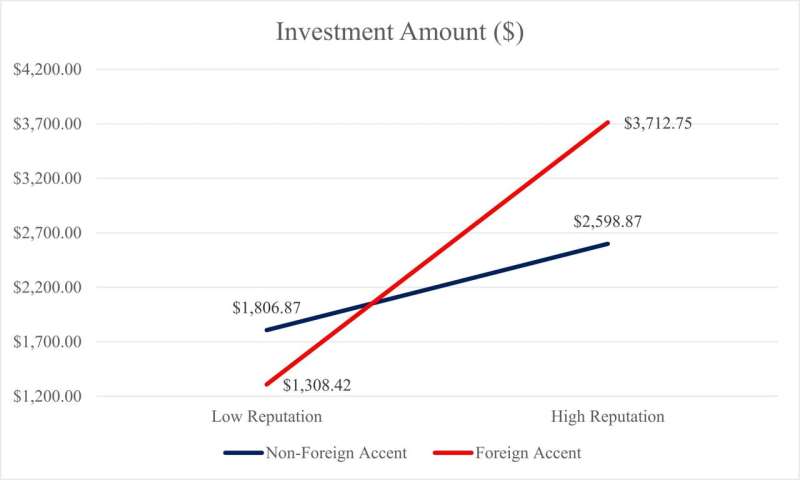
Research from the University of Rhode Island indicates that the accents of chief executive officers (CEOs) can influence investment decisions among everyday investors, while professional investors remain largely unaffected. The study, led by professors Anis Triki and Devendra Kale, was published in the Journal of Behavioral and Experimental Finance on January 25, 2026.
Within the S&P 500, only about 10% of CEOs speak with an accent or come from foreign backgrounds, yet their presence is increasingly significant. As companies like Alphabet, NVIDIA, and Microsoft appoint more leaders with diverse accents, Triki and Kale explored the extent to which these factors sway investor behavior.
“Discussions in academia often touch on the importance of a professor’s accent, but there is limited research on its impact in the business realm,” Triki noted. To address this gap, the researchers investigated whether a CEO’s accent affects investment decisions among investors willing to consider up to $10,000 in a fictional company.
The study involved presenting participants with two types of information: a business journal article detailing the CEO’s reputation and audio recordings of earnings calls, with the CEO’s voice altered to reflect American, Indian, and Kenyan accents. The findings revealed that investors showed a preference for CEOs with foreign accents, particularly when their reputations were strong.
“People generally chose to invest more with individuals who speak with a foreign accent,” stated Triki. The research highlighted that when a CEO’s reputation was poor, their accent had little to no impact on investment decisions. In contrast, a solid reputation enhanced the likelihood of investment, regardless of the CEO’s accent.
Interestingly, among the accents tested, those with Indian and Kenyan accents attracted more hypothetical investment than their American counterpart. The study, which surveyed around 290 participants, contrasted with common assumptions regarding biases against foreign accents.
“When we presented the research, people were surprised,” said Kale. “There is a prevalent narrative about how accents can foster negative bias.” He emphasized that a poor reputation diminishes the effect of accent on investment decisions. Conversely, a good reputation can lead to increased investments for CEOs with foreign accents.
This research underscores the evolving dynamics of investor behavior in a globalized economy, suggesting that while biases exist, they can be mitigated by a strong reputation. The findings offer valuable insights for companies seeking to diversify their leadership and appeal to a broader investor base.

Robinhood Stock Surges 2.5% Today Amid Tech Market Recovery

Philadelphia’s Earth Month Kicks Off with Free Events in Parks

GSK’s Inhaler Decision Sparks Health Concerns for Children

Bradford’s Fish Fry Fridays Offer Community Spirit and Flavor

Speculation Rises on Shutdowns During Trump’s Potential Presidency

Samsung Galaxy Watch 9 to Feature Larger Battery, Report Reveals

Inventors Find New Purpose Through Unconventional Paths

UConn Huskies Aim for Back-to-Back Titles in 2026 NCAA Tournament

U.S. Mine Countermeasure Ships Dock in Malaysia for Logistics Stop

University of Hawaiʻi at Mānoa Joins $25.6M AI Initiative for Disaster Monitoring

$2.2 Million Boost for Cancer Research and Training in Hawaiʻi

ALMA Discovers Companion Orbiting Red Giant Star π 1 Gruis

Sacituzumab Govitecan Shows Promise for HR+/HER2− Breast Cancer

币安人生 Sees $15.92 Million in Trading Volume Amid Market Fluctuations

New Gel Offers Hope for Regrowing Tooth Enamel in Dentistry

CAVA Group Shares Surge 5.1% Amid Mixed Analyst Ratings

Christian Bale in Talks to Join Leonardo DiCaprio in Heat 2

Supreme Court to Review Birthright Citizenship for Children of Immigrants
-
Science9 months ago
University of Hawaiʻi at Mānoa Joins $25.6M AI Initiative for Disaster Monitoring
-
 Health7 months ago
$2.2 Million Boost for Cancer Research and Training in Hawaiʻi
-
 Science8 months ago
ALMA Discovers Companion Orbiting Red Giant Star π 1 Gruis
-
 Health7 months ago
Sacituzumab Govitecan Shows Promise for HR+/HER2− Breast Cancer
-
Politics5 months ago
币安人生 Sees $15.92 Million in Trading Volume Amid Market Fluctuations
-
 Health9 months ago
New Gel Offers Hope for Regrowing Tooth Enamel in Dentistry
-
 Business7 months ago
CAVA Group Shares Surge 5.1% Amid Mixed Analyst Ratings
-
 Entertainment8 months ago
Christian Bale in Talks to Join Leonardo DiCaprio in Heat 2
-
 Politics7 months ago
Supreme Court to Review Birthright Citizenship for Children of Immigrants
-

 Lifestyle8 months ago
Art Deco and Traditional Designs Set to Transform Homes in 2026
-

 Lifestyle7 months ago
Fernando Mendoza Secures Maxwell and O’Brien Awards Ahead of Heisman
-

 World8 months ago
Swiss Residents Reject 50% Inheritance Tax on Wealthy