
Top Stories
B.C. Premier Eby Welcomes U.S. Supreme Court Ruling on Tariffs

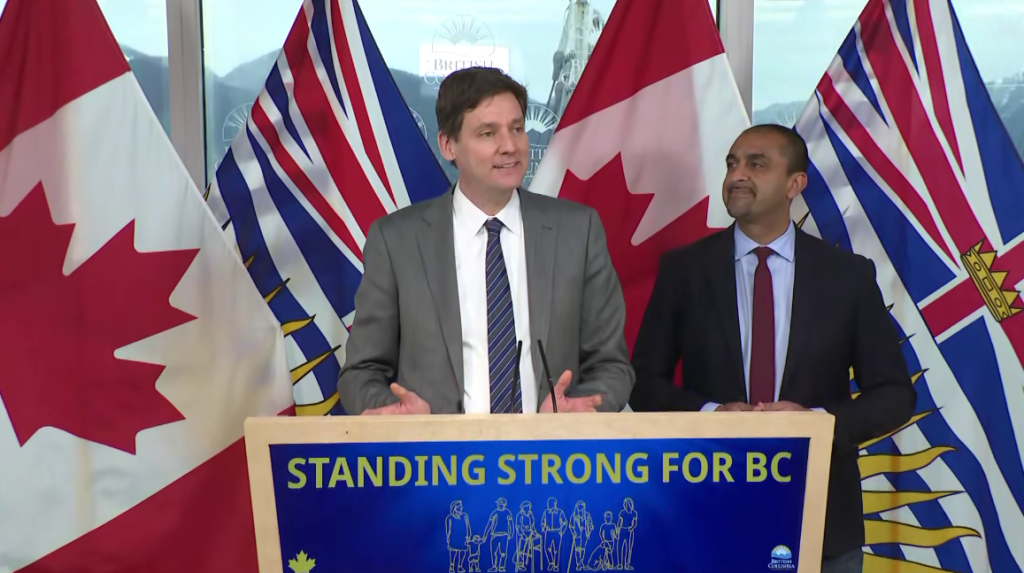
UPDATE: In a significant development, the U.S. Supreme Court has ruled against former President Trump’s tariffs, sparking optimism in British Columbia. Premier David Eby expressed hope that this ruling provides a legal foundation for challenging remaining tariffs impacting Canadian industries.
During a speech earlier today at the Greater Vancouver Board of Trade, Eby highlighted that the Supreme Court’s decision, coupled with a recent condemnation of the tariffs by the U.S. House of Representatives, signals a potential shift in the economic landscape. “They’re signs of spring,” Eby remarked, indicating a renewed sense of possibility for B.C. businesses.
The ruling is expected to ease some of the financial strains placed on Canadian industries, particularly in the lumber and aluminum sectors, which have struggled under the weight of these tariffs. Eby emphasized that American consumers are currently shouldering the burden of these costs, which may pressure the Trump administration to reconsider its trade policies.
However, Eby faced criticism regarding his government’s recent budget announcement, which forecasts a staggering $13.1 billion deficit. GVBOT president Bridgitte Anderson articulated the business community’s concerns, stating, “We are on two different pages right now.” She urged Eby to clarify how the province intends to return to a sustainable fiscal path, especially after inheriting a near $6 billion surplus when he took office in November 2022.
Anderson warned that without significant spending cuts, tax increases may be inevitable. The recently announced budget included the first tax hike on the lowest income bracket in over 25 years and expanded the provincial sales tax (PST) to select professional services, raising alarm among small businesses. “This is going to impact our members significantly,” she said.
Eby acknowledged the challenges posed by a “big jump” in the deficit and the adverse impact on revenue from natural resources. He defended ongoing investments in infrastructure, stating, “That kind of debt, that’s tied to infrastructure, is positive, and that drives growth.”
Despite the backlash over the PST expansion, Eby maintained that it is necessary to ensure a stable tax base to support essential services like health care and education. He pointed out that British Columbia’s economy is transitioning from resource-driven to service-oriented, necessitating this change.
The premier’s remarks came after GVBOT gave the provincial budget a “D” rating, the lowest since Anderson became president in 2019. Eby responded to criticism by comparing B.C.’s fiscal performance to other provinces, saying, “I don’t mind getting a D if other students in the class are also graded.”
Eby dismissed claims that businesses are moving to Alberta due to the PST increase, asserting that B.C. offers greater economic potential. “Alberta is talking about moving out of the country,” he added, reinforcing his belief that British Columbia remains a more stable and promising environment for businesses.
As the situation develops, stakeholders in British Columbia will be closely watching the impact of the U.S. Supreme Court’s ruling and the provincial budget on their industries and overall economic health. The coming weeks will be crucial in determining the effectiveness of Eby’s strategies to address the pressing financial concerns facing the province.

Robinhood Stock Surges 2.5% Today Amid Tech Market Recovery

Philadelphia’s Earth Month Kicks Off with Free Events in Parks

GSK’s Inhaler Decision Sparks Health Concerns for Children

Bradford’s Fish Fry Fridays Offer Community Spirit and Flavor

Speculation Rises on Shutdowns During Trump’s Potential Presidency

Samsung Galaxy Watch 9 to Feature Larger Battery, Report Reveals

Inventors Find New Purpose Through Unconventional Paths

UConn Huskies Aim for Back-to-Back Titles in 2026 NCAA Tournament

U.S. Mine Countermeasure Ships Dock in Malaysia for Logistics Stop

University of Hawaiʻi at Mānoa Joins $25.6M AI Initiative for Disaster Monitoring

$2.2 Million Boost for Cancer Research and Training in Hawaiʻi

ALMA Discovers Companion Orbiting Red Giant Star π 1 Gruis

Sacituzumab Govitecan Shows Promise for HR+/HER2− Breast Cancer

币安人生 Sees $15.92 Million in Trading Volume Amid Market Fluctuations

New Gel Offers Hope for Regrowing Tooth Enamel in Dentistry

CAVA Group Shares Surge 5.1% Amid Mixed Analyst Ratings

Christian Bale in Talks to Join Leonardo DiCaprio in Heat 2

Supreme Court to Review Birthright Citizenship for Children of Immigrants
-
Science8 months ago
University of Hawaiʻi at Mānoa Joins $25.6M AI Initiative for Disaster Monitoring
-
 Health7 months ago
$2.2 Million Boost for Cancer Research and Training in Hawaiʻi
-
 Science8 months ago
ALMA Discovers Companion Orbiting Red Giant Star π 1 Gruis
-
 Health7 months ago
Sacituzumab Govitecan Shows Promise for HR+/HER2− Breast Cancer
-
Politics4 months ago
币安人生 Sees $15.92 Million in Trading Volume Amid Market Fluctuations
-
 Health8 months ago
New Gel Offers Hope for Regrowing Tooth Enamel in Dentistry
-
 Business7 months ago
CAVA Group Shares Surge 5.1% Amid Mixed Analyst Ratings
-
 Entertainment8 months ago
Christian Bale in Talks to Join Leonardo DiCaprio in Heat 2
-
 Politics7 months ago
Supreme Court to Review Birthright Citizenship for Children of Immigrants
-

 Lifestyle8 months ago
Art Deco and Traditional Designs Set to Transform Homes in 2026
-

 Lifestyle7 months ago
Fernando Mendoza Secures Maxwell and O’Brien Awards Ahead of Heisman
-

 World8 months ago
Swiss Residents Reject 50% Inheritance Tax on Wealthy