
Top Stories
Rising Oil Prices Blamed on Perception, Not Supply Issues

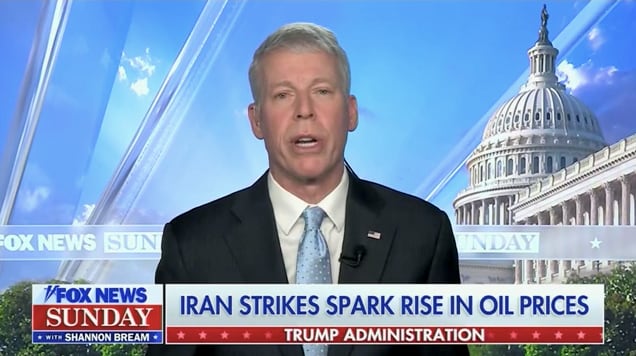
Oil prices have surged significantly in recent weeks, prompting discussions about the underlying causes. U.S. Secretary of Energy Chris Wright attributed these rising costs to “fears” rather than actual supply shortages. In appearances on both Fox News Sunday and CNN’s State of the Union, Wright emphasized that the troubles Americans face at the pump stem from a perception issue rather than the ongoing conflict in the Middle East.
During his interviews, Wright downplayed the impact of the February 28, 2024, military actions initiated by former President Donald Trump, which have contributed to regional instability. He characterized the narratives surrounding the rising oil prices as “fiction,” pointing to what he deemed a misunderstanding of the market situation. “In fact, the run-up in prices has nothing to do with any shortage of barrels of oil or natural gas,” Wright stated, asserting that the current crisis is fueled by speculation about future disruptions.
Despite acknowledging higher prices, Wright claimed that the supply of oil remains adequate. “The world is very well supplied with oil right now. The United States is a net oil exporter,” he said. He also noted that any increases in prices are linked to market sentiment rather than tangible deficits in supply. “You’re seeing a little bit of fear premium in the marketplace, but the world is not short of oil today or natural gas,” he concluded.
Market Responses and Regional Implications
The tensions in the Middle East have significantly affected global oil dynamics, particularly around the Strait of Hormuz, which historically has been vital for oil transport, handling around 20 percent of the world’s oil supply. Recent reports indicate that the ongoing conflict has rendered the strait unsafe for many vessels, further complicating the supply chain.
As reported by the American Automobile Association (AAA), gasoline prices have surged by 47 cents per gallon over the past week, while diesel prices increased by 83 cents. These figures highlight the immediate financial impact on consumers, despite Wright’s insistence that the market is not facing a supply crisis.
Wright’s comments come in the wake of President Trump’s statements on social media, where he declared that Iran has lost its status as the “Bully of the Middle East.” Trump’s remarks suggest that he anticipates protracted military engagement in the region, which could further destabilize oil markets. Leaked reports indicate that the Trump administration is preparing for military actions that may extend through September, raising concerns about the future of oil supply and prices.
The U.S. response to the situation includes a temporary suspension of many sanctions on Russian crude oil, allowing Russian President Vladimir Putin to benefit from the oil crisis. This shift has raised eyebrows, as it may enable Russia to capitalize on the increasing demand and prices driven by the conflict.
As the situation evolves, the complexities of global oil supply chains and the geopolitical landscape will continue to influence prices at the pump. Observers will be watching closely to see how market perceptions align with actual supply conditions in the coming months.

Robinhood Stock Surges 2.5% Today Amid Tech Market Recovery

Philadelphia’s Earth Month Kicks Off with Free Events in Parks

GSK’s Inhaler Decision Sparks Health Concerns for Children

Bradford’s Fish Fry Fridays Offer Community Spirit and Flavor

Speculation Rises on Shutdowns During Trump’s Potential Presidency

Samsung Galaxy Watch 9 to Feature Larger Battery, Report Reveals

Inventors Find New Purpose Through Unconventional Paths

UConn Huskies Aim for Back-to-Back Titles in 2026 NCAA Tournament

U.S. Mine Countermeasure Ships Dock in Malaysia for Logistics Stop

University of Hawaiʻi at Mānoa Joins $25.6M AI Initiative for Disaster Monitoring

$2.2 Million Boost for Cancer Research and Training in Hawaiʻi

ALMA Discovers Companion Orbiting Red Giant Star π 1 Gruis

Sacituzumab Govitecan Shows Promise for HR+/HER2− Breast Cancer

币安人生 Sees $15.92 Million in Trading Volume Amid Market Fluctuations

New Gel Offers Hope for Regrowing Tooth Enamel in Dentistry

CAVA Group Shares Surge 5.1% Amid Mixed Analyst Ratings

Christian Bale in Talks to Join Leonardo DiCaprio in Heat 2

Supreme Court to Review Birthright Citizenship for Children of Immigrants
-
Science8 months ago
University of Hawaiʻi at Mānoa Joins $25.6M AI Initiative for Disaster Monitoring
-
 Health7 months ago
$2.2 Million Boost for Cancer Research and Training in Hawaiʻi
-
 Science8 months ago
ALMA Discovers Companion Orbiting Red Giant Star π 1 Gruis
-
 Health7 months ago
Sacituzumab Govitecan Shows Promise for HR+/HER2− Breast Cancer
-
Politics4 months ago
币安人生 Sees $15.92 Million in Trading Volume Amid Market Fluctuations
-
 Health8 months ago
New Gel Offers Hope for Regrowing Tooth Enamel in Dentistry
-
 Business7 months ago
CAVA Group Shares Surge 5.1% Amid Mixed Analyst Ratings
-
 Entertainment8 months ago
Christian Bale in Talks to Join Leonardo DiCaprio in Heat 2
-
 Politics7 months ago
Supreme Court to Review Birthright Citizenship for Children of Immigrants
-

 Lifestyle7 months ago
Fernando Mendoza Secures Maxwell and O’Brien Awards Ahead of Heisman
-

 Lifestyle8 months ago
Art Deco and Traditional Designs Set to Transform Homes in 2026
-

 World7 months ago
Swiss Residents Reject 50% Inheritance Tax on Wealthy