
Top Stories
Stockholm’s Electric Ferry Cuts Travel Time and Emissions by 94%

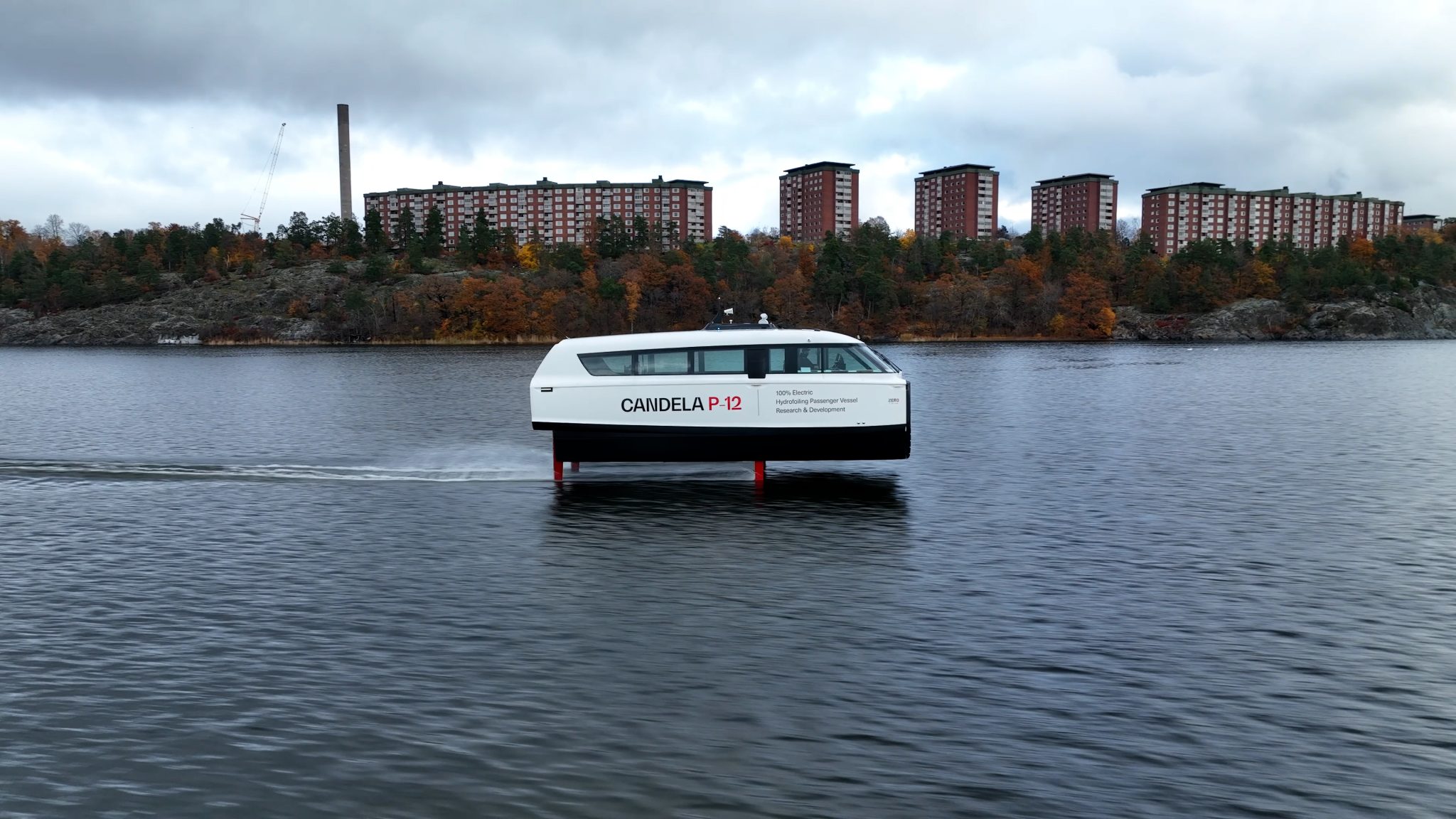
Stockholm has unveiled a groundbreaking hydrofoiling electric ferry, the Candela P-12 Shuttle, which has successfully reduced carbon dioxide emissions by approximately 94 percent compared to traditional diesel ferries. Launched in late 2024, this innovative vessel is reshaping urban travel in the Swedish capital, which is spread across 14 islands and heavily relies on waterways for transportation.
The ferry operates between the suburb of Ekerö and central Stockholm, slashing commute times from 55 minutes to just 30 minutes. The Swedish Transport Administration has reported that the pilot program is a resounding success, with passenger numbers climbing by 22.5 percent during the trial period. Local officials have hailed the ferry as a potential “paradigm shift” for cities that utilize their waterways.
Revolutionary Technology Enhances Efficiency
The Candela P-12 Shuttle stands out as the first computer-controlled electric hydrofoil ferry in serial production. Its design incorporates carbon fiber wings, or hydrofoils, which generate lift and elevate the vessel above the water’s surface as it accelerates. This unique feature significantly reduces drag, allowing for higher speeds and lower energy consumption.
Equipped with an advanced onboard computer system, the ferry adjusts the angle of the foils in real-time, ensuring a stable and smooth ride. The environmental benefits extend beyond emissions; the ferry’s minimal wake minimizes shoreline erosion and ecological disturbance. Furthermore, noise levels are comparable to a car traveling at 28 miles per hour, making it a quieter option for urban waterways.
Economic Benefits and Expansion Opportunities
The success of the Candela P-12 Shuttle has economic implications as well. The increased passenger capacity could facilitate more frequent departures, potentially enhancing overall service efficiency. According to the report, replacing two diesel ferries with six P-12 vessels could raise departure frequency from hourly to every 15 minutes, boosting passenger capacity by approximately 150 percent. The projected socioeconomic benefit of this transition is estimated at SEK 119 million (around $13.1 million).
Dockside charging upgrades for the electric ferry are also less extensive compared to traditional electric options, contributing to lower operational costs due to reduced fuel consumption and maintenance needs.
The implications of this pilot program extend beyond Stockholm. Gustav Hasselskog, founder and CEO of Candela, envisions a future where urban waterways are transformed worldwide. “By combining high speed, minimal energy use, and near-zero emissions, we can unlock faster, cleaner, and more cost-efficient waterborne transport for cities worldwide,” he stated.
Other cities, including Berlin and Mumbai, are already looking to implement similar vessels by 2026, while locations in the Maldives and Thailand are preparing to adopt this cutting-edge technology. As urban areas face challenges related to congestion and climate change, Stockholm’s experiment serves as a compelling case study for reimagining transportation solutions that harness existing waterways, elevating transport above traditional roadways.

Robinhood Stock Surges 2.5% Today Amid Tech Market Recovery

Philadelphia’s Earth Month Kicks Off with Free Events in Parks

GSK’s Inhaler Decision Sparks Health Concerns for Children

Bradford’s Fish Fry Fridays Offer Community Spirit and Flavor

Speculation Rises on Shutdowns During Trump’s Potential Presidency

Samsung Galaxy Watch 9 to Feature Larger Battery, Report Reveals

Inventors Find New Purpose Through Unconventional Paths

UConn Huskies Aim for Back-to-Back Titles in 2026 NCAA Tournament

U.S. Mine Countermeasure Ships Dock in Malaysia for Logistics Stop

University of Hawaiʻi at Mānoa Joins $25.6M AI Initiative for Disaster Monitoring

$2.2 Million Boost for Cancer Research and Training in Hawaiʻi

ALMA Discovers Companion Orbiting Red Giant Star π 1 Gruis

Sacituzumab Govitecan Shows Promise for HR+/HER2− Breast Cancer

币安人生 Sees $15.92 Million in Trading Volume Amid Market Fluctuations

New Gel Offers Hope for Regrowing Tooth Enamel in Dentistry

CAVA Group Shares Surge 5.1% Amid Mixed Analyst Ratings

Christian Bale in Talks to Join Leonardo DiCaprio in Heat 2

Supreme Court to Review Birthright Citizenship for Children of Immigrants
-
Science8 months ago
University of Hawaiʻi at Mānoa Joins $25.6M AI Initiative for Disaster Monitoring
-
 Health7 months ago
$2.2 Million Boost for Cancer Research and Training in Hawaiʻi
-
 Science8 months ago
ALMA Discovers Companion Orbiting Red Giant Star π 1 Gruis
-
 Health7 months ago
Sacituzumab Govitecan Shows Promise for HR+/HER2− Breast Cancer
-
Politics4 months ago
币安人生 Sees $15.92 Million in Trading Volume Amid Market Fluctuations
-
 Health8 months ago
New Gel Offers Hope for Regrowing Tooth Enamel in Dentistry
-
 Business7 months ago
CAVA Group Shares Surge 5.1% Amid Mixed Analyst Ratings
-
 Entertainment8 months ago
Christian Bale in Talks to Join Leonardo DiCaprio in Heat 2
-
 Politics7 months ago
Supreme Court to Review Birthright Citizenship for Children of Immigrants
-

 Lifestyle7 months ago
Fernando Mendoza Secures Maxwell and O’Brien Awards Ahead of Heisman
-

 Lifestyle8 months ago
Art Deco and Traditional Designs Set to Transform Homes in 2026
-

 World7 months ago
Swiss Residents Reject 50% Inheritance Tax on Wealthy