
Top Stories
Trump Revives Greenland Acquisition Talks Amid Arctic Tensions

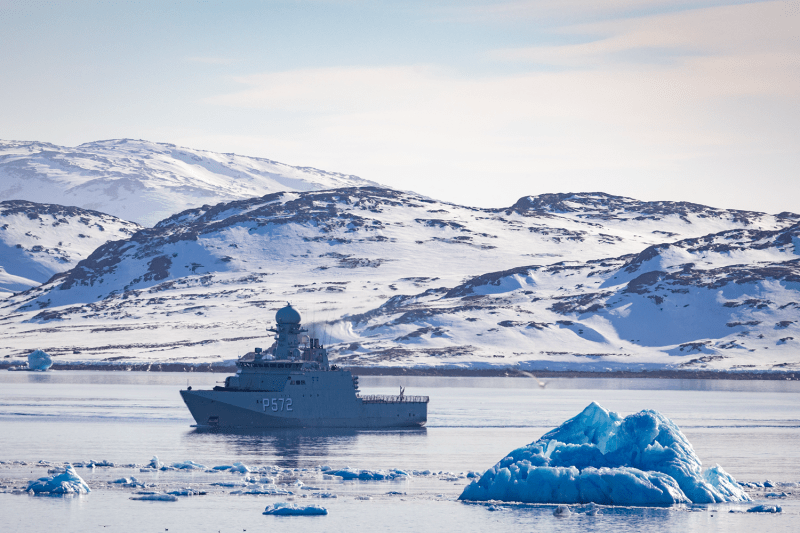
UPDATE: President Donald Trump has reignited discussions about acquiring Greenland, emphasizing his desire for the U.S. to take control of the strategically vital territory, with or without Denmark’s consent. This alarming move, condemned by European leaders, underscores a critical issue: the U.S. lacks a coherent Arctic strategy amidst rising competition from Russia and China.
In a stark reminder of escalating geopolitical tensions, Trump’s comments come just a year into his second term, highlighting the increasing significance of the Arctic as melting ice opens new shipping routes and exposes vast natural resources. The U.S. Geological Survey estimates that the Arctic holds about 13 percent of the world’s undiscovered conventional oil and 30 percent of undiscovered conventional gas resources.
Trump’s threats do little to address the real challenges facing Arctic security. Instead of pursuing annexation, experts argue that the U.S. should enhance collaboration with its allies in the region. Currently, Russia operates 12 military bases and possesses the world’s only nuclear-powered icebreaker fleet, while China is ambitiously increasing its presence, collaborating with Russia on Arctic shipping technologies.
The Arctic is not only a battleground for resources but a vital region for the defense of the U.S. homeland. Radar systems operated by the U.S. and Canada provide crucial defense capabilities. However, Trump’s comments risk damaging relations with key NATO partners like Denmark and Canada, critical to U.S. Arctic strategy and security.
Greenland already hosts the Pituffik Space Base, and agreements are in place for U.S. companies to tap into critical mineral deposits. Greenlandic Prime Minister Jens-Frederik Nielsen affirmed that there are “no obstacles” to increased U.S. security in Greenland, emphasizing that military cooperation can occur without annexation.
Denmark recently signed a bill allowing U.S. military construction on its soil, but it warned that relations could sour if Trump continues to threaten annexation. A similar sentiment has emerged in Canada, where recent comments have shifted public perception of the U.S. to a more negative light, complicating defense partnerships.
Last month, Canada pledged 1 billion Canadian dollars over four years for Arctic infrastructure, while Denmark committed $4.2 billion to bolster security in the region. These investments highlight the potential for collaboration, yet Trump’s rhetoric threatens to undermine these efforts.
Instead of pursuing contentious annexation, experts suggest the U.S. should focus on cooperative frameworks like the Icebreaker Collaboration Effort (ICE) Pact, which includes Canada and Finland to build Arctic icebreakers. Such partnerships are essential for a cohesive defense strategy in the face of growing threats from adversaries.
The Biden administration has already laid a foundation for an effective Arctic strategy, emphasizing the need for a united front against challenges posed by Russia and China. As tensions rise, the U.S. is called to strengthen its alliances rather than provoke further discord through aggressive rhetoric.
By shifting focus from threats to collaboration, the U.S. can better position itself in the evolving Arctic landscape. As developments continue to unfold, the stakes are high, and the need for a coherent, strategic approach is more urgent than ever.

Robinhood Stock Surges 2.5% Today Amid Tech Market Recovery

Philadelphia’s Earth Month Kicks Off with Free Events in Parks

GSK’s Inhaler Decision Sparks Health Concerns for Children

Bradford’s Fish Fry Fridays Offer Community Spirit and Flavor

Speculation Rises on Shutdowns During Trump’s Potential Presidency

Samsung Galaxy Watch 9 to Feature Larger Battery, Report Reveals

Inventors Find New Purpose Through Unconventional Paths

UConn Huskies Aim for Back-to-Back Titles in 2026 NCAA Tournament

U.S. Mine Countermeasure Ships Dock in Malaysia for Logistics Stop

University of Hawaiʻi at Mānoa Joins $25.6M AI Initiative for Disaster Monitoring

$2.2 Million Boost for Cancer Research and Training in Hawaiʻi

ALMA Discovers Companion Orbiting Red Giant Star π 1 Gruis

Sacituzumab Govitecan Shows Promise for HR+/HER2− Breast Cancer

币安人生 Sees $15.92 Million in Trading Volume Amid Market Fluctuations

New Gel Offers Hope for Regrowing Tooth Enamel in Dentistry

CAVA Group Shares Surge 5.1% Amid Mixed Analyst Ratings

Christian Bale in Talks to Join Leonardo DiCaprio in Heat 2

Supreme Court to Review Birthright Citizenship for Children of Immigrants
-
Science9 months ago
University of Hawaiʻi at Mānoa Joins $25.6M AI Initiative for Disaster Monitoring
-
 Health7 months ago
$2.2 Million Boost for Cancer Research and Training in Hawaiʻi
-
 Science9 months ago
ALMA Discovers Companion Orbiting Red Giant Star π 1 Gruis
-
 Health7 months ago
Sacituzumab Govitecan Shows Promise for HR+/HER2− Breast Cancer
-
Politics5 months ago
币安人生 Sees $15.92 Million in Trading Volume Amid Market Fluctuations
-
 Health9 months ago
New Gel Offers Hope for Regrowing Tooth Enamel in Dentistry
-
 Business8 months ago
CAVA Group Shares Surge 5.1% Amid Mixed Analyst Ratings
-
 Entertainment8 months ago
Christian Bale in Talks to Join Leonardo DiCaprio in Heat 2
-
 Politics8 months ago
Supreme Court to Review Birthright Citizenship for Children of Immigrants
-

 Lifestyle8 months ago
Art Deco and Traditional Designs Set to Transform Homes in 2026
-

 Lifestyle8 months ago
Fernando Mendoza Secures Maxwell and O’Brien Awards Ahead of Heisman
-

 World8 months ago
Swiss Residents Reject 50% Inheritance Tax on Wealthy