
Top Stories
White Christian Nationalism: A Growing Threat to US Democracy

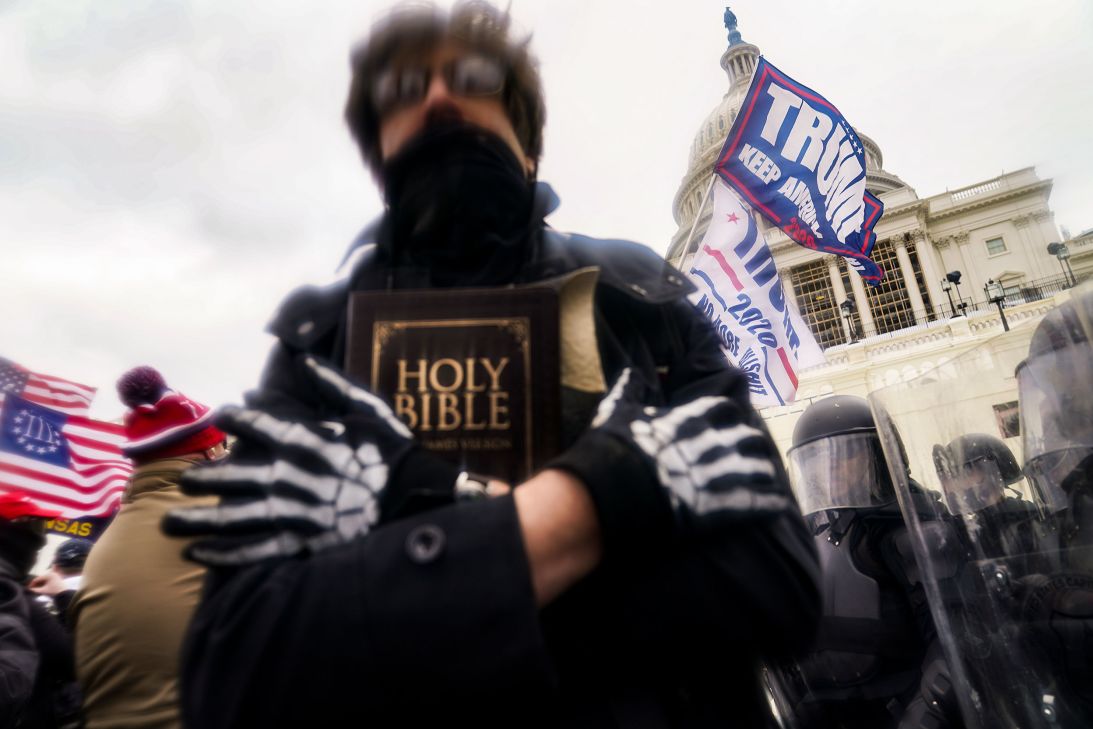
URGENT UPDATE: The discourse surrounding White Christian nationalism is intensifying as new analyses reveal its historical roots and contemporary implications. The term gained prominence following the January 6, 2021Ku Klux Klan, which surged in the early 20th century under leaders like William J. Simmons. Simmons envisioned a nation where only White Protestants thrived, leading to over 5 million members by 1920, influencing critical legislation, including the introduction of racial immigration quotas.
Currently, the Pew Research Center reports that over 54% of US adults are unaware of White Christian nationalism, raising concerns about its growing influence. Scholars argue that this ideology perpetuates a narrative of a “Christian America,” appealing to many who feel threatened by demographic changes and cultural diversity. Historian Kelly J. Baker notes that the Klan’s agenda echoes the modern-day goals of White Christian nationalists, fostering a vision of a homogenous nation devoid of “corrupting influences.”
As the movement gains traction, its proponents advocate for a return to a “Christian nation,” asserting that laws should reflect biblical principles. One prominent leader, Douglas Wilson, claims the US was founded as a Christian nation and should revert to its historical roots, despite widespread historical contention.
The implications are profound. Many White Christian nationalists envision a society where laws align with religious doctrine, including the repeal of the 19th Amendment, which grants women the right to vote. This perspective reflects a broader sentiment among their ranks, as surveys indicate that 87% believe America should prioritize European Christian values.
However, critics warn that this movement poses a significant threat to democracy. Historian Philip Gorski argues that White Christian nationalism redefines “we the people” in exclusionary terms, undermining the principles of a multiracial democracy. The movement’s historical context reveals a legacy intertwined with violence against Native Americans and the justification of slavery and segregation.
As Martin Luther King Jr. articulated, America is envisioned as a diverse society, yet White Christian nationalists often reject this inclusive narrative. The ongoing debate raises urgent questions about the future of American identity and governance.
With growing visibility and influence, White Christian nationalism is reshaping the political landscape. As more Americans become aware of its implications, the discourse surrounding this ideology will likely escalate. The urgency of understanding its roots and consequences cannot be overstated, as it challenges the very fabric of American democracy.
As this situation develops, attention is focused on how political leaders, scholars, and citizens respond to the rising tide of White Christian nationalism. The unfolding dialogue will be crucial in determining the future trajectory of a nation grappling with its identity in an increasingly diverse world.

Robinhood Stock Surges 2.5% Today Amid Tech Market Recovery

Philadelphia’s Earth Month Kicks Off with Free Events in Parks

GSK’s Inhaler Decision Sparks Health Concerns for Children

Bradford’s Fish Fry Fridays Offer Community Spirit and Flavor

Speculation Rises on Shutdowns During Trump’s Potential Presidency

Samsung Galaxy Watch 9 to Feature Larger Battery, Report Reveals

Inventors Find New Purpose Through Unconventional Paths

UConn Huskies Aim for Back-to-Back Titles in 2026 NCAA Tournament

U.S. Mine Countermeasure Ships Dock in Malaysia for Logistics Stop

University of Hawaiʻi at Mānoa Joins $25.6M AI Initiative for Disaster Monitoring

$2.2 Million Boost for Cancer Research and Training in Hawaiʻi

ALMA Discovers Companion Orbiting Red Giant Star π 1 Gruis

Sacituzumab Govitecan Shows Promise for HR+/HER2− Breast Cancer

币安人生 Sees $15.92 Million in Trading Volume Amid Market Fluctuations

New Gel Offers Hope for Regrowing Tooth Enamel in Dentistry

CAVA Group Shares Surge 5.1% Amid Mixed Analyst Ratings

Christian Bale in Talks to Join Leonardo DiCaprio in Heat 2

Supreme Court to Review Birthright Citizenship for Children of Immigrants
-
Science9 months ago
University of Hawaiʻi at Mānoa Joins $25.6M AI Initiative for Disaster Monitoring
-
 Health7 months ago
$2.2 Million Boost for Cancer Research and Training in Hawaiʻi
-
 Science8 months ago
ALMA Discovers Companion Orbiting Red Giant Star π 1 Gruis
-
 Health7 months ago
Sacituzumab Govitecan Shows Promise for HR+/HER2− Breast Cancer
-
Politics5 months ago
币安人生 Sees $15.92 Million in Trading Volume Amid Market Fluctuations
-
 Health9 months ago
New Gel Offers Hope for Regrowing Tooth Enamel in Dentistry
-
 Business7 months ago
CAVA Group Shares Surge 5.1% Amid Mixed Analyst Ratings
-
 Entertainment8 months ago
Christian Bale in Talks to Join Leonardo DiCaprio in Heat 2
-
 Politics7 months ago
Supreme Court to Review Birthright Citizenship for Children of Immigrants
-

 Lifestyle8 months ago
Art Deco and Traditional Designs Set to Transform Homes in 2026
-

 Lifestyle7 months ago
Fernando Mendoza Secures Maxwell and O’Brien Awards Ahead of Heisman
-

 World8 months ago
Swiss Residents Reject 50% Inheritance Tax on Wealthy