
World
Canada Joins EU Defense Fund to Enhance Military Capabilities

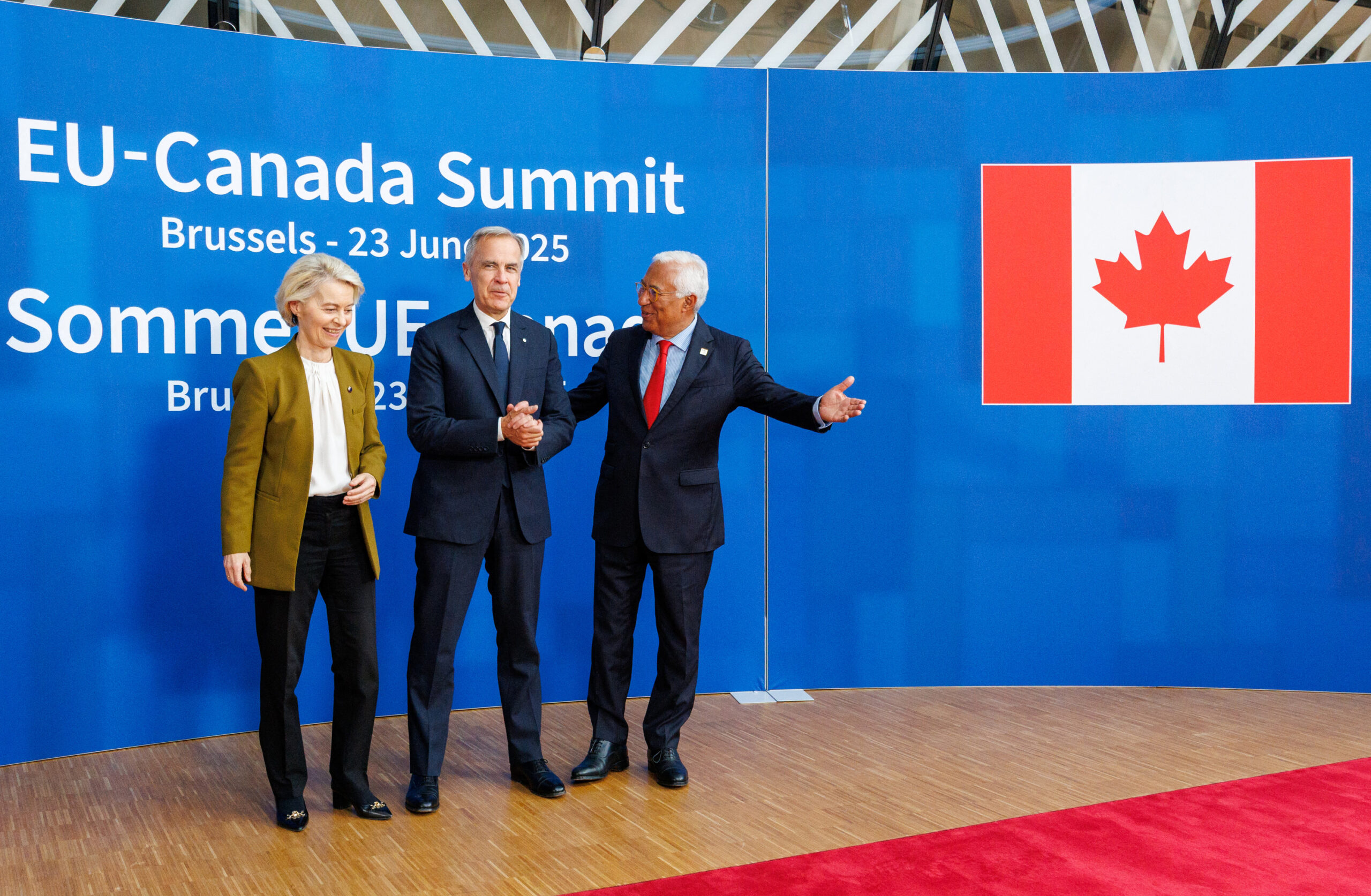
Canada has officially joined the European Union’s flagship rearmament program, known as Security Action for Europe (SAFE). This marks Canada as the first non-EU country to participate in the initiative, which has a budget of €150 billion dedicated to facilitating loans for joint military procurement. The announcement was made by Canadian Prime Minister Mark Carney this week, detailing that this collaboration could significantly bolster Canada’s defense capabilities, particularly in the areas of fighter jets and submarines.
In a statement, Carney emphasized that joining SAFE would “unlock billions of dollars in potential defense opportunities for Canadian businesses.” He highlighted the potential for attracting new suppliers for the Armed Forces and creating substantial opportunities for national manufacturers to develop and export Canadian-made military technologies.
As part of its defense strategy, Canada is currently reviewing its next-generation fighter jet procurement process. While the government has already committed funding for 16 initial F-35 aircraft, it is also considering a mixed fleet that includes the Swedish-made Gripen as a competitive option. The specifics of Canada’s involvement in the SAFE program are still being finalized, with ongoing discussions aimed at ratifying a bilateral agreement between Ottawa and the EU.
Funding and Procurement Opportunities
Under SAFE regulations, eligibility for funding requires that no more than 35% of a project’s components originate from outside the European Union, the European Economic Area, or Ukraine. Nonetheless, participating nations can buy their way into the program through financial contributions that grant them greater access to funding opportunities. The details surrounding Canada’s financial commitment remain unclear, including whether this contribution will be a one-time fee or linked to specific procurement agreements.
Negotiations for the United Kingdom’s entry into SAFE faced delays last month due to disagreements over the level of financial support. The EU had proposed a commitment between €4 billion and €6.5 billion, while the UK was prepared to contribute only approximately €200 million to €300 million.
Given Canada’s ambitious defense procurement goals, experts believe funding could extend to advanced military technologies, including next-generation fighter aircraft, conventional submarines, and maritime domain awareness systems. Roger Hilton, a defense fellow at the Bratislava-based think tank GLOBSEC, noted that Canada may also explore SAFE options for drones, anti-submarine warfare platforms, and secure satellite communications.
Strategic Partnerships and Future Collaborations
Projects funded through SAFE require collaboration among at least two partners, typically involving member states or partnerships with Ukraine or other EFTA/EEA nations. Hilton suggests that Canada is likely to align itself with European partners that share similar strategic priorities, particularly concerning Arctic security and North Atlantic defense.
He expressed confidence that Canada would gravitate towards countries with robust aerospace and naval industries, such as France, Germany, Italy, Sweden, and Spain. These nations possess the industrial capacity, design authority, and consortium models that SAFE favors, which could enhance Canada’s military procurement capabilities.
As discussions and negotiations continue, Canada’s participation in SAFE represents a significant step toward strengthening its defense infrastructure and fostering international military cooperation. This development not only highlights Canada’s commitment to modernizing its armed forces but also signals a broader strategy to integrate more closely with European defense initiatives.

Robinhood Stock Surges 2.5% Today Amid Tech Market Recovery

Philadelphia’s Earth Month Kicks Off with Free Events in Parks

GSK’s Inhaler Decision Sparks Health Concerns for Children

Bradford’s Fish Fry Fridays Offer Community Spirit and Flavor

Speculation Rises on Shutdowns During Trump’s Potential Presidency

Samsung Galaxy Watch 9 to Feature Larger Battery, Report Reveals

Inventors Find New Purpose Through Unconventional Paths

UConn Huskies Aim for Back-to-Back Titles in 2026 NCAA Tournament

U.S. Mine Countermeasure Ships Dock in Malaysia for Logistics Stop

University of Hawaiʻi at Mānoa Joins $25.6M AI Initiative for Disaster Monitoring

$2.2 Million Boost for Cancer Research and Training in Hawaiʻi

ALMA Discovers Companion Orbiting Red Giant Star π 1 Gruis

Sacituzumab Govitecan Shows Promise for HR+/HER2− Breast Cancer

币安人生 Sees $15.92 Million in Trading Volume Amid Market Fluctuations

New Gel Offers Hope for Regrowing Tooth Enamel in Dentistry

CAVA Group Shares Surge 5.1% Amid Mixed Analyst Ratings

Christian Bale in Talks to Join Leonardo DiCaprio in Heat 2

Supreme Court to Review Birthright Citizenship for Children of Immigrants
-
Science8 months ago
University of Hawaiʻi at Mānoa Joins $25.6M AI Initiative for Disaster Monitoring
-
 Health7 months ago
$2.2 Million Boost for Cancer Research and Training in Hawaiʻi
-
 Science8 months ago
ALMA Discovers Companion Orbiting Red Giant Star π 1 Gruis
-
 Health7 months ago
Sacituzumab Govitecan Shows Promise for HR+/HER2− Breast Cancer
-
Politics5 months ago
币安人生 Sees $15.92 Million in Trading Volume Amid Market Fluctuations
-
 Health8 months ago
New Gel Offers Hope for Regrowing Tooth Enamel in Dentistry
-
 Business7 months ago
CAVA Group Shares Surge 5.1% Amid Mixed Analyst Ratings
-
 Entertainment8 months ago
Christian Bale in Talks to Join Leonardo DiCaprio in Heat 2
-
 Politics7 months ago
Supreme Court to Review Birthright Citizenship for Children of Immigrants
-

 Lifestyle8 months ago
Art Deco and Traditional Designs Set to Transform Homes in 2026
-

 Lifestyle7 months ago
Fernando Mendoza Secures Maxwell and O’Brien Awards Ahead of Heisman
-

 World8 months ago
Swiss Residents Reject 50% Inheritance Tax on Wealthy