
World
China Expands Marine Protection Efforts to Shape Global Governance

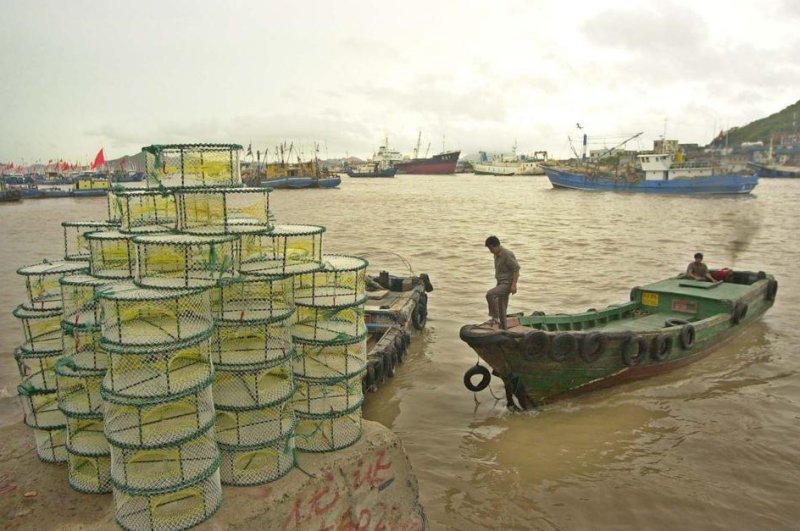
China is taking significant steps to enhance its marine protection and assert its role in global ocean governance. In response to severe ecological degradation, including collapsing fish stocks and coral bleaching, the Chinese government is recalibrating its maritime policies. This shift indicates a growing recognition that China’s long-term influence over ocean resources cannot rely solely on extraction and enforcement; it must also incorporate conservation strategies.
The recent ratification of the High Seas Treaty, a United Nations-backed agreement aimed at protecting marine biodiversity in international waters, underscores Beijing’s ambition to play a leading role in shaping global ocean governance. According to Yong Chen, a professor of marine science at the School of Marine and Atmospheric Sciences at Stony Brook University, this move reflects China’s understanding of its long-term interests, such as food security and the sustainability of marine ecosystems.
Ecological Challenges and Strategic Responses
The South China Sea is one of the world’s most biodiverse marine ecosystems, crucial for feeding millions. However, overfishing, industrialization, and rising ocean temperatures have severely impacted its health. Scientific studies reveal that coral reefs have experienced repeated bleaching events, and fish stocks have plummeted in many areas over the past two decades.
In response, China has expanded its network of marine protected areas, which now exceeds 300 sites, covering approximately 13% of its claimed waters. Official figures indicate that about 4% of China’s total sea area is designated as protected. Ellen Pikitch, executive director of the Institute for Ocean Conservation Science, emphasizes that the effectiveness of these marine protected areas hinges on enforcement and science-based management, rather than merely existing as lines on a map.
The interconnectedness of marine ecosystems means that successful conservation efforts require ecological connectivity. Strengthening these connections and promoting regional data-sharing initiatives are essential for achieving long-term stability in ocean governance.
Scientific Collaboration Amid Geopolitical Tensions
Despite ongoing territorial disputes and heightened geopolitical tensions in the South China Sea, marine scientific cooperation is growing. Collaborative efforts in tsunami preparedness, ocean condition data-sharing, and renewed research initiatives signify a shift toward recognizing science as a unifying force among conflicting parties.
Chinese marine scholars advocate for scientific research to foster cooperation among South China Sea claimants, suggesting that joint studies and data-sharing can proceed in the context of ongoing sovereignty disputes. In this framework, marine protected areas are evolving into platforms for diplomacy, facilitating joint monitoring of reefs, shared assessments of fish stocks, and regional training programs.
Professor John McManus from the University of Miami asserts that maintaining discussions and collaborative studies is vital, even if tangible actions remain limited. While these efforts will not resolve sovereignty disputes, they could lay the groundwork for a more substantive regional Code of Conduct focused on sustainable resource governance.
China’s domestic recalibration in marine conservation coincides with a rapidly changing international dynamic. With the United States yet to ratify the High Seas Treaty and retreating from several multilateral environmental commitments, a diplomatic vacuum is forming. Beijing is positioning itself to fill this gap, framing marine governance within the concept of “ecological civilization,” which connects environmental protection to sustainable economic development.
In practical terms, China has supported global initiatives to reduce harmful fisheries subsidies and has urged caution regarding deep-sea mining, emphasizing the need for scientific evidence before large-scale exploitation occurs.
As the world witnesses a shift in how maritime power is perceived, China’s leadership is increasingly evaluated not only by its naval capabilities but also by its stewardship of the global commons. This transformation is set to take center stage at the upcoming Boao Forum in Hainan, where a session titled “Marine Environmental Protection: Forging a New Pattern of China-ASEAN Ocean Governance” will showcase initiatives aimed at aligning conservation, scientific cooperation, and regional diplomacy.
Hainan’s selection as the venue is strategic, serving as both a geographical and political gateway to the South China Sea. Historically significant, the island has often been depicted as the southernmost limit of Chinese territory in official maps, reinforcing national narratives that support Beijing’s maritime ambitions.
Environmental cooperation in the region offers a pragmatic avenue for Southeast Asian states caught between major powers. Collaborative efforts in fisheries sustainability, coral restoration, and disaster resilience align with domestic development goals and food security needs. Chinese strategists are proposing a South China Sea Marine Science Consortium to connect ASEAN member states, broaden data-sharing, and explore cross-border conservation zones.
According to Professor Chen, fostering trust through collaborative environmental initiatives could reduce the risk of dangerous encounters at sea. If China can successfully demonstrate that environmental stewardship accompanies its maritime power, it may redefine the nature of major-power leadership in ocean governance.
As Lucio Pitlo III, a research fellow at the Asia-Pacific Pathways to Progress Foundation, points out, China’s recent designation of the Scarborough Shoal as a marine protected area raises questions about the actual improvement of its ecosystem and fish stocks. While China’s maritime transformation is ongoing, marked by assertive coast guard patrols and economic dependence on marine resources, a policy shift towards conservation and scientific engagement is becoming more pronounced.
The successful integration of ecological principles into national strategy, alongside enhanced scientific capacity and monitoring systems, will be crucial for determining China’s lasting influence in maritime affairs. The lesson from coral reefs—dependent on a delicate balance for survival—applies equally to ocean governance: without sustained cooperation and shared stewardship, even the most powerful maritime nations risk losing their influence and the health of the ecosystems they rely upon.

Robinhood Stock Surges 2.5% Today Amid Tech Market Recovery

Philadelphia’s Earth Month Kicks Off with Free Events in Parks

GSK’s Inhaler Decision Sparks Health Concerns for Children

Bradford’s Fish Fry Fridays Offer Community Spirit and Flavor

Speculation Rises on Shutdowns During Trump’s Potential Presidency

Samsung Galaxy Watch 9 to Feature Larger Battery, Report Reveals

Inventors Find New Purpose Through Unconventional Paths

UConn Huskies Aim for Back-to-Back Titles in 2026 NCAA Tournament

U.S. Mine Countermeasure Ships Dock in Malaysia for Logistics Stop

University of Hawaiʻi at Mānoa Joins $25.6M AI Initiative for Disaster Monitoring

$2.2 Million Boost for Cancer Research and Training in Hawaiʻi

ALMA Discovers Companion Orbiting Red Giant Star π 1 Gruis

Sacituzumab Govitecan Shows Promise for HR+/HER2− Breast Cancer

币安人生 Sees $15.92 Million in Trading Volume Amid Market Fluctuations

New Gel Offers Hope for Regrowing Tooth Enamel in Dentistry

CAVA Group Shares Surge 5.1% Amid Mixed Analyst Ratings

Christian Bale in Talks to Join Leonardo DiCaprio in Heat 2

Supreme Court to Review Birthright Citizenship for Children of Immigrants
-
Science8 months ago
University of Hawaiʻi at Mānoa Joins $25.6M AI Initiative for Disaster Monitoring
-
 Health7 months ago
$2.2 Million Boost for Cancer Research and Training in Hawaiʻi
-
 Science8 months ago
ALMA Discovers Companion Orbiting Red Giant Star π 1 Gruis
-
 Health7 months ago
Sacituzumab Govitecan Shows Promise for HR+/HER2− Breast Cancer
-
Politics4 months ago
币安人生 Sees $15.92 Million in Trading Volume Amid Market Fluctuations
-
 Health8 months ago
New Gel Offers Hope for Regrowing Tooth Enamel in Dentistry
-
 Business7 months ago
CAVA Group Shares Surge 5.1% Amid Mixed Analyst Ratings
-
 Entertainment8 months ago
Christian Bale in Talks to Join Leonardo DiCaprio in Heat 2
-
 Politics7 months ago
Supreme Court to Review Birthright Citizenship for Children of Immigrants
-

 Lifestyle8 months ago
Art Deco and Traditional Designs Set to Transform Homes in 2026
-

 Lifestyle7 months ago
Fernando Mendoza Secures Maxwell and O’Brien Awards Ahead of Heisman
-

 World8 months ago
Swiss Residents Reject 50% Inheritance Tax on Wealthy